DealMaker Q&A

Eduardo Peláez

TTR DealMaker Q&A with UNE Asesores Financieros Partner Eduardo Peláez

Eduardo Peláez

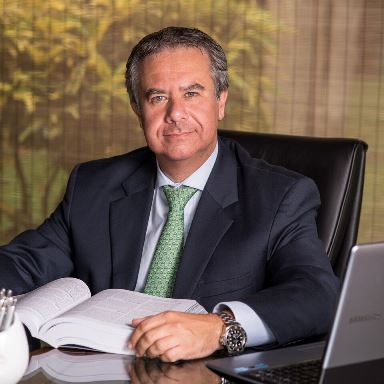
Eduardo Peláez is Partner of UNE Asesores Financieros, an M&A advisory boutique focused in Latin America Small/Mid-Market. Eduardo Peláez has conducted many transactions in diverse sectors including tourism, chemicals, real estate and agriculture. Previously Eduardo was associate of Miranda & Amado Abogados and Hernández & Cía. Abogados. Also, worked in Lindley. 

He is Lawyer from Pontificia Universidad Católica del Perú and holds a MSc Management from Alliance Manchester Business School.

TTR: What’s your general outlook for the M&A market in Latin American this year, and specifically, in Peru?

EP: We believe the Latin American M&A market is experiencing a quite dynamic phase. Notwithstanding, the particular circumstances of each country in terms of macroeconomic conditions and political environment lead to diverse possibilities and projections. 

In the region there are markets like Venezuela, a country with enormous potential but absolutely isolated, but also the case of Chile, a nation with very stable economy and government, but with less opportunities for high returns. Also, there are some up-and-coming countries like Paraguay that has established favorable market conditions through a pro-investment regulatory and tax set of rules. 

The case of Peru is very particular. Despite of the political turbulence and the scandals of corruption, the economy is stable and the National Central Bank maintains its growth´s projections around 4%. The last two years have been marked by iconic transactions led by strategic investors pursuing market consolidation, such as the acquisition of the pharmacy chain MiFarma by Intercorp and the recent acquisition of Intradevco by Alicorp.

TTR: What are the primary factors influencing M&A decisions in the current economic climate? How do these economic fluctuations affect investment priorities?

EP: In the last decade, Peru has grown consistently. Even though the pace slowed since 2014, the Peruvian market maintains healthy indexes and presents opportunities for high returns, making it one of the most attractive markets in Latin America. 

Likewise, the Private Equity industry is taking more prominence in Peru, generating more dynamism in M&A activity. Global funds like Advent and Carlyle are already active investors in the Peruvian market. Also, there are other relevant players specialized in the mid-market such as HIG, L Catterton, Southern Cross and Victoria Capital Partners, that are exploring opportunities in Peru. 

From the sell-side standpoint, the political instability could make some businesses owners’ deciding to sell. Also, the new M&A regulation that will go into effect next year could accelerate the velocity of transactions and increase the volume of deals in the following months.

TTR: What is the state of the capital market in Perú? How has the country evolved in this respect in recent years? What is your forecast for the near-term?

EP: Peruvian capital market is still in an embryonic stage, characterized by low activity and hardly influenced by a few institutional investors. The exclusion of Credicorp from the FTSE Emerging Markets index is symptomatic. 

There are some significant efforts of developing the MAV (capital market for mid-size companies with less than S/. 350MM of annual revenue), but the results are modest, with just 13 listed companies since its inception in 2013. 

In this context, the recent creation of FIRBIs and FIBRAs, vehicles that have similarities with the American REITs, could represent a great opportunity to attract retail investors and increase the activity and liquidity of the capital market.

TTR: How difficult is it for corporates to access financing from local financial institutions in the current environment? What are the main barriers? How is financing structured?

EP: We have experienced a significant evolution in the volume of Peruvian companies accessing to the banking system in the past few years, going from 25% in 2014 to 40% in 2018, according to ASBANC. 

The big challenge is the inclusion of the majority of small and medium enterprises that currently have very few options. The fintech market represents a very interesting alternative for this type of businesses, particularly in the way of factoring platforms. 

Also, the increasing presence of foreign debt funds, especially Chilean, are becoming key participants, even in the small-and-mid size market. For example, recently we helped our client Llaxta Inmobiliaria y Constructora to obtain a US$ 10.5MM loan from Volcom Capital Chile for a real estate project in Piura, part of the social program “Techo Propio”.

TTR: Finally, we would like you to share with us your opinions and forecasts about the opening of the Peruvian market with other countries

EP: The Peru market presents many opportunities for all types of international investors, from strategic regional players to family offices and private equity and debt funds. 

Beyond the usual M&A activity in the mining sector, we see interesting opportunities of consolidation in the agricultural business. For example, there is the case of Hortifrut that became the leading berry producer in the world after the acquisition of El Rocío. Likewise, last year we had the opportunity to advise the British trader Wealmoor and Limones Piuranos in the acquisition of the mango and avocado´s exporter Sunshine. Also, recently we led the sale of the mango´s exporter Dominus to the Peruvian-Danish joint venture Danper

On the other hand, the real estate market still presents superiors return rates compared with other countries in Latin America, attracting global and regional real estate funds. 

Finally, considering the current development of modern retail, we believe Peru represents an interesting possibility for regional companies dedicated to services related with cold chain and specialized storage.

DealMaker Q&A

Alberto Rebaza

TTR DealMaker Q&A with Rebaza, Alcazar & De Las Casas Partner Alberto Rebaza

Alberto Rebaza
Alberto Rebaza

Alberto Rebaza is founding partner and managing partner of Rebaza, Alcazar & De Las Casas law firm. Partner leads to mergers and acquisitions and corporate areas. In addition to his masters, he has studies at Georgetown University and England. He has also been director in several companies and organizations such as Edegel (Energy), Rigel Peru (Insurance), Liderman (Services), Amrop (Services), IPAE, Pesquera Alexandra (Fishing), YPO, among others.

TTR: Mr. Rebaza, firstly we would like to get your expert opinion, in a brief analysis, on the progress of the Peruvian M&A market in the first four months of the year.

AR: The Peruvian legal market has experienced an unusual volume of M&A closings in 1Q19 for all type and sizes of transactions. From the small/medium size deals with a strong strategic focus, to the multimillion dollar/cross-border deals that cover most of our newspapers. Our team has participated in 7 closings in 2019 so far (including strategic deals such as the sale of Papelsa to Grupo Gloria, the sale of Holding Plaza to Parque Arauco or the purchase of Duraplast and Novatec by Wenco). We are thrilled and have high expectations with our pipeline of transactions for 2Q19.


TTR: According to our data, Peru allocated a significant part of its investments to other Latin American countries, mainly Colombia and Chile. What attracts the interest of Peruvian investors? 


AR: There are several factors that may explain this phenomenon. First, Colombia and Chile are two countries with lots of social, historic, cultural and legal similarities with Peru. A regional expansion within those countries is normally catalogued as a soft landing for foreign investors.

Second, since the launching of the Pacific Alliance (Latin American trade bloc, formed by Peru, Chile, Colombia and Mexico) in 2011, Peruvian investors are taking a close look to the participant countries of the Pacific Alliance to diversify or expand their businesses. It is worth noting that, despite certain tax benefits (agreements to avoid double taxation or tax reductions, among others), the founding members of the Pacific Alliance executed an agreement to abolish all tariffs of merchandise trade by January 2020, making this integration a unique Latin American marketplace for producers.


TTR: Similarly, Colombia appears so far in 2019 as one of the main investors in the country. How do you think this reciprocal business relationship between the two countries will evolve? How does it benefit their economies?


AR: Colombian investors have been major players in the M&A industry in the recent years and I wouldn’t expect that to change in the near future. They are the third major foreign investors in Peru, after Spain and Chile.

Back in 2018, the Colombian Business Council in Peru announced fresh investments for over US$ 2B in Peru for the years 2018 and 2019. Their main focus is on projects related to the infrastructure, electricity, hospitality, transport and in the cosmetic industry.

In addition to the investment projections of Colombian players, I think the real deal will come once the corruption crisis in Peru is overcome. The Colombians experience in public-private partnerships and Public Works Tax Deduction projects will for sure contribute our economy in a positive way. Their input and investment will boost public projects (and therefore our economy) and increase our employment rate considerably.


TTR: Meanwhile, transactions in Agriculture, Agribusiness, Farming and Fishing have increased in Peru, compared with previous years when that subsector wasn’t as prominent. What could you tell us about that? Do you think the tendency will remain?


AR: The fishing industry in Peru is now consolidated, however, the government has been debating the last months certain legislative modifications that may heavily impact the industry, such as the increase of the fishing rights.

On the other hand, we have viewed a transactional boom related to shrimp-based business like the purchase of La Fragata by Marinazul (affiliated to Grupo Camposol).

Furthermore, the agricultural-related industries are facing an unusual increase in their sectors due to the international demand for agricultural products. We have notice the peculiar interest of foreign investments funds and, particularly, private investors from Chile in the purchase of estates in the north of Peru to develop agribusiness and farming companies. Peru is a privileged country for the agribusiness, making it one of the most suitable natural producers. The progressive increase of the worldwide demand, followed by a friendly legal framework that includes income tax reductions and special depreciation conditions are the perfect match for this boost.


TTR: Lastly, Peru has recently suffered and been involved in certain corruption scandals. How do you think those scandals affect the country’s economy today? What is your outlook on the matter?


AR: Thankfully, the political crisis experienced in Peru last year and the current corruption cases have not prevented the unstoppable growth of our economy and, specifically, of the M&A players’ appetite.

However, it is important to note that all major infrastructure projects have been stopped and their continuity is under analysis. This has deeply affected our economy and the governmental stability, lowering the Peruvian employment rate. I believe this corruption turmoil may only be disregarded by a strong political force that needs to convey economic trust and decision-making features. Furthermore, we are now facing an exchange in the players or the main public projects. The typical powerful Brazilian and local companies are been replaced by international actors of various backgrounds.

Should the current government be unable to revert this situation, I believe the presidential elections in 2021 will be the right moment to overcome this scenario.

DealMaker Q&A

TTR Dealmaker Q&A with Hernández & Cía. Partner
Juan Luis Hernández

Juan Luis Hernández

Juan Luis Hernández Gazzo studied in the Pontificia Universidad Católica del Perú, (1994) and in the Harvard Law School – Master of Law (LL.M), (1998). He begin his career as speaker at different national and international forums in the matter of Banking and Finance, Mergers and Acquisitions and Capital Markets. Later he worked in the legal area of the Peruvian Securities and Exchange Commission – CONASEV (Current Capital Markets superintendent) (1994). Since 1998 til 1999 was in New York as International Associate at Shearman & Sterling. Currenty he is partner in Hernández & Cía firm where he started his career in 1992.

TTR: What your perception of the economic performance in Latin America, and particularly, in Peru this year?

The first quarter of the year is usually a bit slow in terms of legal activity across all economic sectors. However, 2019 has begun quite strong for us, which suggests our workload will be even greater for the rest of the year.

There is an interesting dynamic in Peru, not only because our firm has had sustained growth in recent years (48% in 2018), but also because the market itself has grown significantly. In terms of M&A, for example, we are seeing a greater volume of transactions, due to a combination of several factors.

In general terms, we see more activity in 1Q19 compared to previous years, both for our firm and countrywide. At the regional level, it is a bit more complicated; Based on my discussions with other attorneys in Latin America, countries like Chile and Colombia, which have strong connections to Peru, are experiencing similar scenarios. 


TTR: Why is there so much M&A in the extractives sector and in financial services?  

In the case of Peru, the mining sector had a strong start this year. Peru is fundamentally a mining country and, together with Chile, is one of the leaders in the mining industry regionally. Peru has a wide variety of minerals, which is a plus, and the rise in prices of various metals has driven a revival in the industry. This revival has spurred new projects and led to M&A targeting companies in the sector, even those in the exploration stage.  The mining industry and natural resources generally in Peru constitute an essential driver of the country’s economic future.

We have not witnessed a particular surge of activity in financial services as this sector consolidated a long time ago. It is unusual to see significant M&A activity in financial services because the country’s financial institutions have been quite structured for time ago. This does not mean that we are only going to see transactional activity in mining, but in other sectors as well.


TTR: In which other sectors do you expect to see M&A deals this year?

The Peruvian market will undergo consolidation in retail – in the broadest sense – and among companies providing services of different to SMEs. We believe the explanation is due to the current situation in the country. Paradoxically, we usually complain about how we are doing as a country, but if we compare ourselves to other markets regionally, we continue to be one of the main focuses of investment in Latin America. From the outside, they see us as attractive because we have been doing things well for 25 years in macroeconomics, besides offering investors a secure legal framework. We believe that infrastructure activity will soon rebound again. This sector has been stuck over the past few years,but once reactivated, it will generate a significant number of deals.


TTR: Colombia has been an important commercial partner to Peru, both as a destination and origin for invesment. What explains this and with which other regional markets do you expect Peru to strengthen its ties?

It has to do with a virtuous circle that has been generated between Peru, Colombia and Chile for some time now. We have many clients, that is, many multinational companies, that manage their regional operations from Lima, Bogotá or Santiago. In addition, there are many cross-border businesses with Colombian investors investing in Peru, and vice versa.

Also, the relationship with Chile is quite solid, it’s a phenomenon that has been going on for many years in Peru and is on the rise, not only fomented from Chile to Peru, but also from Peru to Chile. That is why we are confident that it will continue to develop as it has done to date.

It would be very positive for the country to have more trade and investment with Mexico. Let’s hope that soon the rapprochement will materialize. Everything suggests there will be stronger economic ties to Brazil as well. Because Brazil is so big, many companies there concentrate on satisfying domestic demands, but ultimately the larger companies can be expected to outgrow the country’s borders and invest abroad.


TTR: What’s your outlook for the remainder of 2019?

The expectation is very positive regarding the development of our country. We have had an atypical beginning this year due to its dynamism and, if the normal trend of increasing M&A activity throughout the year persists, we will have a very active 2019. The large Peruvian business groups are very active, eager to expand, trying to find synergies. We have many transactions of this type in Hernández Cía. Abogados, in addition to the mining projects that are expected to be reactivated promptly. In conclusion, the outlook is very positive.


Entrevista con Juan Luis Hernández, socio de Hernández Cía. Abogados.

TTR: En primer lugar, ¿podría brindarnos una visión general de cómo se está dando comienzo el año en Latinoamérica y en Perú en particular? ¿Cree que está transcurriendo tal y cómo se esperaba?

Según nuestra experiencia a nivel local, siempre el primer trimestre del año es más ‘lento’ en cuanto a la actividad legal y en todos los sectores económicos. Sin embargo, este 2019 ha comenzado bastante fuerte para nosotros como Firma, lo cual -afortunadamente- nos hace pensar que la carga de trabajo será aún más elevada para todo lo que resta del año.

Existe una dinámica interesante en el Perú. No solamente porque nuestro estudio haya tenido un crecimiento sostenido en los últimos años (48% solamente en el año 2018), sino también porque el mercado en sí mismo ha tenido un incremento sostenido importante. Por dar un ejemplo, en materia de M&A -que es uno de los aspectos en los cuales TTR se focaliza- estamos viendo un mayor volumen de transacciones, debido a una combinación de varios factores.

En términos generales, vemos más actividad en este primer trimestre del 2019, a comparación con años anteriores, tanto a nivel estudio como a nivel país. A nivel región, es un poco más complicado de opinar; por lo que he podido compartir con diferentes abogados de Latinoamérica, la percepción que tengo es que países como Chile y Colombia tienen relaciones consolidadas con nuestro país; por tal motivo, los 3 tenemos escenarios similares.

TTR: En cuanto a los sectores que están teniendo un inicio de año más positivo, destacan el de recursos naturales, el financiero y de seguros ¿a qué cree que puede deberse?

En el caso peruano, el sector minero ha tenido un fuerte inicio de año. No nos olvidemos que el Perú es un país fundamentalmente minero y que marca una diferencia muy importante en toda la región junto con Chile, países líderes en la industria minera. Asimismo, nuestro país cuenta con un “plus” adicional, pues cuenta con una amplia variedad de minerales. La subida de precios de diversos metales ha generado que la industria se reactive.

Por ello, existen nuevos proyectos y más posibilidades de compras de empresas del sector, incluso en etapa de exploración.  La industria minera y los recursos naturales en el Perú constituyen un driver esencial en el devenir económico.

Por otro lado, no vemos un movimiento particular en el sector financiero ni en el de seguros; están consolidados desde hace mucho tiempo. Es muy raro ver una actividad transaccional de M&A muy fuerte allí porque son sectores más o menos estructurados desde hace tiempo. Esto no quiere decir que únicamente vayamos a ver intercambios transaccionales de materia minera, sino en otros campos también.

TTR: Además de los sectores que se mencionan en la pregunta anterior, ¿qué otros sectores, y por qué, piensa que tienen más potencial de crecimiento durante este ejercicio?

El mercado peruano tendrá varias operaciones que involucran temas de retail-en el sentido más amplio-y temas de prestación de servicios a las MYPES en distintos rubros. Creemos que la explicación se debe a la situación actual del país. Paradójicamente, internamente solemos quejarnos de cómo nos va como país, pero si nos comparamos a nivel regional, seguimos siendo uno de los principales focos de inversión en Latinoamérica. Desde afuera nos ven de manera atractiva porque estamos haciendo bien las cosas desde hace 25 años en temas de macroeconomía, además de que ofrecemos a los inversionistas seguridad jurídica.

Consideramos que pronto se va a venir-nuevamente-una actividad sustancial en materia de proyectos e infraestructura. A la fecha dicho sector ha estado estancado, que una vez reactivado generará una relevante cantidad de operaciones económicas.

TTR: Según nuestros datos, Colombia es el país con el que más negocios ha llevado a cabo el Perú este año, tanto como inversor, como receptor de inversiones ¿Considera que se debe a algún motivo en especial? ¿Con qué países cree que podría reforzar sus relaciones comerciales, y por qué?

Tiene que ver con un círculo virtuoso que se ha ido generando entre Perú, Colombia y Chile desde hace un tiempo. Tenemos muchos clientes, es decir, muchas empresas multinacionales que manejan la región desde Lima, que maneja la región de Bogotá y que maneja la región desde Santiago. Además, hay muchos negocios cruzados, hay inversionistas locales colombianos invirtiendo en Perú y viceversa.

Asimismo, la relación con Chile es bastante sólida, es un fenómeno que cuenta con muchos años en el Perú y que va en aumento, no solo fomentada de Chile a Perú, sino que también de Perú a Chile. Por ello, confiamos en que se siga desarrollando como hasta ahora.

Ahora, sería muy positivo para el país tener más intercambio comercial e inversiones con México. Esperemos que pronto los acercamientos se concreten. Por su parte, con Brasil, todo indica que va a haber iniciativas desde el punto de vista económico que entusiasman al mercado. Por ser tan amplio permite que las empresas se concentren en satisfacer las demandas internas; sin embargo, también hay una expectativa para que se invierta en el extranjero.

TTR: Por último, ¿puede ofrecernos algunos comentarios sobre cuál es su predicción para lo que queda de 2019?

La expectativa es muy positiva en cuanto al desarrollo de nuestro país. Hemos tenido un comienzo de año atípico por su dinamismo  y, si se cumple la predicción de siempre- que este es el trimestre más bajo del año-, vamos a estar frente a un 2019 muy activo. Los grandes grupos empresariales peruanos están muy activos, con ganas de expandirse, de tratar de buscar sinergias. Estamos con muchas operaciones de ese tipo en Hernández Cía. Abogados, además de los proyectos mineros que se esperan sean reactivados prontamente.

En conclusión, la predicción es muy positiva.

Informe Perú – 1Q19

Mercado M&A de Perú registra 28 operaciones en el primer trimestre de 2019

11 operaciones registradas en el primer trimestre alcanzan un importe de USD 806m 

El sector de Agricultura lidera el mercado transaccional en el primer trimestre de 2019 

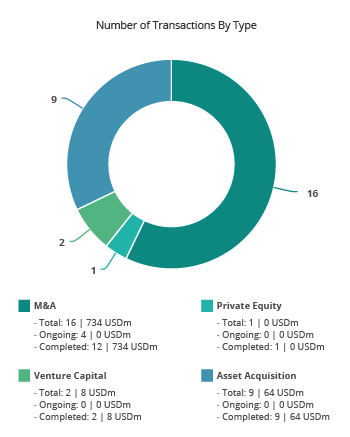
El mercado de M&A en Perú ha contabilizado en los tres primeros meses del año un total de 28 operaciones, de las cuales 11 suman un importe no confidencial de USD 806m, de acuerdo con el informe trimestral de Transactional Track Record. Estos datos reflejan un descenso del 33,33% en el número de operaciones y una baja del 72,93% en el importe de las mismas, con respecto al primer trimestre de 2018.  

De las operaciones contabilizadas de enero a marzo, el 17,86% pertenece a operaciones entre USD 1m y USD 10m; el 14,29% pertenece a operaciones entre USD 10m a USD 50m; y el 7,14% pertenece a operaciones entre USD 100m y USD 500m. 

En términos sectoriales, el subsector de Agricultura, Agronegocio, Ganadería y Pesca es el que más transacciones han contabilizado a lo largo de 2019, con un total de 7 operaciones.  

Ámbito Cross-Border  

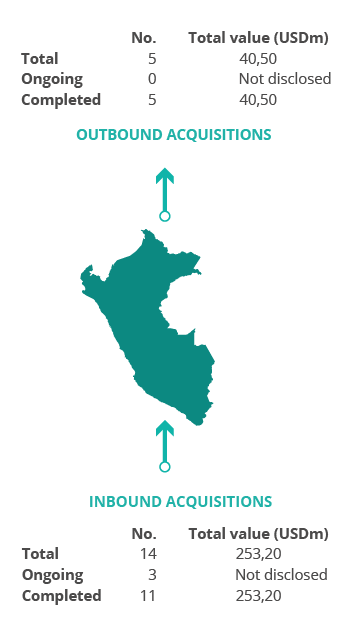
Por lo que respecta al mercado Cross-Border, en el primer trimestre del año las empresas peruanas han apostado principalmente por invertir en Colombia, con 2 transacciones.  

Por otro lado, Colombia (con 5 operaciones), Reino Unido, Estados Unidos, México y Chile (con 2 operaciones en cada uno), son los países que más han apostado por realizar adquisiciones en Perú. Por importe destaca Hong Kong, con USD 225m. 

Venture Capital  

En el primer trimestre de 2019, Perú ha registrado 2 operaciones de Venture Capital, con un importe conjunto de USD 8m, lo que representa un descenso del 50% en el número de operaciones, así como un aumento del 676,70% en el capital movilizado con respecto al primer trimestre de 2018.  

Transacción Destacada 

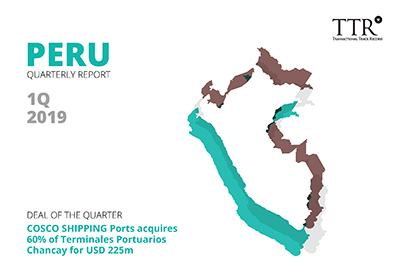
Para el primer trimestre de 2019, Transactional Track Record ha seleccionado como operación destacada la realizada por Cosco Shipping Ports, la cual ha adquirido el 60% de Terminales Portuarios Chancay por USD 225m.

La operación ha estado asesorada por la parte legal por Philippi, Prietocarrizosa, Ferrero DU & Uría Perú, Uría Menéndez España, Slaughter and May Hong Kong, Simpson Thacher & Bartlett US, García Sayán Abogados, y por las firmas inhouse de Volcán Compañía Minera y COSCO SHIPPING Ports. Por la parte financiera, la operación ha sido asesorada por Lazard. 

Ranking de asesores financieros y jurídicos 

El informe publica los rankings de asesoramiento financiero y jurídico del mercado M&A peruano durante el primer trimestre de 2019, donde se informa de la actividad de las firmas destacadas por número de transacciones y por importe de las mismas. 

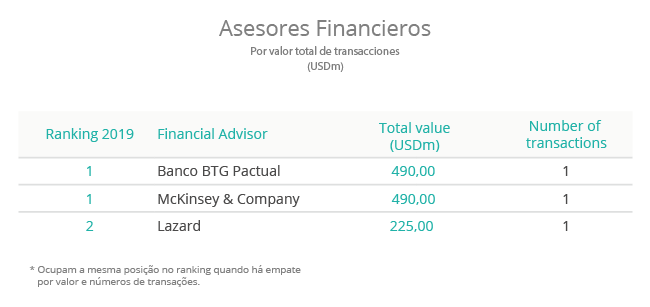
En el ranking TTR de asesores financieros, por importe, lideran en el primer trimestre de 2019 Banco BTG Pactual con USD 490m, y por número de operaciones, lidera Summa Asesores Financieros, con 3 operaciones.  

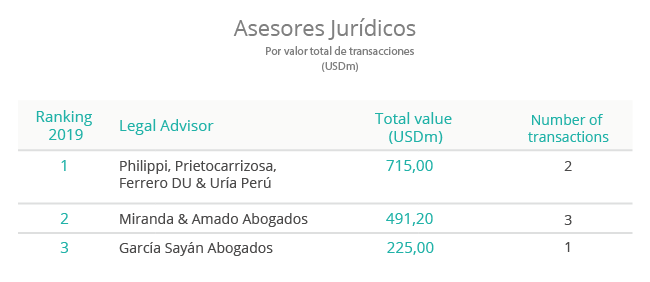
En el ranking peruano de asesores jurídicos en el segmento de Fusiones y Adquisiciones,  Estudio Muñiz, ha ocupado el primer lugar por número de transacciones, con 7 transacciones. Y por importe, ha liderado Philippi, Prietocarrizosa, Ferrero DU & Uría Perú, con USD 715m. 

Informe Trimestral Perú – 4T 2018

Capital movilizado en el mercado M&A de Perú 
aumenta un 85% en 2018

A lo largo del año se han registrado 155 operaciones y un importe de USD 9.133m 

En el trimestre se han registrado 35 operaciones con un importe de USD 2.164m 

El sector Financiero y de Seguros lidera el mercado transaccional en 2018

 El mercado de M&A en Perú ha registrado en 2018 un total de 155 operaciones, de las cuales 78 tienen un importe no confidencial que suman aproximadamente USD 9.133m, según el más reciente informe de Transactional Track Record. Estas cifras suponen un aumento del 1,97% en el número de operaciones y un alza del 85% en el importe de las mismas, con respecto a las cifras de 2017. 

Por su parte, en el cuarto trimestre del año se han producido un total de 35 transacciones, de las cuales 15 registran un importe conjunto de USD 2.164m, lo que implica un descenso del 14,63% en el número de operaciones y una baja del 22,27% en el importe de las mismas, con respecto al cuarto trimestre del año anterior. 

De las operaciones contabilizadas de enero a diciembre, 58 son de mercado bajo (importes inferiores a USD 100m) y 14 de mercado medio (entre USD 100m y USD 500m), y 6 de mercado alto (superior a USD 500m).  

En términos sectoriales, el subsector Financiero y de Seguros es el que más transacciones ha contabilizado a lo largo de 2018, con un total de 17 operaciones cada uno, seguidos por el Minero, con 14 operaciones. 

Ámbito Cross-Border  

Por lo que respecta al mercado Cross-Border, en el año las empresas peruanas han apostado principalmente por invertir en Colombia, con 6 operaciones, seguido de Bolivia y Chile, con 3 transacciones en cada sector. 

Por otro lado, Estados Unidos y Chile, con 13 operaciones en cada país, son las regiones que más han apostado por realizar adquisiciones en Perú. Por importe destaca Estados Unidos, con USD 2.368,75m. 

Private Equity y Venture Capital  

En el transcurso de 2018, Perú ha registrado 10 operaciones de Private Equity, de las cuales 3 registran un importe conjunto de USD 1.090,77m, lo que representa un aumento del 100% en el número de operaciones, así como un aumento del 859% en el capital movilizado con respecto a diciembre de 2017.  

En cuanto al segmento de Venture Capital, Perú ha registrado 11 operaciones en 2018, de las cuales 6 contabilizan un importe conjunto de USD 17,13m, lo que representa un aumento del 83% en el número de operaciones y un aumento del 774% en el importe de las mismas con respecto al año anterior.  

Transacción Destacada 

TTR ha seleccionado como transacción destacada del trimestre la compra por Sigma SAFI del 51% restante del Parque Eólico Marcona y del Parque Eólico Tres Hermanas a Grupo Cobra, por un importe de USD 56m. Parque Eólico Marcona y Parque Eólico Tres Hermanas son dos SPV que han sido creadas para la construcción de dos parques eólicos homónimos en Perú. Grupo Cobra ha sido es el sponsor en este proceso.

Ranking de asesores financieros y jurídicos 

El informe publica los rankings de asesoramiento financiero y jurídico del mercado M&A peruano a lo largo de 2018, donde se informa de la actividad de las firmas destacadas por número de transacciones y por importe de las mismas. 

En el ranking peruano de asesores jurídicos en el segmento de Fusiones y Adquisiciones,  Estudio Muñiz ha ocupado el primer lugar por número de transacciones y por importe de las mismas, con 24 operaciones y con un capital movilizado de USD 3.168,32m, respectivamente.