DealMaker Q&A

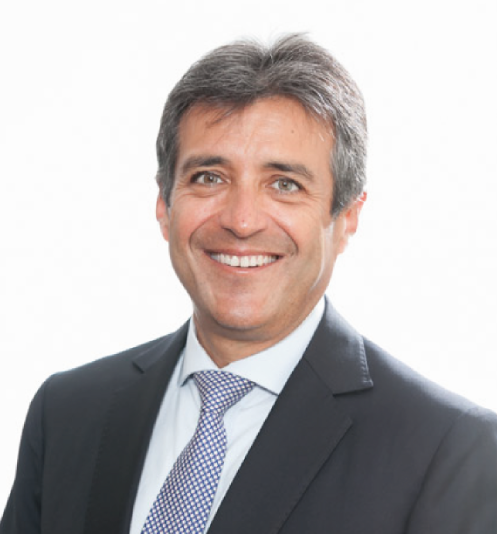
TTR DealMaker Q&A with Dentons Cardenas & Cardenas Partner Mauricio Borrero

Mauricio BorreroDentos Cardenas & Cardenas: Co-head of M&A and Corporate groups, and is the head of the Latin American and Caribbean region Corporate practice group.

—————————————–

The M&A activity in 2020 is severely affected by the COVID-19 health crisis. How would you describe the situation of the M&A players in Colombia and LatAm at this time?

After coming nearly to a halt as a result of the Coronavirus, the M&A market is starting to recuperate. In general terms, traditional M&A players such as strategic buyers and private equity funds, are currently focusing on protecting the value of their own companies and assets rather than entering into new transactions. Nonetheless, those strategic buyers and funds that have available cash, are now starting to actively look for potential targets to acquire. This stems from the fact that the crisis has created a buyer’s market for M&A, with bargain prices and multiple investment opportunities. This is particularly evident for strong LatAm companies investing in other countries of the region, as well as acquisitions of companies with a strong reputation and global presence. With an increase in the negative financial effects of the crisis in local companies, especially in the leisure, transport, hospitality, and real estate sectors, it is likely that we will have a surge in distressed M&A transactions during the second semester of 2020 and Q1 and Q2 of 2021.

Which sectors would you say are more affected by this situation? Which ones do you think are most likely to recover more quickly?

Although this crisis has affected the entire economy, the most affected sectors are leisure, transportation, hospitality, and real estate. The oil and gas sector has also been affected by both COVID-19 and a reduction of the international prices of crude oil. We consider that the sectors that are more likely to recover quickly will be pharmaceutical, manufacturing, and technology.

What regulatory measures do you think could be deployed to unblock the current situation?

The most critical point is to re-open the economy, with a controlled opening of air travel. The Colombian government needs to increase the available funds for the different financial stimulus packages (i.e. Colombia Responde, Colombia Responde para Todos, etc.), to provide liquidity to local companies. The payment ecosystem needs to be enhanced by enabling new players and different options for the circulation of money and payment mechanisms different than traditional means such as cash. This will also serve to give access to credit and some level of formalization to more individuals and businesses. Defining what economic sectors are key in the “new dynamic” and promote them with subsidized funding and/or tax incentives.

What is the situation of the M&A market in Colombia compared to other nearby countries? Is this stagnation being lived in the same way in other countries in LatAm?

The current situation of the Colombian M&A Market is fairly similar to our peers in LatAm. We have been monitoring the situation with our M&A partners of the region and we have seen that they have all experienced a slowdown in the number and size of M&A deals. We have also evidenced that through the LatAm region there is an increased interest from strategic buyers and private equity sponsors to acquire companies and/or assets at a bargain price. Currently, Dentons Latin America and the Caribbean is participating in several intra-region transactions and international M&A deals involving more than three countries of the region.

What should we expect in the following months? Do you believe it is still possible to get back to normal in 2020?

We consider that the M&A market in Colombia will continue to grow during the following months, but it will not reach the number and size of deals of the previous years. These transactions will be more difficult and the entire process may take longer. All participants of the M&A market will face difficult times ahead when determining the fair market value of the asset/company being acquired, and securing financing at reasonable rates. Moreover, the social distancing rules will affect the negotiation process, as “all hands on deck” negotiations will be difficult to achieve. The time for performing a due diligence process will also be affected, as the collection of documents will become more difficult for the target company, given the limitations for their personnel to be physically present at their offices. We also consider that governmental approvals when required will take longer to be issued. An increase in distressed M&A deals is evident, and will probably be one of the drivers of the M&A market during the following 18 to 24 months. I believe we will only get back to normal during 2023.

———————————————

Versión en español

La actividad transaccional en 2020 está sin duda muy marcada por la crisis sanitaria del COVID-19, ¿cómo describiría la situación de los players del mercado transaccional en Colombia y de la región en estos momentos?

Después de casi detenerse como resultado del Coronavirus, el mercado de fusiones y adquisiciones está comenzando a recuperarse. En términos generales, los actores tradicionales de fusiones y adquisiciones, tales como compradores estratégicos y fondos de capital privado, se están centrando actualmente en proteger el valor de sus propias compañías y activos, en lugar de llevar a cabo nuevas transacciones. Sin embargo, los compradores estratégicos y fondos que tienen efectivo disponible, ahora están comenzando a buscar activamente posibles objetivos para adquirir. Esto se debe al hecho que la crisis ha creado un mercado de compradores para fusiones y adquisiciones, con precios reducidos y múltiples oportunidades de inversión. Esto es particularmente evidente para las compañías latinoamericanas que invierten en otros países de la región, así como para las adquisiciones de compañías con una sólida reputación y presencia global. Con un aumento en los efectos negativos financieros de la crisis en las empresas locales, especialmente en los sectores de entretenimiento, transporte, hotelería e inmobiliario, es probable que tengamos un aumento en las transacciones de “distressed M&A” durante el segundo semestre de 2020 y los dos primeros trimestres de 2021.

¿Qué sectores diría usted que se han visto más afectados por esta situación? ¿Cuáles experimentarán una recuperación más rápida?

Aunque esta crisis ha afectado a toda la economía, los sectores más afectados son el de entretenimiento, transporte, hotelero e inmobiliario. El sector del petróleo y el gas también se ha visto afectado tanto por COVID-19 como por la reducción de los precios internacionales del petróleo crudo.

¿Qué medidas cree que podrían tomarse a nivel regulatorio para desatascar esta paralización?

El punto más crítico es reabrir la economía, con una apertura controlada de los viajes aéreos. El gobierno colombiano necesita aumentar los fondos disponibles para los diferentes paquetes de estímulo financiero (es decir, Colombia Responde, Colombia Responde para Todos, etc.), para proporcionar liquidez a las empresas locales. El ecosistema de pagos debe mejorarse permitiendo nuevos jugadores y diferentes opciones para la circulación de dinero y mecanismos de pago diferentes a los medios tradicionales como el efectivo. Esto también servirá para dar acceso al crédito y cierto nivel de formalización a más individuos y empresas. Definir qué sectores económicos son clave en la “nueva dinámica” y promoverlos con financiamiento subsidiado y/o incentivos tributarios.

¿En qué situación se encuentra Colombia respecto a la actividad transaccional de otros países de su entorno? ¿Esta paralización que vivimos se traslada de igual manera a otros países de América Latina?

La situación actual del mercado colombiano de fusiones y adquisiciones es bastante similar a la de nuestros pares en LatAm. Hemos estado monitoreando la situación con nuestros socios de M&A de la región y hemos visto que todos han experimentado una desaceleración en el número y tamaño de las transacciones de M&A. También hemos evidenciado que en la región de LatAm hay un mayor interés de compradores estratégicos y sponsors de capital privado para adquirir empresas y/o activos a un precio reducido. Actualmente, Dentons Latinoamérica y el Caribe está participando en varias transacciones intrarregionales y acuerdos internacionales de fusiones y adquisiciones que involucran a más de tres países de la región.

¿Qué cabe esperar que suceda en los próximos meses? ¿cree usted que se podrá recuperar la normalidad en 2020?

Consideramos que el mercado de fusiones y adquisiciones en Colombia continuará creciendo durante los próximos meses, pero no alcanzará la cantidad y el tamaño de las transacciones de los años anteriores. Estas transacciones serán más difíciles y puede que todo el proceso dure más tiempo. Todos los participantes en el mercado de fusiones y adquisiciones enfrentarán tiempos difíciles al determinar el valor justo de mercado del activo/empresa que se adquiere y asegurar el financiamiento a tasas razonables. Además, las reglas de distanciamiento social afectarán el proceso de negociación, ya que las negociaciones de “todas las partes sentadas en la misma mesa” serán difíciles de lograr. El tiempo para realizar un proceso de debida diligencia también se verá afectado, ya que la recopilación de documentos será más difícil para el target, dadas las limitaciones para que su personal esté físicamente presente en sus oficinas. También consideramos que las aprobaciones gubernamentales demorarán más en emitirse cuando sean necesarias. Se evidencia un aumento en las transacciones de “distressed M&A”, y probablemente este será uno de los motores del mercado de M&A durante los próximos 18 a 24 meses. Creo que sólo volveremos a la normalidad durante 2023.

DealMaker Q&A

TTR DealMaker Q&A with IMAP Albia Capital Partner Alejandro Azcona

Alejandro Azcona IMAP Albia Capital: Graduate in Economic and Business Sciences, specialising in finance, CIA from the IIA, Florida. He started his career at ARTHUR ANDERSEN and then he joined the IBERDROLA GROUP. In 2004, as a result of his enterpreneurial spirit, he founded IMAP – Albia Capital and since then, he has executed more than 25 sell-side, buy-side or capital raising projects and has participated in 30 Valuation, Restructuring, Refinancing and Feasibility Plans, especially in energy and renewable energy, manufacturing, automotive, food and wine, services and Private Equity.


TTR – How would you describe the current situation of the Spanish M&A market? Have we already overcome the uncertainty caused by the COVID-19 health crisis?

A. A. – The M&A market is currently going through a period of adjustment to the new situation that has arisen as a consequence of the health emergency that we have all had to live through. 

Certain sectors that have emerged stronger out of this crisis, or that have been less affected by it, such as technology, healthcare, or food, remain active in M&A terms, their market and profitability have grown, and their corporate dynamics are in some cases even better than before. 

In other sectors, the ongoing uncertainty that still remains regarding the size of the residual market that businesses will have left makes standard M&A transactions difficult, although we believe that this will be an incentive for business-consolidation transactions in the medium term. 

TTR – Is there investor appetite in the market at the moment? Would you say market opportunities have arisen from the standstill caused by COVID-19?

A. A. – Yes, there is an appetite for investment and there is liquidity in the market, although positions have changed compared to just before the crisis. 

The risk inherent to the current situation has significantly increased, and this means that the judgments made by buyers are more conservative, but likewise sellers are also more sensitive to the risk-exposure of their businesses, both because of what we have been through and because of the uncertainty in the short to medium term. 

This context gives rise to interesting investment opportunities, and as we were saying earlier, there is a clear opportunity to boost sectoral consolidations that improve the competitiveness of the business fabric while at the same time generating attractive and profitable projects. 

TTR – Is it a good moment in terms of access to financing? 

A. A. – The promotion by various government bodies of a range of different instruments to ensure that businesses can retain liquidity, with guarantees of different kinds for lending institutions, has given rise to a period when it has been relatively simple to secure long-term financing under favourable conditions. 

The lesson we learned during the 2008 – 2012 period has meant that the majority of businesses are building up liquidity that will allow them to face the short-term with greater security. 

The situation may change in the coming months, when the government-backed instruments start to taper away and the balance sheets and trading accounts of the financial institutions start to feel the impact of the crisis. When this happens, it is quite likely that credit will dry up significantly, and as such this is clearly the time to access borrowing. 

TTR – Which regulatory measures do you think would help the Spanish M&A market recover more quickly?

A. A. – In order for the M&A market to recover more quickly, the most important thing is for businesses to recover quickly, for the outlook to be good, and for them to have investment capacity and the ambition to grow and develop. Therefore, all regulatory aspects that support the flexibility of business costs in order to adapt to the new market and support the recovery and the improvement of business prospects will make a significant contribution to boosting M&A. 

TTR – How do you expect the M&A market to behave in 2H20 and in 2021?

A. A. – For the remainder of 2020 we are expecting – and are indeed already seeing – an active market in technology-related transactions, both in development projects and in the acquisition of technology by large corporations and in markets that have been winners in the situation we have endured. We are also expecting a volume of opportunistic transactions borne out of the uncertainty, as well as consolidation processes by competitors within the same sector. For 2021 we are expecting an overall economic recovery, which for those companies that have adapted well to the new situation will improve their prospects and their profitability, and will lead to a progressive normalization of the market and of M&A transaction

DealMaker Q&A

TTR DealMaker Q&A with Rivero & Gustafson Abogados Partner John R. Gustafson

John R. Gustafson Rivero & Gustafson Abogados: Corporate and Commercial Law, Litigation, Arbitration and New Technologies.

Graduated at the San Pablo C.E.U./Universidad Complutense (Madrid, 1988), John initiated his professional career at the Public Defender’s Office of Albany, New York, and later joined Baker & McKenzie (1991).


TTR – The M&A activity in 2020 is severely affected by the COVID-19 health crisis. How would you describe the situation of the M&A players in Spain at this time?

J. R. G. – Undoubtedly , the current backdrop is not the most conducive to the development and conclusion of operations in the transaction sector. Alongside the adverse consequences of the actual crisis and the uncertainty of its evolution in the short and medium-term, we must also add the purely logistical issues inherent in lockdown itself. With few exceptions, praise must be given for the difficulty that closing transactions entails in this context, the outlook suggests that most transactions are undergoing a sort of hibernation period and waiting for the “storm to pass”.

TTR – Which sectors would you say are more affected by this situation? Which ones do you think are most likely to recover more quickly?

J. R. G. – The most part of all sectors are feeling the effects to a greater or lesser extent. The service sector has a major bearing on the Spanish economy and is being one of the most severely punished, notably in the spheres of transport, hostelry, tourism, leisure and entertainment in which it has been necessary to cease trading under the current circumstances. These are the very sectors that should experience a swifter recovery due partly to having fallen so sharply. Likewise, the healthcare, pharmaceutical, medical and geriatric treatments spheres will awaken the interests of investors to tackle further outbreaks and remedy weaknesses identified during the lowest points of the epidemic.

TTR – What regulatory measures do you think could be deployed to unblock the current situation?

J. R. G. – All aspects that involve boosting the economic flow of investment and endowing flexibility to the markets will lead to benefits in terms of recovery. Admittedly, now is not the time to raise taxes and legislate towards more rigidity in the employment market, moreover the opposite is true. Backing must be given to investment, research and development, along with reforms.

TTR – What is the situation of the M&A market in Spain compared to other nearby countries? Is this stagnation being lived in the same way in other countries?

J. R. G. – Our insight is that activity in Europe and North America is on a very similar footing. The million-dollar question is whether once the progressive de- escalation comes into being, will we be able to advance at the same pace as those best prepared for the future?

TTR – What should we expect in the following months? Do you believe it is still possible to get back to normal in 2020?

J. R. G. – A situation of major downturn in activity is often followed by another of intense activity. I believe that in this case the recovery of activities will take place more progressively. There will be operators who seek out opportunities that will be undoubtedly the result of this crisis, yet the general economic environment will remain troublesome. Everything makes us think that we will have to coexist with this scenario for a while and adapt to the circumstances. It is somewhat difficult to contemplate presently the return to what we have understood as being normal until mid-March, yet that is the direction in which we must move.


Versión en español


John R. GustafsonRivero & Gustafson Abogados: Derecho Mercantil, Procesal, Arbitraje y Nuevas Tecnologías.

Licenciado en Derecho por la Universidad San Pablo C.E.U./Universidad Complutense de Madrid (1988) y Doctorando en Derecho Mercantil por la Universidad Autónoma de Madrid, comenzó su andadura profesional en la Oficina del Defensor Público de Albany, Nueva York y después se incorporó a Baker & McKenzie (1991). Ha sido profesor de Contratación Internacional del Instituto de Empresa en el programa Master of International Practice.


TTR – La actividad transaccional en 2020 está sin duda muy marcada por la crisis sanitaria del COVID-19, ¿cómo describiría la situación de los players del mercado transaccional en España estos momentos?

J. R. G. -Ciertamente el entorno no es el mas propicio para el desarrollo y conclusión de operaciones en el sector transaccional. A las consecuencias adversas de la propia crisis e incertidumbre de su evolución a corto medio plazo hay que añadir las puramente logísticas propias del confinamiento. Salvo contadas excepciones, que hay que alabar por la dificultad que entraña cerrar transacciones en este contexto, la percepción es de una suerte de hibernación en la mayoría de los operadores que aguardan a que “pase el temporal”.

TTR – ¿Qué sectores diría usted que se han visto más afectados por esta situación? ¿Cuáles experimentarán una recuperación más rápida?

J. R. G. -La gran mayoría de los sectores se están viendo afectados en mayor o menor medida. El sector servicios con gran peso en la economía española, es uno de los más castigados con especial incidencia en transporte, hostelería, turismo, ocio y entretenimiento que se han visto forzados a dejar de operar en las circunstancias actuales. Estos mismos sectores deberían ser los que experimentaran una recuperación más rápida porque parte de un umbral de caída también muy pronunciada. Del mismo modo el sector salud, farmacéutico, atención sanitaria y geriátrica despertará el interés de inversores en previsión de rebrotes y subsanar debilidades identificadas durante lo peor de la pandemia.

TTR – ¿Qué medidas cree que podrían tomarse a nivel regulatorio para desatascar esta paralización?

J. R. G. -Todo lo que implique incentivar el flujo económico de la inversión y dotar de flexibilidad a los mercados redundará en beneficio de la recuperación. Desde luego no es éste el momento de subir impuestos y legislar hacia la rigidez del mercado de trabajo, sino todo lo contrario. Hay que apostar por la inversión, la innovación, la investigación y el desarrollo. Reformas.

TTR – ¿En qué situación se encuentra España respecto a la actividad transaccional de otros países de su entorno? ¿Esta paralización que vivimos se traslada de igual manera a otros países?

J. R. G. -Nuestra percepción es que la actividad en Europa y Norteamérica está en rangos muy similares. La pregunta del millón es si una vez iniciada la progresiva desescalada seremos capaces de avanzar a la misma velocidad que los más preparados.

TTR – ¿Qué cabe esperar que suceda en los próximos meses? ¿cree usted que se podrá recuperar la normalidad en 2020?

A una situación de fuerte caída en la actividad suele seguir una de actividad intensa. Creo que en este caso la recuperación de la actividad tendrá lugar más progresivamente. Habrá operadores buscando oportunidades que sin duda dejará tras de sí esta crisis, pero el entorno económico general seguirá siendo complicado. Todo hace pensar que tendremos que convivir con este entorno durante un tiempo y adaptarnos a las circunstancias. Es difícil contemplar, a día de hoy, un retorno a lo que hemos entendido como normalidad hasta mediados del pasado mes de marzo, pero en esa dirección debemos ir.

DealMaker Q&A

TTR DealMaker Q&A with Auriga Global Investors Head of Derivatives and Alternative Investments Diego García de la Peña

Diego García de la Peña is Head of Derivatives and Alternative Investments, as well as Head of Hedging Consulting for Private Equity funds, infrastructures, real estate, family offices, and companies in Auriga Global Investor. In both activities, the aim is providing solutions for companies’ capital structures and helping them, as well as supporting sponsors to develop their business plans.

_____________________________________________

TTR: 2018 was a record year regarding Private Equity investment, how has it been in 2019? What can we expect for 2020? 

D.G. P.: In 2019 all historical records were broken again in Spain with a volume of investment close to 8.5 billion euros compared to 6 billion euros in the previous year (+41% year-on-year increase), according to Ascri’s data. Furthermore, the number of megadeals (transactions over 100MM EUR) has increased from 8 transactions in 2018 to 18 in 2019. In our case, the activity has been very positive, since we have advised some of the most relevant players in the sector, such as the private equity fund MCH in the management of the interest rate riskof Grupo Palacios’ financing, or the management company ICG in the management of the interest rate hedging of Konecta’s financing. 

Unfortunately, 2020 has started as a year of total uncertainty due to the situation in which we find ourselves in a global health and economic alert. Initially it was starting as a good year of investment, perhaps with volumes not as high as previous years but with a good deal flow but now we will have to see the evolution of the crisis and above all its geographical range and temporal evolution. 

TTR: In recent months you have advised relevant players like Plenium Partners or MCH Private Equity, could you give us any comments about the most relevant transactions? 

D.G. P.: Plenium Partners has executed several transactions in recent months, being one of the most active market participants in the renewable energy sector. On the one hand, Rewind Energy V, a company controlled by Helia Renovables, acquired Sun European Investments Eólico Olivillo, a company that owns two 53.5 MW wind farms in Jerez de la Frontera, as well as three photovoltaic plants. Auriga advised on interest rate hedging in the refinancing. In addition, Tescobor Spain, controlled by Helia Renovables, acquired San Clemente Solar Project, owner of two solar farms in Spain, which have an aggregate capacity of 10 MW. In this transaction, Auriga advised on the interest rate hedging for the refinancing of the park. 

We can also highlight the purchase by Global Tholos, controlled by MCH Private Equity, Ardian, and LGT European Capital, of 100% of Palacios Alimentación in the American company Carlyle. Auriga advised MCH on the interest rate hedging associated with the financing of the Palacios Alimentación acquisition. 

TTR: What sectors do you consider as more active in M&A and Private Equity in recent months and currently? 

D.G. P.: One of the sectors that is experiencing a lot of activity is the renewable energy sector. On the one hand, in the parks already in operation fuelled by the new decree approved by the government guaranteeing profitability until 2031, which gives regulatory and economic stability to investors, as we have experienced on T-Solar’s portfolio refinancing of 23 PV plants deal last December. On the other hand, in the development and construction of new parks, a segment in which we are seeing many operations. 

Another sector that we believe will be very active is the agri-food sector. The entry of Private Equity funds allows the consolidation of this sector which is controlled by small family businesses generally, benefiting from economies of scale. In addition, they can provide professionalization in management, organic growth or boost internationalization. 

Finally, we believe that the Healthcare sector will continue to be very attractive for Private Equity, in areas such as pharmaceuticals, medical technology, hospitals and elderly care. As mentioned in the agribusiness sector, consolidation is one of the value levers, as is the demographic factor due to the ageing population or the improved efficiency of health services. 

TTR: Alternative financing has definitely gained traction in Spain, what can we expect in following years? 

D.G. P.: Alternative financing is seen as something normal in Spain already, both by the business sector and by the banking sector and this normalization is a very important tombstone. Companies no longer see debt funds as exclusively opportunistic source of finance and banks incorporate them as co-financiers in a wide range of operations. 

In the next few years, we expect an increase in sponsorless transactions, as up to now most alternative debt operations have been sponsor-driven. With the increase of alternative financing funds present in Spain, as well as with the reduction of company size and minimum financing amounts as requisites to carry out operations, we believe that there will be a shift towards non-sponsor driven operations. 

We also believe that there will be a greater segmentation of alternative financing operations between pure growth senior bullet financing in high-performance companies, hybrid debt for companies that need a mixed debt-equity solution or special situation financing. 

We will have to be alert to the evolution of the crisis and the liquidity situation with which companies come out of it in order to support them in specific stress situations. 

TTR: Regarding Hedging strategies for Private Equity financing and portfolio companies, what trends can you highlight? 

D.G. P.: Currently, we think it is interesting to hedge with caps instead of traditional hedging with swaps, although the volatility of the former has increased significantly due to the crisis, which has resulted in an increase in premiums. Likewise, it is still interesting, in the case of hedging with swaps, to utilize forward starting swaps in order to avoid low interest rates when the outstanding capital is higher. 

As for currency hedges, we are seeing greater and longer-term planning by the acquiring funds in conjunction with the financial teams of the portfolio companies, like we have experienced with Riverside in the hedging of La Galvanina deal. 

TTR: We are in the midst of one of the major crises and pandemics in history due to COVID-19, right at a very good moment for Private Equity and M&A. In the mid-term, how it´s going to affect the market? 

D.G. P.: We at Auriga believe that it is tremendously important to see the extension in time of the crisis at a global level. If it were a one-off problem, being it totally dramatic, but one that can be overcome in 2-3 months, we believe that the impact will be limited and recovery will be quick, although we also think that it is difficult to reach previous levels. On the other hand, if, as it seems, it is going to be a problem that extends over time because it is affecting different parts of the planet in different phases and consecutively, we believe that the consequences are unpredictable and more far-reaching. 

In the medium term, we believe that it will be important for companies and financiers to have flexibility to find imaginative solutions to the liquidity and financial structure problems that will arise, in order to offer stability to the productive system. 

We also believe that it will be a market that will provide interesting opportunities for those participants who have funds available but, on the other hand, it will be an environment in which fund-raising might prove difficult because investors may have a lower valuation of their assets due to the fall in positions in organised markets and, therefore, less money available in absolute value for allocation to alternative investment.

DealMaker Q&A

TTR DealMaker Q&A with Ecija Partners Javier Bustillo, Leticia Domínguez, Emilio Prieto and Yolanda Lobao

Ecija Partners:
Javier Bustillo: Corporate / M&A and Venture Capital Partner.
Leticia Domínguez: Corporate / M&A, Innovation & Entrepreneurship, Media Partner.
Emilio Prieto: M&A / Private Equity Parter.
Yolanda Lobao: Private Client, Litigation, Real Estate, Corporate
Partner.

_____________________________________________

TTR: Based on the closing of 2019 and taking into consideration the beginning of 2020, what are your expectations for the Spanish M&A market this year?

E: 2019 was a positive year for the Spanish M&A market and we are optimistic for 2020, since all indicators predict a year with a lot of investment activity. Despite of the possible economic slowdown, the available liquidation and the permanent arrival of foreign investment, along with positive growth expectations and profitability of Spanish companies, allow us to anticipate a very positive outlook in the Spanish M&A market. 

In addition, the leading role that private equity funds have acquired in the closing of corporate transactions is remarkable. We continue to see interest in acquiring stakes in technology and disruptive companies; as well as an appetite for quality assets in the market. All these factors lead us to expect a transactional activity improvement.

For us, 2020 begins with dynamism, as we are leading transactions in booming sectors such as technology and media, with a clear commitment from all investors who have good financing and perceive positive signals and cracking Spanish companies. 

TTR: Real Estate is a cornerstone of Spain’s M&A market. What can we expect in this sector in 2020?

E: It is foreseen that the increase of property sales will continue during 2020, although on a more stable basis than previous years. Factors such as diversifying investments in different countries and the existence in Spain of a Golden Visa program, will continue to contribute the growth of foreign investments. Golden Visa in Spain is a fast way to obtain an Authorization of Residency for an investment of a minimum of 500.000 € which allows to non-EU citizens and their families to live and work in Spain.  

Globalization and new ways to spend holidays abroad have certainly changed the real estate industry in Spain. People seek now, not only a pure relaxing time on the beach, but to carry out interesting activities involving healthy food, physical exercise, sports leisure, and psychological -stress free- break. In order to carry out these activities inside a property, certain licenses could be required, and activity use would have to be allowed.

The major challenge for cities is the appearance of the global co-living phenomenon which is forcing authorities to regulate the use of rentals of a long-term sharing flats (without being considered hotels, pensions or bed & breakfasts), the urge of regulation is a fact.

In addition, we will see in the next years if implementation of blockchain and smart contracts will change and facilitate real estate and rental property transactions. 

TTR: What are your views for the Spanish Private Equity market in 2020? Which sectors do you expect investors will target more?

E: We expect a good year in terms of private equity due to the large number of funds available and low interest rates. These circumstances are allowing us to face a cycle with a great appetite for purchasing. Furthermore, we must highlight Spain’s advantageous position as a result of having first-class companies at more affordable purchase prices than in other European Union countries. 

We observe that opportunities in private equity and mid-size markets arise, both in the more traditional sectors and in those in which the technological disruption has had, and is expected to have, an important impact by taking advantage of big data, artificial intelligence and machine learning. Investors clearly are interested in these areas, which are so intensely linked to innovation and digital transformation. Indeed, innovation is nothing more than the transformation of their business. Investors know that consumer markets are highly competitive and both potential buyers as well as investors are eager to find targets that really make a difference.

Finally, and precisely in certain sectors in which it has grown with a high degree of leverage, we also see an activation of the turnaround market, which we are sure will become more present in the near future.

TTR: And what about Venture Capital? Can we expect a new increase in this segment? Will the technology sector be the most targeted again?

E: No doubt about it, the venture capital will continue increasing its size. This segment is in a process of accelerated maturation in Spain. Even though it is far from achieving the same scope as in countries like United Kigndom or Germany, we must recognize a very solid growth in recent years. 

Also, we are seeing how every day there are more investments in venture capital and the liquidity available at the moment is boosting diversification. This situation is turning out to be a major advantage for venture capital.  

Technology has become the central axis of almost all business’ models, so it will continue to be a crucial part in M&A processes, since the acquisition of technology has become the way to invest in innovation. Technology is one of the sectors that we know well at ECIJA and thus, we have seen large operations in recent years.

TTR: ECIJA just signed a global alliance with China-based Grandall Law Firm. Could this agreement boost Chinese investment in Spain? Do you expect an increase in the interaction between China-based and Spain-based companies?

E: Last October 2019, ECIJA signed one of the most ambitious international joint ventures in the legal sector with China’s fifth largest firm, Grandall Law. This agreement resulted in the merge of the China-Spain-Latin America triangle, bringing together more than 3,500 lawyers in 18 countries in a total of 54 offices.

Currently, despite the global decline in Chinese investments in 2019, China remains the third export country and the seventh import country with Spain and there are many Chinese projects that are being executed in Spain. The outlook for 2020 is positive, which will be driven by the easing of trade tensions between the US and China. This factor will facilitate Chinese investment abroad, including Spain. In addition, another factor that will help is the increase of Chinese investment appetite, taking into account that liquidity conditions in the Chinese economy have improved slightly throughout 2019. Also, favorable conditions will be boosted by the implementation of new rules for evaluating foreign investments in the US and Europe.

In this investment map, Spain has positioned itself in a beneficial spot, since our country is seen for China as connection vehicle for Chinese companies to establish themselves throughout Europe and Latin America. In this regard, while in 2019 Chinese investments decreased globally, they did increase in Latin America, especially in sectors such as energy and transport.

TTR: According to TTR data, the interaction between companies from Latin America, a region where ECIJA recently made investments to increase its presence, and from Spain is lower than the interaction between European companies and Spain-based companies, and lower too than the interaction between US-based companies and Spain-based companies. What are the reasons?

E: First of all, it is important to highlight that Spanish investment in Latin America has had multimillion dollar figures in recent years. It is the second most important in the world after the United States. Between 1993 and 2015, the gross investment accumulated by Spanish companies exceeded 207,000 million euros (the equivalent of 20% of national GDP). At the same time, Spain is the main European destination for Latin American investments.

Secondly, our customers’ commitment to the Latin American market is clear. For many Spanish companies it is their natural leap and it is also for companies in other countries (China, USA, UK, among others) that see in Spain the gateway to the American continent. Our role is to accompany them in the region landing in the most integrated way possible. From ECIJA, we are noticing Spanish clients who obtained more income in Latin America than in Europe. For this reason, the Firm wants to be present in these regions, in addition to the cultural and linguistic links between Spain and Latin America.

Therefore, the interaction between companies in Latin America and Spain remains active and the presence of Spanish companies in Latin America continues. Although it is worth emphasizing that Spanish companies might be cautious when investing in these regions due to the influence of the global economic environment. By contrast, the US economy performance is excellent, driven primarily by the effects of tax reform, exceeding nine years of the expansive economic cycle and unemployment rates to unknown levels since 1969.

_____________________________________________

Versión en español

_____________________________________________

Socios de Ecija:
Javier Bustillo: Socio Corporate / M&A y Venture Capital de ECIJA Madrid.
Leticia Domínguez: Socia Corporate / M&A, Innovación y Emprendimiento, Media.
Emilio Prieto: Socio M&A / Private Equity.
Yolanda Lobao: Socia Private Client, Inmobiliario, Procesal, Civil
.

_____________________________________________

TTR: Viendo el cierre del año 2019, y teniendo en cuenta el inicio de 2020, ¿Qué sensaciones tienen para este año sobre el mercado de M&A en España? 

E: 2019 fue un año positivo para el mercado español de M&A y somos optimistas para 2020, ya que todos los indicadores predicen un año con mucha actividad inversora. La liquidez disponible y la permanente llegada de inversión extrajera, unido a unas expectativas positivas de crecimiento y rentabilidad de las empresas españolas, permiten anticipar un panorama muy positivo en el mercado español de M&A, pese a la posible desaceleración económica. Además, cabe recalcar el protagonismo que han adquirido los fondos de private equity en el cierre de transacciones corporativas. Seguimos viendo interés por adquirir participaciones en compañías tecnológicas y disruptivas; así como un apetito por activos de calidad en el mercado. Todo esto nos lleva a esperar una mejora de la actividad transaccional. 

Para nosotros, 2020 comienza con dinamismo, ya que estamos liderando transacciones en sectores en auge como la tecnología y los medios de comunicación, con una apuesta clara por parte de todos los inversores que cuentan con buena financiación y perciben señales positivas de crecimiento y rentabilidad en las empresas españolas. 

TTR: En el mercado transaccional español el sector inmobiliario es sin duda un pilar fundamental, ¿qué cabe esperar de este sector en 2020? 

E: Prevemos una continuación del aumento de ventas de propiedades durante 2020, aunque de manera más estable que en años anteriores. Factores como la diversificación de las inversiones en diferentes países y la existencia en España de un programa “Golden Visa” continuarán contribuyendo al crecimiento de las inversiones extranjeras. En este sentido, la Golden Visa en España se ha convertido en un vehículo rápido para obtener una Autorización de Residencia, bajo una inversión mínima de 500.000 €. De este modo, permite vivir y trabajar en España a los ciudadanos de fuera de la UE, así como a sus familiares.

La globalización y las nuevas formas de pasar las vacaciones en el extranjero sin duda han cambiado la industria inmobiliaria en España. Los extranjeros no solo buscan un turismo puramente de playa, sino realizar actividades interesantes que involucren comida saludable, ejercicio físico, ocio deportivo y descanso psicológico sin estrés. Para llevar a cabo estas actividades dentro de una propiedad, se podrían requerir ciertas licencias.

Para 2020, el principal desafío para las ciudades es la aparición del fenómeno global de coliving, que está obligando a las autoridades a regular el uso de alquileres de pisos compartidos a largo plazo (sin ser considerados hoteles, pensiones o bed & breakfast). Además, veremos en los próximos años si la implementación de blockchain y los contratos inteligentes cambian y facilitan las transacciones de bienes raíces y propiedades de alquiler.

TTR: ¿Qué perspectivas tienen respecto a operaciones de Private Equity para este año? ¿Qué sectores se perfilan como importantes para los inversores? 

E: Esperamos un buen año en términos de private equity, debido al gran número de fondos disponibles y a los bajos tipos de interés, circunstancias que hacen que nos encontremos ante un ciclo con gran apetito de compra. A esto a hay que añadir la posición ventajosa de España como consecuencia de disponer de empresas de primer nivel a unos precios de compra más afrontables que en otros países de la Unión Europea.

Observamos que en los mercados de private equity y en el de mid-size se ofrecen oportunidades, tanto en los sectores más tradicionales como en aquellos otros en los que la disrupción tecnológica ha tenido, y es de esperar tenga, un impacto importante, aprovechándose de big data, inteligencia artificial y machine learning. Los inversores claramente apuntan a estos ámbitos, tan intensamente relacionados con la innovación y transformación digital, que no es más que la transformación de su negocio, pues saben que los mercados de consumo son altamente competitivos y tanto los potenciales compradores de naturaleza industrial como los inversores están deseosos de encontrar targets que realmente marquen la diferencia.

Por último, y precisamente en ciertos sectores en los que se ha crecido con alto grado de apalancamiento, vemos también una activación del mercado de turnaround, que estamos seguros se hará más presente en próximas fechas. 

TTR: ¿Y respecto a Venture Capital? ¿Veremos un nuevo repunte de este segmento de mercado? ¿Seguirá el sector tecnológico copando la mayor parte de las operaciones? 

E: Sin lugar a duda el venture capital seguirá incrementando su tamaño que se encuentra en un proceso de maduración acelerada en España y que, aunque lejos de países como Gran Bretaña o Alemania, debemos reconocer un crecimiento muy sólido en los últimos años. Cada día hay más inversiones en venture y la liquidez disponible en estos momentos invita a la diversificación, resultando en que el venture capital sea uno de los grandes beneficiados. 

La tecnología se ha convertido en el eje central de casi todos los modelos de negocio por lo que seguirá siendo una pieza capital en los procesos de M&A, ya que la adquisición de tecnología se ha convertido en la forma de invertir en innovación. La tecnología es uno de los sectores que conocemos bien en ECIJA y hemos observado grandes operaciones en los últimos años.

TTR: ECIJA acaba de firmar una alianza global con el despacho chino Grandall Law Firm. ¿Abre esto aún más la puerta de entrada al mercado transaccional español del inversor chino? ¿Desde ECIJA se espera un incremento de la interacción entre empresas chinas y empresa españolas? 

E: El pasado mes de octubre de 2019, ECIJA protagonizó una de las joint ventures internacionales más ambiciosas del sector legal con la quinta firma más grande de China, Grandall Law. Este acuerdo resultó en la unión del triángulo China-España-Latinoamérica, aglutinando a más de 3.500 abogados repartidos en 18 países en un total de 54 oficinas.

En la actualidad, a pesar del descenso global de las inversiones chinas en 2019, China sigue siendo el tercer país de exportación y el séptimo país de importación con España y hay muchos proyectos chinos que se están ejecutando en España. Las perspectivas para 2020 son favorables, impulsadas por el alivio de las tensiones comerciales entre EE.UU. y China, que facilitará la actividad inversora china en el extranjero, incluyendo a España. Además, otro factor que ayudará es el aumento del apetito inversor chino, dado que las condiciones de liquidez en la economía china han mejorado ligeramente a lo largo del 2019, o la implementación de nuevas reglas de evaluación de las inversiones extranjeras en EE.UU. y Europa.

En este mapa de inversión, España se sitúa en una posición beneficiosa, ya que nuestro país es para China un vehículo de conexión para que empresas chinas se establezcan en Europa y Latinoamérica. En este sentido, mientras que en 2019 las inversiones chinas disminuyeron a nivel global, en América Latina aumentaron, con especial interés en sectores como energía y transportes. 

TTR: Según los datos de TTR, la interacción entre empresas de Latinoamérica, región en la que ECIJA también ha realizado inversiones recientemente para ganar presencia, y de España es inferior a la interacción entre empresas europeas y empresas españolas, e incluso a la interacción entre empresas estadounidenses y empresas españolas. ¿Cuáles son los motivos? 

E: En primer lugar, es importante destacar que la inversión española en América Latina ha alcanzado cifras multimillonarias en los últimos años. Es la segunda más importante del mundo tras la de Estados Unidos. Entre 1993 y 2015 la inversión bruta acumulada por las empresas españolas superó los 207.000 millones de euros (el equivalente al 20% del PIB nacional). Al mismo tiempo, España es el principal destino europeo de las inversiones latinoamericanas. 

En segundo lugar, la apuesta de nuestros clientes por el mercado latinoamericano es clara. Para muchas empresas españolas es su salto natural y también lo es para empresas de otros territorios (China, EE.UU., Gran Bretaña, etc.) que ven en España la puerta de entrada al continente americano. Nuestro rol es acompañarles en ese desembarco en la región de la manera más integrada posible. Desde ECIJA, estamos observando clientes españoles que obtienen más ingresos en América Latina que en Europa. Por este motivo, la Firma quiere estar presente en estas regiones, además de aprovechar los vínculos culturales y lingüísticos entre España y América Latina.

Por tanto, la interacción entre empresas de Latinoamérica y de España sigue siendo activa y sigue aumentando la presencia de las empresas españolas en Iberoamérica. Si bien cabe hacer hincapié que las empresas españolas se muestran cautas a la hora de invertir por la influencia del entorno económico global en la región. En cambio, esto contrasta con el excelente desempeño de la economía norteamericana, impulsada principalmente por los efectos de la reforma fiscal, superando los nueve años de ciclo económico expansivo y llevando las tasas de desempleo hasta niveles desconocidos desde 1969.