Interview with Philip Whitchelo, VP for Strategic Business Development at Intralinks

Interview with Philip Whitchelo, Vice President for Strategic Business Development, Intralinks

Philip is responsible for business and corporate development at Intralinks, a provider of software and services to the global M&A, private equity and banking communities.


TTR – How would you describe the performance of the Spanish M&A market? Do you think the results of 2018 could beat those of 2017?

After a flat 2015 and a decline in 2016, the Spanish MA& market came roaring back in 2017: there were over 1,000 announced M&A deals for Spanish targets in 2017, a 14% increase over 2016. The conditions for M&A in 2018 are also supportive: improving global economic growth, low inflation, low interest rates, ready availability of debt finance, lots of corporate and private equity capital looking for acquisition opportunities. Our own Intralinks Deal Flow Predictor is forecasting worldwide M&A growth of up to 10% in 1H 2018, so it is entirely possible that 2018 could exceed 2017 for Spanish M&A announcements.


TTR – In which position, based on importance and size, would you place Spain’s M&A market among the European countries? Could you point some differences between Spain and the top ones?

In Europe, Spain is the fourth or fifth largest target M&A market by both volume (number) and value. This is the same as Spain’s ranking as the fifth largest European economy. Spain has a relatively open M&A market and has the highest proportion of industrials, real estate and energy & power M&A among the top 5 European countries: these three sectors have accounted for over 60% of Spanish target M&A by value since 2013.


TTR – In general terms, would you say Spanish companies are highly demanded by foreign companies?  Why?

Yes, I would say so. Spain has a relatively open M&A market with a high level of cross-border M&A activity: since 2013, over 74% of Spanish target M&A by value has involved a foreign acquirer, the second highest percentage (after the UK) among the top 5 European countries. The Spanish economy is faster growing than the Euro area as a whole, although it is also more volatile: among the top 5 European economies, it is the one with the most “emerging market” characteristics.


TTR – You were recently involved in a study regarding cancelled deals worldwide in the last 25 years. Roughly speaking, which are the main reasons for deal failures?

Our study, which we conducted in partnership with the University of London’s Cass Business School, examined over 78,000 announced M&A deals including over 1,800 involving Spanish acquirers and targets. We identified several significant predictors of deal failure and deal success. Acquirers could increase their chances of deal success by negotiating target break fees, avoiding very large, transformational deals in favour of smaller strategic acquisitions, paying for multiple advisers, offering cash-only consideration and avoiding hostile and unsolicited acquisitions in favour of agreed deals.


TTR – In the specific case of Spain, how high is the rate of abandoned acquisitions? Are there specific circumstances that account for that figure?

Since 2010, Spain has the second highest rate of abandoned acquisitions, at 3.8%, among the major European countries, with only the UK (3.9%) being higher.


As an M&A analyst, do you think Donald Trump’s protective measures could have a strong impact in the European M&A markets or are they large enough to not be affected?

In 2018, the risks to the scenario of a fifth consecutive year of increasing M&A activity are twofold: political and financial. Increases in economic nationalism, protectionism and restrictions on global trade and cross-border economic integration all have the potential to negatively affect dealmaking sentiment. With global equity markets recently at record highs, and nine years since the last major trough, a correction that turns into a more serious sell-off could also prove negative for dealmaking confidence.

We may be seeing the start of such a protectionist trend, with the latest example being the blocking by US President Trump of Broadcom’s acquisition of US semiconductor manufacturer Qualcomm. Other countries, such as Germany, Australia and the UK, are also becoming more resistant to perceived foreign takeovers (especially from China and Asia) in sensitive industries such as technology, robotics, semiconductors, energy and land.

Rising protectionism in M&A would disproportionately affect countries which have a high volume of outbound (cross-border) M&A activity. In Europe, the UK and Germany have the highest proportion of outbound, cross-border acquisitions. The danger is that once the US becomes more protectionist, other countries could feel obliged to follow suit and protect their companies from foreign takeover.


Entrevista com Guilherme Sampaio Monteiro, sócio do Pinheiro Neto Advogados, sobre o mercado de capitais brasileiro em 2018

Guilherme Sampaio Monteiro, sócio do Pinheiro Neto Advogados desde 2011, fala com o TTR sobre o cenário do mercado de capitais brasileiro em 2018.

Depois de três anos de estagnação, em 2017 o mercado de capitais brasileiro deu sinais positivos de retomada. Para 2018, pode-se esperar uma continuidade desse cenário? Como descreveria a performance do primeiro trimestre de 2018?

2018 promete ser um bom ano ao mercado de capitais. Entretanto, a volatilidade trazida pelas eleições e cenário externo complexo irão impactar a performance dos IPOs. Além disso, estamos vendo um menor número de follow ons, que foram parte importante do mercado de ações no ano passado.

Os valores alcançados com os IPO’s em 2017 ficaram aquém das expectativas, visto que apenas a oferta do Burger King saiu no topo da faixa indicativa? Para o ano, quais são as expectativas em termos de valorização de ativos e de novas aberturas de capital? A volatilidade do mercado e a instabilidade política preocupam?

Eu não diria. Se o IPO foi concretizado, significa que Companhia e Controladores, de certa forma, estavam satisfeitos com os valores obtidos. Entretanto, apesar de não ser nossa área de expertise, nos parece que os ranges dos IPOs deste ano já estão considerando o histórico do ano passado. Como disse acima, a instabilidade política preocupa.

O Pinheiro Neto atuou no IPO do PagSeguro, o primeiro a ser completado no mercado brasileiro em 2018, e que foi finalizado acima da faixa indicativa. Como descreveria essa operação em termos de importância para mercado nacional?

É uma operação muito importante para a economia brasileira, que evidenciou a possibilidade de empresas brasileiras de tecnologia acessarem o mercado americano, que está mais acostumado com esse tipo de companhia, num valuation adequado. Sem dúvida estimula outras companhias a seguirem o mesmo caminho. Por outro lado, o sucesso de uma operação não realizada no Brasil é algo que deve ser bem analisado internamente. Como país, temos que pensar em como internacionalizar nossos mercados e torná-los mais atraente a investidores do mundo todo.

De 2016 para 2017, houve um incremento também nos números de operações de “Follow-on” em termos de aporte. Quais foram os fatores que mais influenciaram essas movimentações e quais as expectativas para o decorrer de 2018?

Acredito que em 2016 e 2017 havia uma grande demanada reprimida de empresas nacionais que buscavam uma oferta de ações. Com a abertura de mercado, as empresas abertas jpa consolidadas e grandeporte foram um destino óbvio para os investidores. Para 2018, nos parece que as opção são um pouco menores, mas ainda esperamos alguns follow ons para o ano.

**************

Guilherme Sampaio Monteiro, partner at Pinheiro Neto Advogados since 2011, talks to TTR about the Brazilian capital market scenarios for 2018.

After three years of economic stagnation, the Brazilian capital market showed signs of recovery in 2017.  Could this promising scenario be expected for 2018 as well? How would you describe the performance levels in the first quarter of 2018?

PN: 2018 promises to be a good year for the capital markets. However, the uncertainties brought by the coming elections and by such a complex international scenario are likely to have an impact on the performance of IPOs. Besides, there has been a slowdown in follow-ons, which were an important element in the stock market performance last year.

Were the IPO values in 2017 below expectation, as only the Burger King offer was priced at the top end of indicative range? What are the expectations for the year in terms of asset appreciation and new IPOs? Are market volatility and political instability worrisome?

PN: I wouldn’t say so. If an IPO is priced, it means that the company and its controlling shareholders were somehow satisfied with the values. Nevertheless, although this is not our area of expertise, we believe that the IPO ranges this year are already taking last year’s history into account. As I said, political instability is a matter of concern.

Pinheiro Neto has acted in the IPO of PagSeguro, the first to be completed in the Brazilian market in 2018, and eventually priced above indicative range. How would you describe this transaction in terms of its importance for the Brazilian market?

PN: This is an extremely important transaction for the Brazilian economy in that it showed the possibility of Brazilian tech companies accessing the US market, which is much more comfortable with such types of companies, at an adequate valuation. This will undoubtedly encourage other companies to follow suit. On the other hand, the successful outcome for a transaction not carried out in Brazil should deserve careful consideration locally. At country level, we must think of how to make our markets more open and attractive to international investors.

From 2016 to 2017, the number of follow-ons also picked up in terms of contribution. Which were the factors that most influenced those moves, and what could be expected for 2018?

PN: I believe that in 2016 and 2017 there was a pent up demand for follow-on public offers by local companies. As the markets opened up, large-sized and well-settled listed companies were a natural bet for investors. For 2018, it seems that the options will not be so plentiful, but we still expect some follow-on along the year.


TTR Monthly Report – LatAm February 2018

LatAm deal volume falls 14% in January to 116 deal

· Aggregate deal value fell 12% to USD 5.7bn

· Deal of the Month: Mosaic acquires 40% of Compañia Minera Miski Mayo for USD 1.4bn


The 116 announced and closed deals across Latin America in February together represent a 14% decline in transaction volume and a 12.3% drop in aggregate transaction value over February 2017, according to TTR data.

M&A volume is down 13.8% regionally YTD over the first two months of 2017, meanwhile, with 263 deals registered since the beginning of the year worth USD 11.7bn in aggregate, considering 103 transactions of disclosed consideration across Latin America.


Top Six M&A Markets in Latin America

Brazil accounted for 119 of the 263 deals recorded across the region in the first two months of the year, a 20% decline relative to the transaction volume in the region’s largest market between January and February 2017. Aggregate deal value fell 69% to USD 3.9bn, meanwhile, taking into account 39 deals of disclosed consideration.

Mexico’s 53 deals YTD represent a 39% jump in volume over the same two months last year, while aggregate deal value increased 35% to USD 1.35bn, taking into account 21 deals of disclosed consideration.

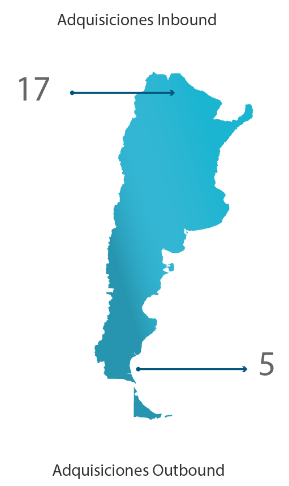
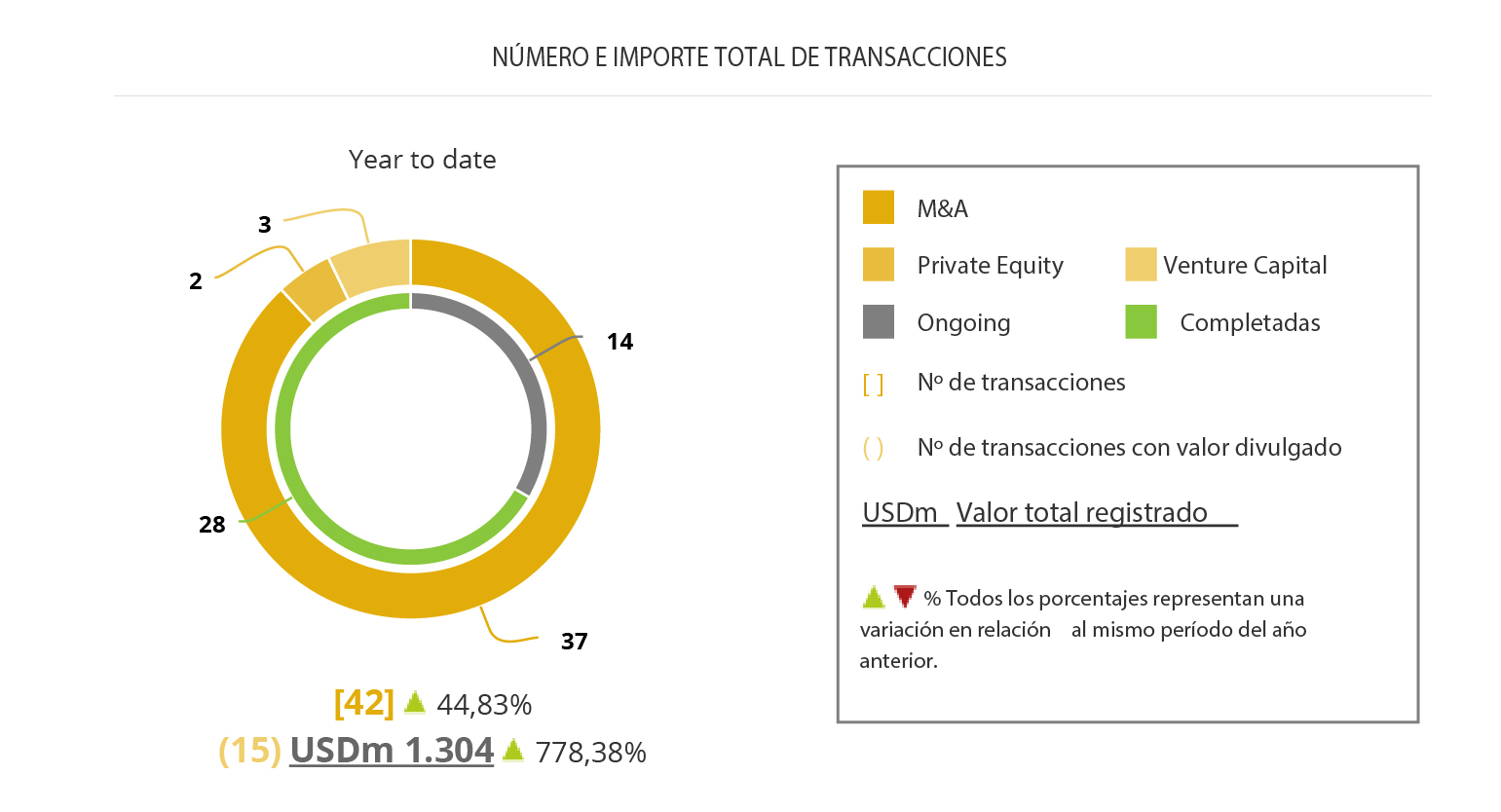
Argentina ranks third in Latin America by transaction volume at the close of February with 42 announced and closed deals YTD, a 75% increase in volume over the same two months last year. The 18 transactions of disclosed consideration registered in Argentina YTD are together worth just over USD 1bn, a 155% jump in aggregate value over the January-to-February period in 2017.

Colombia ranks fourth by volume at the close of February with 25 transactions, deal flow increasing 19% over the first two months of 2017. The seven transactions of disclosed consideration registered in Colombia YTD are together worth USD 258m, representing a 77% jump in aggregate value over the same two-month period of 2017.

Peru ranks fourth regionally at the close of February, tied with Chile by volume, but surpassing its southern neighbor by aggregate value. The 20 deals registered in Peru YTD represent a 23% decline in volume. Aggregate value surged 1,399% meanwhile, to USD 3.4bn, buoyed by Mosaic’s early February acquisition of Compañia Minera Miski Mayo, among 12 transactions of disclosed consideration.

Chile fell to the bottom of the top six regional ranking by the end of February, its 20 deals representing a 55% drop in volume, notwithstanding a 40% increase in aggregate value to USD 209m relative to the first two months of 2017, considering nine transactions of disclosed consideration.

Cross-Border Deals

Bidders based in Latin America made seven extra-regional acquisitions in February, five targeting companies in North America and two with targets in the EU.

North American buyers led the bidding for Latin American targets with 16 inbound deals regionally in February, followed by bidders from the EU with 13, from Asia with two and one acquisition by an Australian firm.

Deal of the Quarter

TTR selected The Mosaic Company’s USD 1.4bn acquisition of a 40% stake in Compañia Minera Miski Mayo as Deal of the Month in February. The Peru-based target mines potassium, phosphate, kaolin and potash in the region of Piura. Estudio Muñiz represented the target in the deal, which represents 41% of Peru’s aggregate transaction value YTD.

Reporte transaccional Febrero 2018 – México

Fusiones y adquisiciones en México aumentan 52,94% en febrero de 2018

  • En el mes se han registrado 26 transacciones en el país
  • 6 operaciones registradas en febrero alcanzan un importe de USD 122m
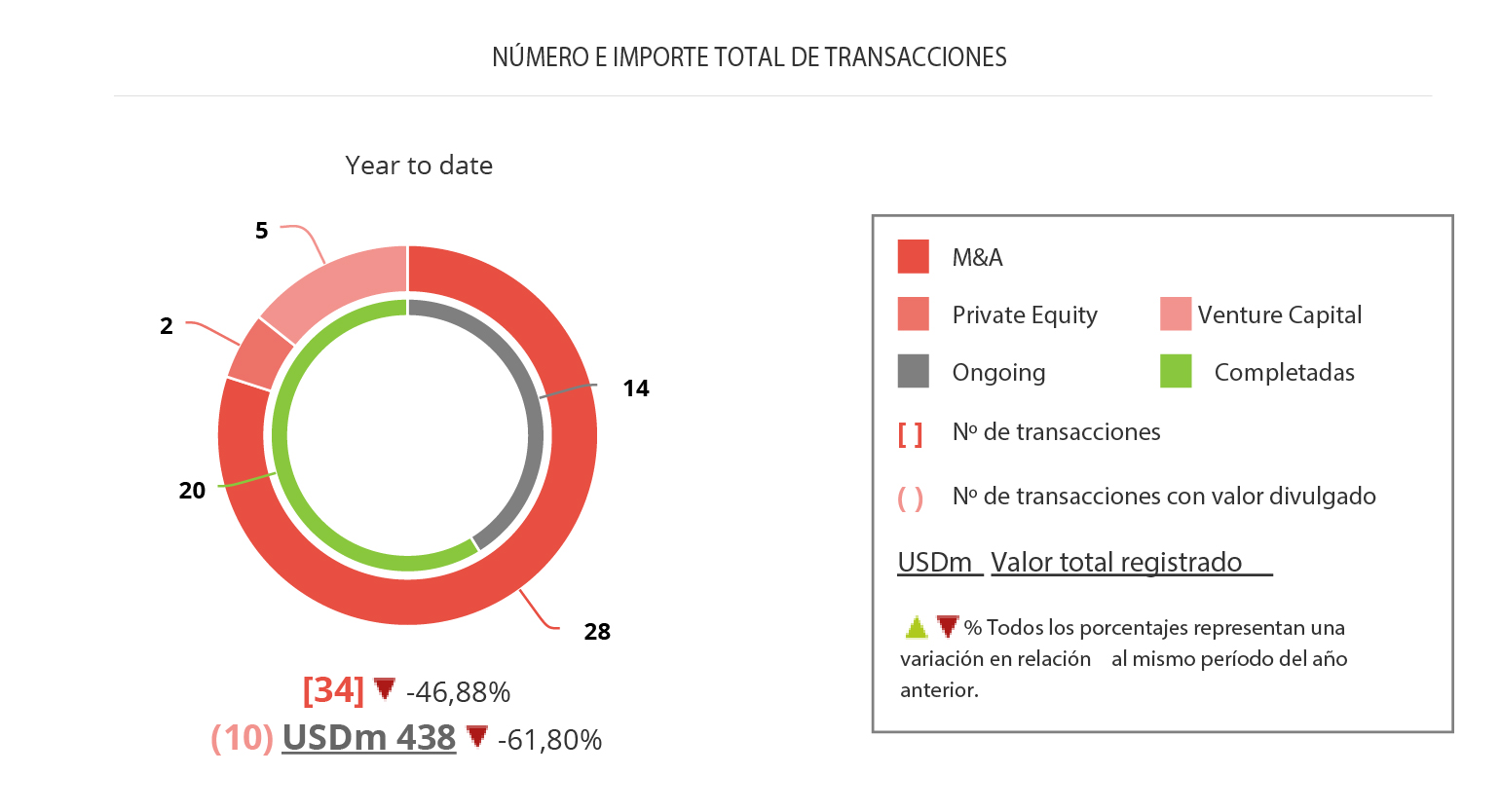
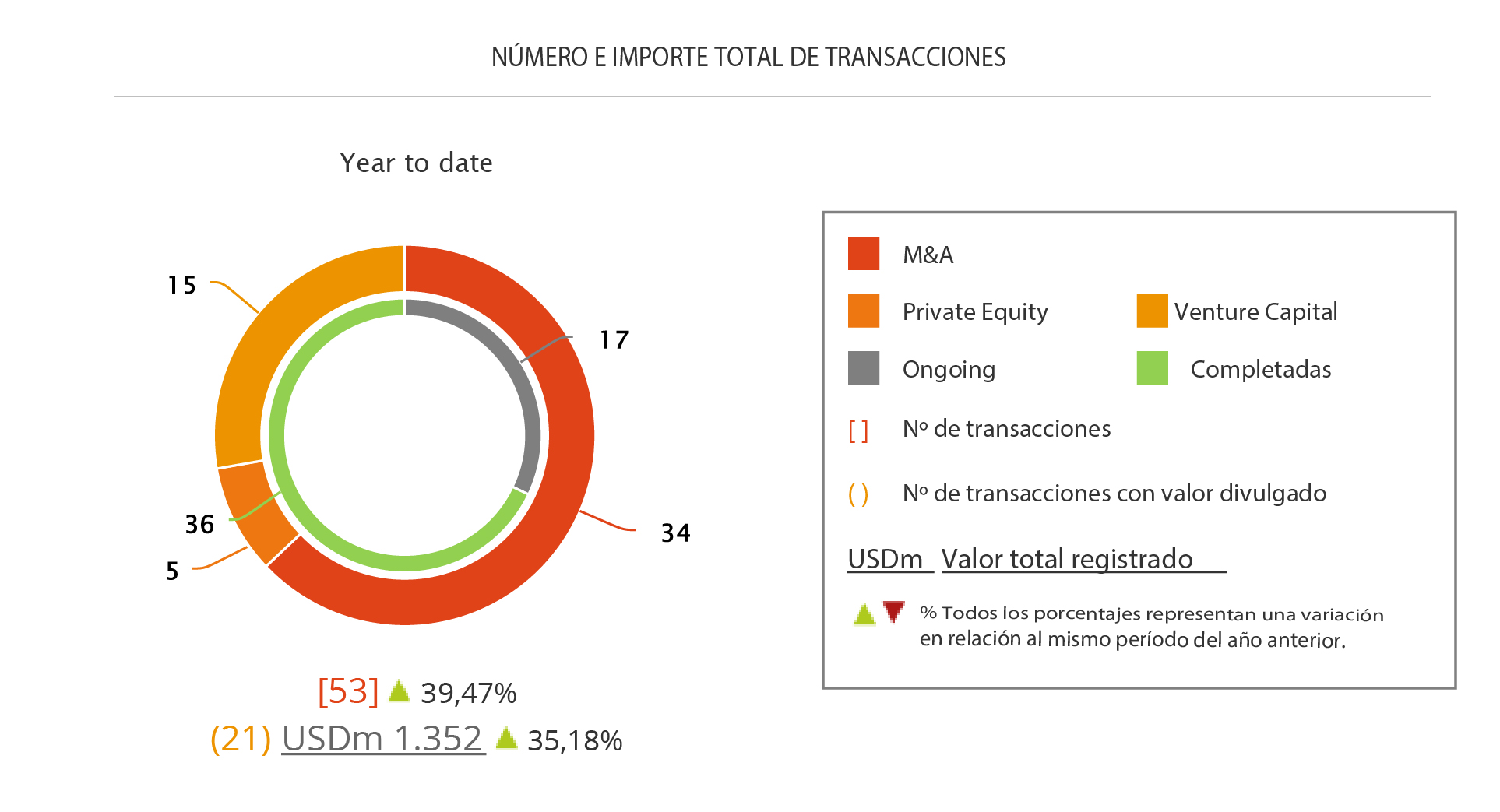
  • A lo largo de 2018 se han registrado 53 transacciones y un importe de USD 1.352m
  • Sector Financiero y de Seguros, el más destacado del año, con 9 operaciones cada uno

El mercado de M&A en México ha contabilizado en febrero de 2018 un total de 26 operaciones, de las cuales 6 suman un importe no confidencial de USD 122m, de acuerdo con el informe mensual de Transactional Track Record (www.TTRecord.com). Estos datos reflejan un aumento del 52,94% en el número de operaciones y un alza del 0,91% en el importe de estas con respecto a febrero de 2017.

Por su parte, en los dos primeros meses del año se han producido un total de 53 transacciones, de las cuales 21 registran un importe conjunto de USD 1.352m, lo que implica un aumento del 39,47% en el número de operaciones y del 35,18% en el importe de estas, con respecto al mismo período de 2017.

De las 21 operaciones contabilizadas en 2018 con importe revelado, 18 son de mercado bajo (importes inferiores a USD 100m), y 3 de mercado medio (entre USD 100m y USD 500m).

En términos sectoriales, el sector Financiero y de Seguros e Inmobiliario son los que más transacciones han contabilizado a lo largo del año, con un total de 9 y 7 operaciones respectivamente; seguidos por el sector de Petrolero y Gas, con 6 registros, e Internet, con 5 negocios.

Ámbito Cross-Border

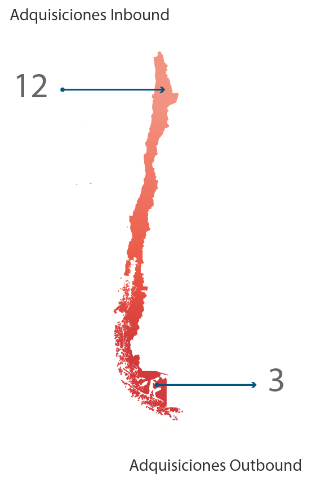
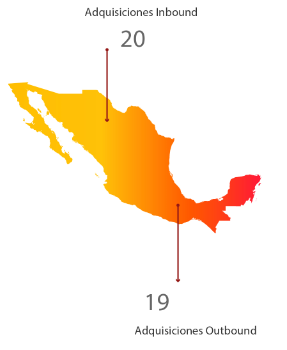
Por lo que respecta al mercado cross-border, en el bimestre las empresas mexicanas han apostado principalmente por invertir en Estados Unidos y Argentina, con 8 y 4 transacciones, respectivamente. Y por importe destaca Estados Unidos de nuevo, con USD 243,10m.

Por otro lado, Estados Unidos, es el país que más ha apostado por realizar adquisiciones en México, con 6 operaciones, seguido de Canadá y España, con 2 transacciones cada uno. Por importe, se destaca en este periodo Canadá, con USD 320m.

Private Equity y Venture Capital

En lo que va de año se han producido un total de 5 transacciones de Private Equity, con una tendencia estable con respecto al mismo periodo de 2017.

Por su parte, en 2018 se han contabilizado 15 operaciones de Venture Capital, con un aumento del 88%, y un capital movilizado de USD 173,60m en 6 transacciones divulgadas, lo cual representa un aumento del 13,43%.

Transacción destacada

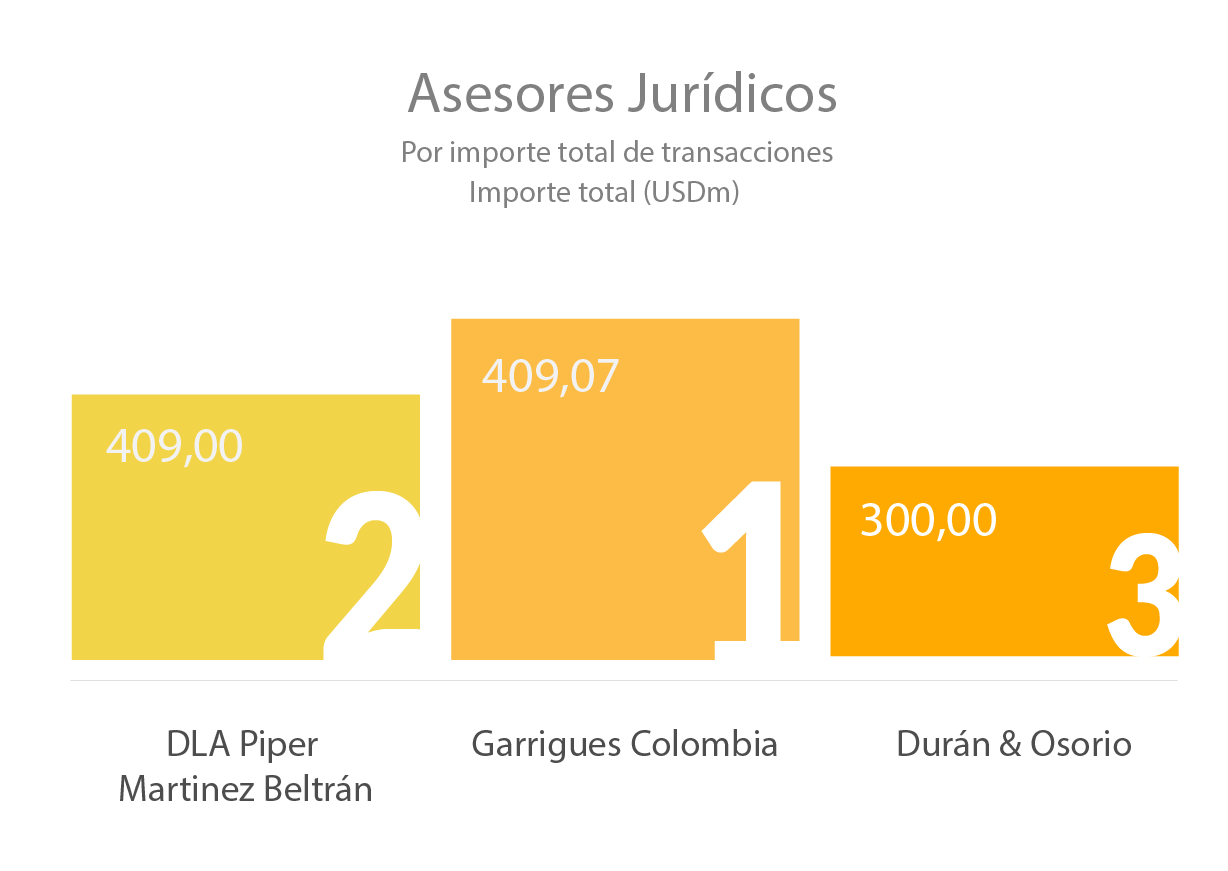
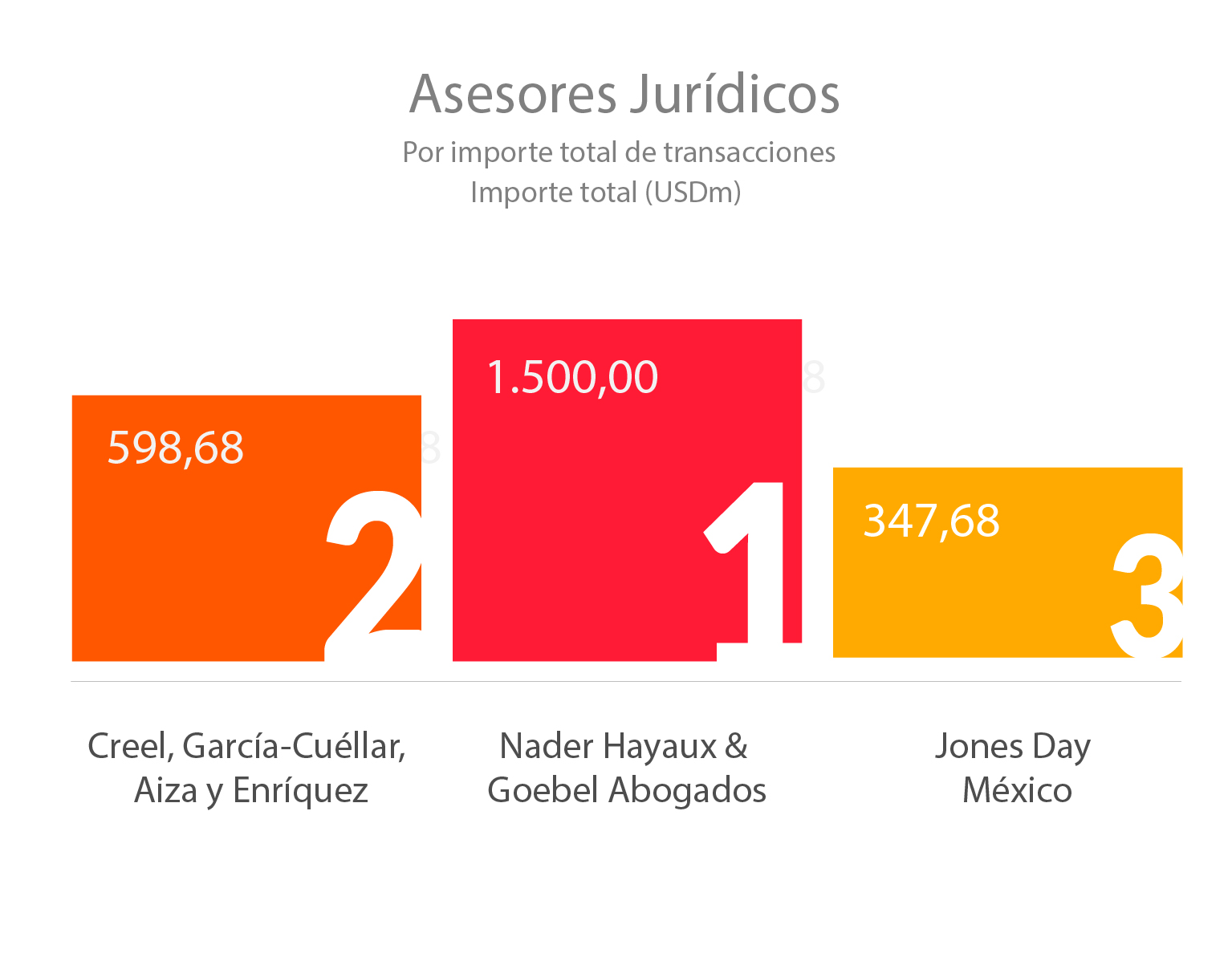
Para febrero de 2018, Transactional Track Record ha seleccionado como operación destacada la relacionada con FibraHotel, que ha concluido la adquisición del hotel Fiesta Americana Condesa Cancún. La operación, que ha registrado un importe de USD 154,88m, ha estado asesorada por la parte legal por Nader Hayaux & Goebel Abogados, Pontones & Ledesma y Cannizzo, Ortiz y Asociados.  Lea más acerca de la transacción.


Informe mensual sobre el mercado transaccional en España en febrero de 2018

El importe de operaciones de M&A en España se incrementa en un 11,37% en febrero de 2018

  • En el periodo se han contabilizado 116 transacciones valoradas en EUR 8.512m
  • El sector Inmobiliario es el más activo de febrero, con 28 transacciones
  • El mes registra 13 operaciones de Private Equity y 20 de Venture Capital


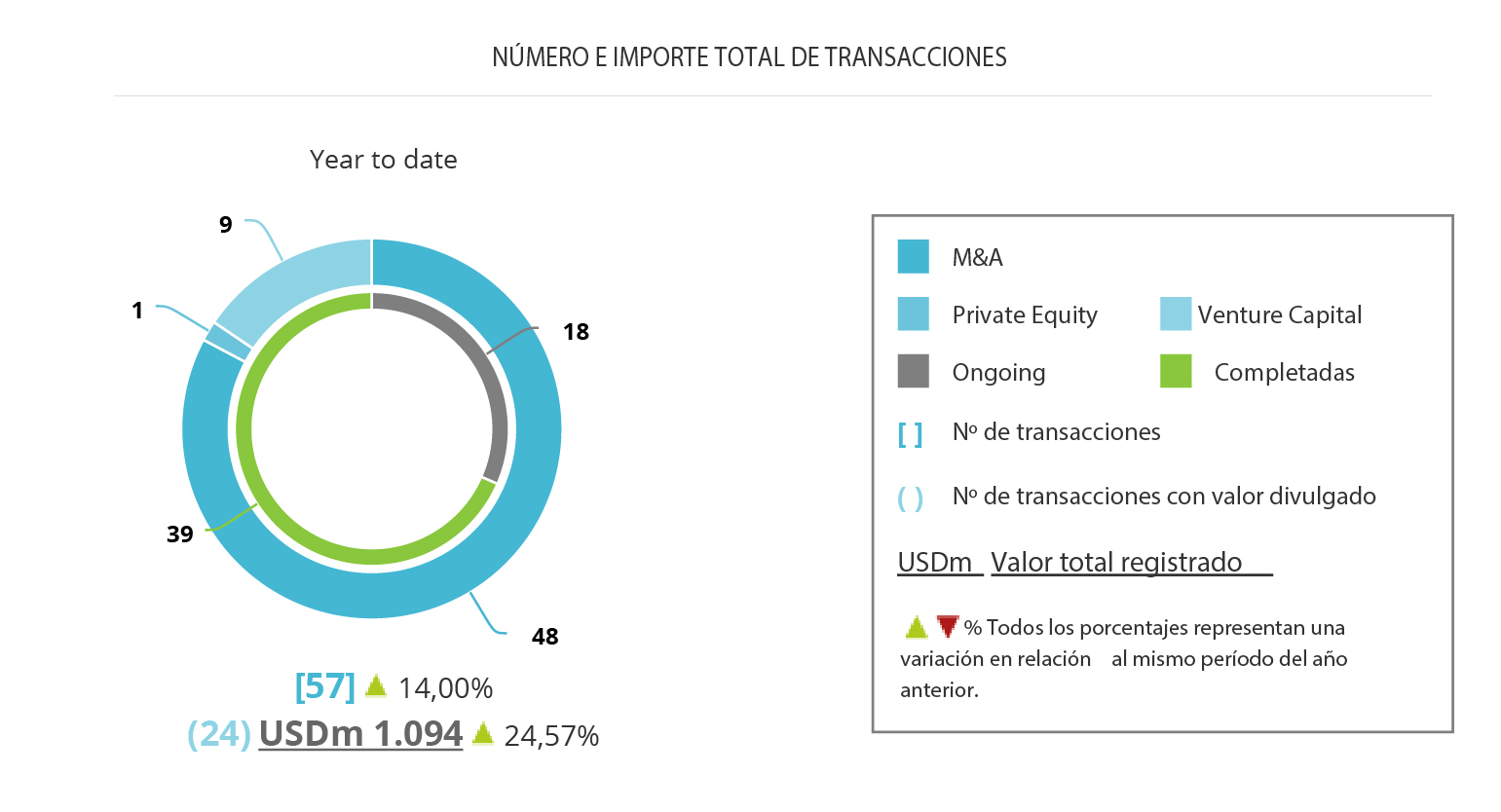
El mercado transaccional español ha registrado en febrero un total de 116 fusiones y adquisiciones, entre anunciadas y cerradas, por un importe agregado de EUR 8.512m, según el informe mensual de TTR (www.TTRecord.com) en colaboración con Intralinks. Estas cifras suponen un aumento del 11,37% en el capital movilizado y una disminución del 32,16% en el número de operaciones con respecto al mismo periodo de 2017.

Por su parte, en los dos primeros meses del año se han contabilizado un total de 287 transacciones, de las cuales 108 registran un importe conjunto de EUR 10.766m, lo que implica decrementos del 18% en el número de operaciones y del 6,10% en el importe de estas, con respecto a febrero del año pasado.

En términos sectoriales, el Inmobiliario ha sido el más activo del año, con un total de 82 transacciones, seguido por el de Tecnología, con 47, y el de Consultoría, Auditoría e Ingeniería, con 21.

Ámbito Cross-Border

Por lo que respecta al mercado Cross-Border, en los dos primeros meses del año las empresas españolas han elegido como principales destinos de inversión a Estados Unidos, con 8 operaciones, y a Portugal, con 6 transacciones. En términos de importe, Emiratos Árabes Unidos es la zona en la que España ha realizado un mayor desembolso, con un valor aproximado de EUR 1.207,92m.

Por otro lado, Estados Unidos (13), Luxemburgo (6), Reino Unido (6), y Francia (6) son los países que mayor número de inversiones han realizado en España. Por importe destaca Luxemburgo, con EUR 1.103,06m.


Private Equity y Venture Capital

En el segundo mes de 2018 se han contabilizado un total de 13 operaciones de Private Equity por EUR 4.326,31m, lo cual supone un aumento del 35% en el capital movilizado y una disminución del 41% en el número de operaciones respecto al mismo periodo del año anterior.

Por su parte, en el mercado de Venture Capital se han llevado a cabo en febrero un total de 20 operaciones con un importe agregado de EUR 68m, lo que implica una reducción del 43% en el número de operaciones y una disminución del 78% en el importe de estas en términos interanuales.


Mercado de capitales

En el mercado de capitales español se han cerrado a lo largo del año tres salidas a Bolsa y cinco ampliaciones de capital.

Transacción del mes

En febrero de 2018, TTR ha seleccionado como transacción destacada la adquisición de un 58,07% adicional de la empresa española Axiare Patrimonio, por parte de la también española Colonial, a través de una Oferta Pública de Adquisición (OPA).

La operación, que ha registrado un importe de EUR 849,38m, ha estado asesorada por la parte legal por Ramón y Cajal, Freshfields Bruckhaus Deringer España, Garrigues España, Kirkland & Ellis UK, Allen & Overy Spain, Uría Menéndez España, y Linklaters Spain.

Por su parte, JB Capital Markets ha participado como asesor financiero. Lea más acerca de la transacción.