TTR Data Dealmaker Q&A with Gómez-Acebo & Pombo Spain Partner Mónica Weimann
Gómez-Acebo & Pombo
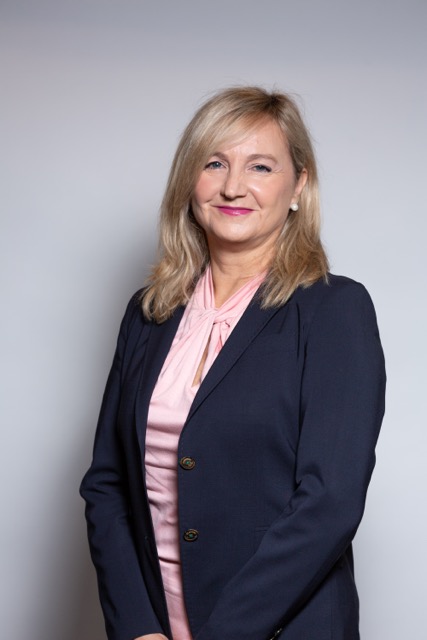
Mónica Weimann
Mónica is a Corporate M&A partner, Head of the German Desk, Head of the International Board and co-head of Food and Consumer Products at Gómez-Acebo & Pombo.
She has broad experience on cross-border transactions, corporate, commercial, international and M&A.
She was head of the London office (2015/2018) achieving the Highly recommended recognition in the category London Office of the Year of the British Legal Awards in 2016 as the only Iberian firm among the nominees.
She holds a degree in Law from the Complutense University of Madrid and a diploma in Business Administration from the San Pablo CEU University in Madrid, Spain. She obtained a diploma in Microeconomics from the London School of Economics & Political Science. She followed PhD studies in the Commercial Law department at the Complutense University of Madrid and at the Max-Planck Institut in Munich. She successfully passed the exams for the profession of Patent & Trademark Attorney (Spanish Ministry of Industry and Energy BOE 14/9/98). She completed the General Management Programme (PDG) at IESE.
Monica has been the first woman to be elected President of the German-Spanish Association of Lawyers and was listed by Iberian Lawyer in its InspiraLaw Top 50 Women list 2018. She was trustee of the Fernando Pombo Foundation between 2016 and 2019. She has been consistently acknowledged as Highly Regarded in recent years by IFLR 1000 for her work and expertise in the M&A area. In addition, she has been ranked in the leading legal directories Chambers and Partners and Legal 500 as one of the top professionals in the areas of Corporate/M&A – Foreign Expertise in Germany and Corporate/M&A – Germany (Foreign Expert Based in the UK), as well as in the Food sector.
She is currently a member of the Board of Directors of the German Chamber of Commerce for Spain. Registered as a European Lawyer (REL) with the Solicitors Regulation Authority (SRA).
Market Assessment: A Challenging First Half
During the first half of 2025—particularly following the tariff crisis—the M&A market in Spain experienced a notable decline, both in deal volume and deal value.
Geopolitical tensions, financial market volatility, and the tariff crisis have led to a more cautious investor sentiment, with many transactions on hold and a more limited deal pipeline.
However, signs of renewed activity are beginning to emerge, offering a cautiously optimistic outlook for the second half of the year—provided this trend gains momentum.
That said, ongoing shifts in the geopolitical, financial, and trade landscape continue to undermine investor confidence, making it difficult to predict how the market will evolve in the coming months.
International Tensions and Their Impact on Strategic Sectors
Uncertainty surrounding U.S. foreign policy, coupled with escalating tensions in the Middle East, is directly affecting strategic sectors such as defense, energy, and infrastructure. In defense, the war in Ukraine and the Arab-Israeli conflict—alongside U.S. involvement—have prompted increased defense spending, which could drive deal activity in the sector.
At the same time, regulatory scrutiny is intensifying, with a growing preference for domestic or European investors to safeguard critical assets.
Shifts in Foreign Investment Flows and Spain’s Competitive Edge
Foreign investment flows into Spain have adjusted, with a slight decline in U.S. investment due to global risk reassessment and a preference for domestic or geopolitically safer markets. Meanwhile, Asian investment—particularly from China and Japan—remains stable, with a stronger focus on technology and energy sectors.
Investors are increasingly prioritizing jurisdictions with political stability, legal certainty, and access to European markets. In this context, Spain stands out with its diversified economy, advanced infrastructure, favorable regulatory framework, and strategic position as a gateway to both Europe and Latin America.
Germany also shows signs of recovery following the election of a new coalition government, which has lifted the constitutional debt brake (Schuldenbremse) to prioritize infrastructure investment. Europe has long awaited Germany’s return as its economic engine—this may be the first step in that direction.
Key Sectors and Opportunities for the Remainder of 2025
Looking ahead, the most dynamic sectors for M&A activity in Spain are expected to be Telecommunications, Healthcare, Industry, Technology, and Energy/Renewables. Growth is particularly anticipated in areas such as artificial intelligence, cybersecurity, and fintech, where competition for innovative assets is intense.
Overall, investor appetite remains strong, with high competition for attractive opportunities.
Cross-Border Deal Structures and Legal Innovation
In today’s uncertain and volatile global environment, cross-border deals are evolving toward more flexible structures. There is increased use of price adjustment clauses, earn-out mechanisms, and warranty & indemnity (W&I) insurance to mitigate risks.
Beyond the usual conditions precedent related to antitrust clearance, there is growing use of foreign direct investment (FDI) approval clauses and more detailed material adverse change (MAC) provisions.
Challenges and Vision at Gómez-Acebo & Pombo
Excellence today is inseparable from digitalization and the use of advanced technological tools—such as artificial intelligence and collaborative platforms—which are increasingly essential for managing complex transactions efficiently.
Our firm is investing significantly in this area, fully aware that staying at the forefront requires a strong focus on innovation to remain competitive.
We are pursuing a strategy of positioning and profitability, with the ambition of becoming the leading Iberian law firm. All our efforts are aligned with this goal, and we are confident that we are on the right path.
Mónica Weimann
Mónica es socia del área de Corporate M&A, responsable del German Desk, presidenta del Consejo Internacional y co-responsable del área de Alimentación y Productos de Consumo en Gómez-Acebo & Pombo.
Cuenta con una amplia experiencia en operaciones transfronterizas, derecho societario, comercial, internacional y de fusiones y adquisiciones. Fue directora de la oficina de Londres entre 2015 y 2018, etapa en la que logró el reconocimiento de Highly Recommended en la categoría London Office of the Year de los British Legal Awards en 2016, siendo el único despacho ibérico entre los nominados.
Es licenciada en Derecho por la Universidad Complutense de Madrid y diplomada en Dirección de Empresas por la Universidad San Pablo CEU de Madrid. Obtuvo un diploma en Microeconomía por la London School of Economics & Political Science. Realizó estudios de doctorado en el Departamento de Derecho Mercantil de la Universidad Complutense de Madrid y en el Instituto Max-Planck de Múnich. Aprobó con éxito los exámenes para ejercer como Agente de Patentes y Marcas (Ministerio de Industria y Energía de España, BOE 14/9/98). Completó el Programa de Dirección General (PDG) en IESE.
Mónica fue la primera mujer elegida como presidenta de la Asociación Hispano-Alemana de Juristas y fue incluida por Iberian Lawyer en su lista InspiraLaw Top 50 Women en 2018. Fue patrona de la Fundación Fernando Pombo entre 2016 y 2019. En los últimos años ha sido reconocida de forma constante como Highly Regarded por IFLR 1000 por su labor y experiencia en el área de M&A. Además, figura en los principales directorios jurídicos Chambers and Partners y Legal 500 como una de las profesionales más destacadas en las áreas de Corporate/M&A – Foreign Expertise in Germany y Corporate/M&A – Germany (Foreign Expert Based in the UK), así como en el sector de Alimentación.
Actualmente, es miembro del Consejo de Dirección de la Cámara de Comercio Alemana para España. Está inscrita como Abogada Europea (REL) en la Solicitors Regulation Authority (SRA).
Evaluación del mercado de fusiones y adquisiciones en España durante el primer semestre de 2025
Durante el primer semestre de 2025 y especialmente desde la crisis arancelaria, el mercado de fusiones y adquisiciones (M&A) en España ha experimentado una caída significativa, tanto en deal volume como en deal value.
El contexto geopolítico, la volatilidad de los mercados financieros y la crisis de los aranceles han determinado en general una actitud más cautelosa de los inversores, con operaciones en stand-by y un pipeline más contenido.
Sin embargo, se empieza a observar una reactivación de las operaciones, lo que permite augurar un cierto optimismo para el segundo semestre de 2025, si la tendencia se consolida.
Dicho esto, los constantes cambios en el contexto geopolítico, financiero y comercial no favorecen la confianza de los inversores y complican predecir el comportamiento del mercado en lo que resta de año.
Impacto de las tensiones internacionales en sectores estratégicos
La incertidumbre sobre la política exterior de EE. UU. unida a la creciente tensión en Oriente Medio impactan de manera directa en sectores estratégicos como defensa, energía e infraestructuras. En defensa, la guerra de Ucrania y el conflicto árabe-israelí unido a la intervención de Estados Unidos han determinado la aprobación del reciente incremento de gasto en defensa, lo que debería permitir augurar un crecimiento de operaciones en este sector. Por otra parte, se observa un mayor escrutinio regulatorio y una preferencia por inversores nacionales o europeos, en aras de la protección de activos críticos.
Cambios en los flujos de inversión extranjera y ventajas competitivas de España
Los flujos de inversión extranjera hacia España han experimentado ajustes, con una ligera reducción de la inversión estadounidense debido a la reevaluación de riesgos globales y la preferencia por mercados domésticos o menos expuestos a tensiones geopolíticas. Por otro lado, la inversión asiática, especialmente de China y Japón, se mantiene estable, aunque con mayor énfasis en sectores tecnológicos y energéticos. Los inversores están reevaluando riesgos en función del contexto internacional, priorizando jurisdicciones con estabilidad política, seguridad jurídica y acceso a mercados europeos. En este sentido, España ofrece ventajas competitivas frente a otros países de la región, como una economía diversificada, infraestructuras avanzadas, un marco regulatorio favorable y una posición estratégica como puerta de entrada a Europa y Latinoamérica.
También cabe destacar que Alemania presenta signos de recuperación tras la elección del nuevo gobierno de coalición, que ha levantado la prohibición de endeudamiento prevista constitucionalmente (Schuldenbremse) con el fin prioritario de inversión en infraestructuras. Europa estaba reclamando la vuelta de Alemania como locomotora de Europa. Parece haberse dado el primer paso en este sentido.
Sectores más relevantes y oportunidades/restricciones para lo que resta de 2025
Para el resto de 2025, los sectores que parecen apuntar a una mayor relevancia en la actividad transaccional son Telecomunicaciones, Salud, Industria y Tecnología y Energía/Renovables, con crecimiento previsible en áreas como inteligencia artificial, ciberseguridad y fintech, con alta competencia por activos innovadores.
En general se observa apetito inversor y mucha competencia por activos interesantes.
Evolución de las estructuras de operaciones cross-border e innovaciones jurídicas
El entorno global incierto y volátil está determinando que las operaciones cross-border vayan evolucionando hacia estructuras más flexibles. Vemos un mayor uso de cláusulas de ajuste de precio, mecanismos de earn-out y seguros de garantías y representaciones (W&I insurance) para mitigar riesgos. Además de las habituales condiciones suspensivas por control de concentraciones, se observa una mayor utilización de condiciones suspensivas relativas a la autorización de inversión extranjera (FDI), así como cláusulas de material adverse change (MAC) más detalladas.
Retos para Gómez-Acebo & Pombo en el mercado español de M&A
Actualmente la excelencia no puede sino ir unida a la digitalización y el uso de herramientas tecnológicas avanzadas (inteligencia artificial o plataformas colaborativas), que son cada vez más necesarias para una gestión eficiente de operaciones complejas. La firma dedica esfuerzos relevantes a este capítulo, consciente de que el state of the art exige poner el foco en este tema para poder competir con éxito.
El nuestro es un proyecto de posicionamiento y rentabilidad, aspiramos a ser la firma ibérica de referencia. Todos nuestros esfuerzos se enfocan a esa meta. Estamos convencidos de que estamos en el buen camino.