DealMaker Q&A

TTR DealMaker Q&A with PPU Peru Partner Rafael Boisset

Rafael Boisset, Partner in Philippi Prietocarrizosa Ferrero DU & Uría Perú, is an expert in corporate matters as well as mergers and acquisitions of private and listed companies in various industries of economy, representing both sellers and buyers. He has advised significant clients by his active participation in the strategic planning of acquisitions and corporate restructuring, project finance, and banking and corporate financing through capital markets. He has experience representing investment banks as well as companies that raise funds from international capital markets.

_____________________________________________

TTR – Firstly, Mr. Boisset, we would like you to share your opinion on the progress of the Peruvian market in 2019. 

R. B. – Both the number and value of deals reported proved to be a quiet active year in terms of M&A transactions, which turns to be interesting considering the slowdown of the Peruvian economy and the political crisis we faced during the year and particularly in the last quarter. Once again the energy sector has been the most relevant in terms of size and complexity but we also saw relevant deals in the manufacturing industry, such as the Intradevco Industrial sell to Alicorp.

TTR – As an advisor in M&A deals, what could you tell us about the investors that show interest in Peru-based companies? What are the main attractions of those companies? 

R. B. – I would say macroeconomic stability, low inflation, stable exchange rates, independency of the Central Bank, simplicity of its tax regime, and a deep potential growth of the middle class, which is an opportunity in several industries.

Despite the slowdown of the economy, Peru has proved to be a country, in which its macroeconomic fundamentals showed to be isolated from the political instability 

TTR – In 2019, there was an interesting increase in agribusiness deals in the country. What can you tell us about that upsurge? 

R. B. – Unlike other countries in the region, Peru’s large coast has some strategic keys for the agribusiness, such as predictable weather, access to ports for exportation, water supply and reasonable land prices and workforce costs. We have seen a consolidation of land and production of local investors in the last 10 to 15 years, that are now being acquired by bigger players that need such scale to invest. 

TTR – What other sectors could potentially have a noteworthy increase in their activity in the mid-term? Why? 

R. B. – It will of course depend on how the economy will move in the mid-term, but we expect that sectors related to the increase of the middle class be more active, such as education, retail, healthcare, and real estate. 

Two other sectors that may be relevant are mining and infrastructure. In mining, the slowdown of commodity prices creates the need for some companies to divest and the opportunity to others to invest. In infrastructure, we expect the criminal trials to end in the midterm allowing new investors to acquire assets that the current conditions do not offer the transparency and security that are needed. 

TTR – Lastly, what is your forecast for the next year?

R. B. – We believe it will be a very active year, probably even more active than 2019. Key sectors will be education, healthcare and manufacturing.

DealMaker Q&A

TTR DealMaker Q&A with Allen & Overy Partner Ignacio Hornedo

Ignacio Hornedo is a partner within the corporate department at A&O Spain. His practice encompasses all aspects of corporate transactions including M&A, disposals, private equity, joint ventures, corporate reorganizations and commercial contracts. He regularly advises both listed and unlisted companies and acts for corporate purchasers, private equity bidders and financial advisors.

_____________________________________________

TTR – How would you describe the M&A activity in Spain in 2019?

I. H. – It has been another strong year in terms of activity. While mega-deal volumes were slightly lower than the year before, we have experienced lots of activity in our key sectors such as private equity, energy, infrastructure and telecoms. PE houses continue to be fully-loaded and to seek investment opportunities, aiming at pre-empting processes to avoid the difficulties and uncertainties of an auction. Our starring PE practice has had another great year advising key players as EQT and ICG, supplemented by a very significant reach in the energy space: the renewables sector has shown real market heat with a lot of development projects now forming a sophisticated project-M&A market, where players are able to price the different stages of a project yet to be built. Foreign investors including German, French and Chinese energy players, as well as infrastructure funds, are looking for assets at development phases and they bring risk appetite and value-creation proposals to differentiate themselves.

TTR – How would you describe the relationship of the Spanish M&A market with its neighbouring countries?

I. H. – We compare more than well to our neighbour countries. Out of the Southern Europe jurisdictions, we are probably the most comparable one with the UK M&A style. We can confidently say that we are more flexible and simultaneoulsy more rigourous than our immediate neighbouring countries. In terms of trends, we do see now more interest in Portugal and we provide Iberian coverage to our international clients looking at particular assets there, specially in the energy and infrastructure sectors. 

TTR – What do you think about the performance of Private Equity and Venture Capital segments in 2019 in Spain?

I. H. – Private Equity houses are all over the place and the vast liquidity pushes a fierce competition also with more sector strategic investors. Transactions as the sale of BT España evidence that -for a while now- PE houses compete in equal terms with industrial players.  

TTR – Real Estate is again the most targeted sector in the year, why do you think is that?

I. H. – Assets have still benefitted from the post-crisis price adjustment and the usual suspects on REOs acquisitions are more and more sophisticated in their valuation mechanisms. We are now starting to see these key players turning their strategy in Spain to rotating their portfolios, with their investment teams turning sight to other jurisdictions. Certainly the next big thing in real estate is all the Madrid Nuevo Norte project, where the leading characters are positioning themselves towards investors’ interest in the short to mid term. 

TTR – What can we expect to happen in the Spanish M&A market in 2020?

I. H. – We expect 2020 to continue with strong levels of activity. While political uncertainties continue to be a top concern for any Investment Committee and the new government is yet to be assessed, the vast liquidity keeps pushing the market forward. Renewable assets continue to attract foreign investment interest. Large corporates who are key players in other energy sources are now deploying large amounts of capitals to build green energy platforms. This trend will continue to incentivise assets’ development activity, market consolidation for operating plants and more and more transactions. It is yet to be seen how the market absorbs the enormous interest of all kind of investors, some of which may face difficulties if projects in their initial phases do not reach the relevant milestones at the expected pace.

DealMaker Q&A

TTR DealMaker Q&A with Machado, Meyer, Sendacz e Opice Advogados Partner Guilherme Bueno Malouf

Machado, Meyer, Sendacz e Opice Advogados Partner Guilherme Bueno Malouf is Head of the Business Law Department, which covers our M&A and Private Equity, Corporate, and Capital Markets practices. Expert in M&A transactions, private equity investments, organization of structured investment funds, especially Equity Investment Funds (FIP), Real Estate Investment Funds (FII), and Credit Rights Investment Funds (FIDC). Has extensive experience in the food and beverage, steel, cement, real estate, energy, services, technology, and retail. Part of the Asian Desk of the firm.

TTR – To begin with, Mr. Malouf, could you give us your opinion on the progress of the Brazilian M&A market in 2019?

It has been a good year for M&A, with a high number of transactions. Most active sector has been technology, but other sectors, such as oil&gas, health, education, real estate and timber have also been active.
We have seen some interesting high-end transactions involving Petrobras, Hapvida, Positivo, Madero and Cecrisa and our firm has been involved in a number of them.

TTR – You have advised in M&A deals in the technology sector, the most active in the country in recent years. So, what can you tell us about the evolution of this sector?

We have seen lots of deals and increasing competition in Brazil. Many of these transactions have been consummated in record-breaking timeframes. In terms of evolution, I would say that many players, who initially approached these transactions with a venture capital mindset (i.e., less concerned about liabilities and indemnification) realized that in Brazil tax and labor issues require a deeper analysis, not only to validate the business model of the enterprise, but also to identify potential liabilities and allow the investor to negotiate a suitable protection (i.e., indemnity and collateral). 

TTR – What other sectors do you think can follow in its footsteps and why?

I think actually it is the other way around. The tech world is now balancing more and adjusting to the more traditional M&A standards. It is not impossible, however, that the fast-moving approach commonly seen in tech deals be replicated in other sectors, but this still remains to be seen.

TTR – Following from the previous question, and as an expert in the field, how has the development of the technology sector affected the legal concept of Intellectual Property? What new challenges arise from it?

Technology development and centricity on data are bringing questions about the extension of ownership and intellectual propriety rights. Issues related to ownership of personal data databases, scrapping information from public available sources, fair use with respect to copyright and disputes what constitutes unfair competition will become more and more frequent and complex. A bigger issue to be addressed is related to copyright in connection to works created by Artificial Intelligence, which is already a reality. To what extent such works will be copyrightable in light of the fact that are not human creations? We are not yet close to any consensus about how to deal with several of those issues but the implications to the intellectual property concept are evident.

TTR – Another of your areas of expertise is capital markets. After its start at the beginning of the year, how do you rate its operation so far in 2019? What is your forecast for the end of the year?

2019 has been a very good year for capital markets. CVM (the Brazilian SEC) has registered 14 public offering of equity securities, totaling more than R$35 billion. This is a huge increase from the average of the previous years.  In addition, a total of 38 “limited effort” public offering of equity securities (known as “476 offerings”) have already been completed and involved a total of R$32 billion. Our debt market (debentures) has remained hot as well.

We continue very active and our projections are for a very active end of 2019 and beginning of 2020.

TTR – Finally, also considering your experience in Private Equity, how do you expect that type of investment to progress?

Structure-wise, the use of FIPs (our private equity investment fund) by foreign PE firm has been under a huge scrutiny of tax authorities. My perception, though, is that the current administration wants to foster foreign investments, including PE investments, and that a middle ground solution will be set. The enactment of the “economic freedom act” is an indication of that.

Venture and Seed Capital investors tend to be more innovative, and many times structure their investments either through an offshore vehicle (whose sole asset is the investment in the Brazilian target) or through loans or debt securities. Such structures allow the investor not only an easier exit but also enhanced protection against liabilities of the target companies (that in Brazil many timed pierce the corporate veil and are attributed to shareholders).

DealMaker Q&A

TTR DealMaker Q&A con José María Gil-Robles, socio de DLA Piper

José María Gil-Robles es socio responsable del departamento de Corporate de DLA Piper en España. Tiene amplia experiencia en operaciones de fusiones y adquisiciones y reestructuración de deuda asesorando a inversores de capital riesgo y Hedge Funds. Así mismo es muy activo en situaciones especiales de crisis financiera y de reestructuración.

TTR – ¿Cómo describiría la actividad de M&A en España en lo que va de año?

El año, como no podía ser de otra manera, está resultando complicado. Nuestro crecimiento es mayor que el de muchos países de nuestro entorno, la deuda pública está (por el momento, y a la espera del resultado de las elecciones de noviembre) estable, la prima de riesgo se mantiene en los niveles de los últimos años y se sigue creando empleo, factores todos ellos que ayudan a que España siga en el radar de los inversores internacionales. Pero al mismo tiempo los indicadores macroeconómicos llevan meses deteriorándose: todos los días nos desayunamos con la llamada a la cautela de algún organismo internacional, no somos inmunes a factores de riesgo de la economía mundial que todos conocemos y hemos tenido un año cargado de elecciones (que nunca son buenas para la actividad de M&A), y que todavía no ha finalizado.

Teniendo en cuenta lo anterior, es previsible que acabemos el año por detrás de 2018 en cuanto a número de operaciones y, a expensas de lo que pueda ocurrir en relación con procesos como la venta de Ferrovial Servicios, también en cuanto a volumen. Dicho esto, no creo que quienes nos dedicamos a asesorar en operaciones de M&A tengamos motivo alguno para la queja, aunque la actividad se ralentice, el año va a ser bueno, muy bueno. Me gustaría equivocarme, pero creo que 2020 será un año más complicado y en el que añoraremos el nivel de actividad que estamos disfrutando.

TTR – Como experto en operaciones de private equity, ¿qué diagnóstico haría del mercado español? ¿Considera que se encuentra en un buen momento? 

Mi sensación es que, en cuanto al volumen de inversión, el año será tan bueno como el pasado o incluso mejor: se han ejecutado ya o están a punto de cerrarse tres operaciones de public to private (Telepizza, Natra y Parques Reunidos), sólo el primer semestre se han cerrado más de 8 mega deals (que en España, y de acuerdo con la clasificación de Ascri, son aquellas operaciones de más de €100 millones) y en la segunda mitad del año ya se han cerrado o se cerrarán previsiblemente algunas transacciones de cuantía muy significativa que pueden llevar el volumen de inversiones por encima del alcanzado 2018. 

Pero si eliminamos el efecto de los mega deals y nos fijamos en el número de operaciones, vemos que el mercado de private equity también se está ralentizando, menos que el mercado de M&A en su conjunto por la necesidad que tienen los operadores de encontrar acomodo a los importes bastante significativos que los inversores han puesto en sus manos en estos últimos años, pero si empezamos a ver menor actividad.

Dicho esto, el momento que vive el sector es muy bueno y durante unos cuantos meses todavía vamos a estar ocupados.

TTR – ¿Qué tipo de compañías diría usted que resultan más atractivas para los inversores de private equity en este momento? ¿Qué sectores destacaría?

En el corto plazo creo que los sectores sanitario, residencias para la tercera edad, alimentación, fintech, alimentación y hostelería, retail y empresas de tecnología seguirán protagonizando muchas de las inversiones de los operadores de private equity. También educación, donde hemos visto muchas operaciones en estos dos últimos años, y energías renovables y otras inversiones sostenibles.

A medio plazo los temas estrella para los inversores van a ser, en mi opinión, la inteligencia artificial, el envejecimiento de la población, la automatización de procesos, la ciberseguridad, la sostenibilidad (los recursos naturales) y la digitalización.

TTR – Cuenta usted también con experiencia en la transmisión de carteras de deuda. ¿Qué tipos de carteras de deuda son los más demandados? ¿Qué tipo de players existen en este mercado? 

El número de compradores de carteras se mantiene estable desde hace varios años, pero la tipología es algo distinta. En sus orígenes los inversores tenían un perfil marcadamente oportunista, algunos desinvirtieron cuando España empezó a salir de la crisis y no han vuelto, y otros, como Lone Star, han regresado con energías renovadas tras varios años sin pisar nuestro país. Junto a ellos tenemos inversores “industriales” y también algún fondo de pensiones, como CPPIB.

En general el apetito es mayor por las carteras de inmuebles y de hipotecas que por las carteras de deuda unsecured, que en estos momentos tienen un universo de potenciales compradores más limitado (Gescobro, Axactor, Intrum o Cabot, por ejemplo) que el de compradores de hipotecas.

En cuanto a la deuda hipotecaria, las carteras más complicadas son las de hipoteca residencial, por las incertidumbres en cuanto a su ejecución que la reciente resolución C-260/18, de 3 de octubre, del Tribunal de Justicia de la Unión Europea debería ayudar a despejar. Es difícil saber con qué rapidez empezaremos a ver más procesos de venta de este tipo de carteras, para cuya compra los fondos de pensiones deberían estar mejor posicionados que el resto.

Para el resto de hipotecas no van a faltar compradores, porque incluso operadores que tradicionalmente sólo invertían en deuda unsecured ahora tienen apetito por deuda secured.

TTR – Sin duda las compraventas de carteras de deuda son muy frecuentes en nuestro mercado. ¿Qué factores explican esta frecuencia? ¿Se mantendrá el ritmo de operaciones de este tipo en el medio/largo plazo? 

La elevada frecuencia de operaciones en España es muy sencilla de explicar: hay una oferta de activos non-performing (NPEs) estimada en torno a €300.000 millones, de los que dos tercios son inmuebles (REOs) y el resto son non-performing loans (NPLs), y hay también mucha demanda. 

En cuanto al lado de la oferta, es verdad que tanto los bancos españoles como (en menor medida) Sareb han hecho un esfuerzo desinversor descomunal desde que empezó la crisis, pero una parte importante de dichos activos (casi el 45%) tienen que ser todavía objeto de desinversión por parte de los inversores que los han comprado, desinversión que en muchos años se producirá mediante la venta de carteras a nuevos inversores (las operaciones de mercado secundario eran rara avis hace unos años y ya hemos visto algunos activos cambiar de manos una tercera vez). Y los bancos españoles y Sareb siguen siendo propietarios de NPEs por más de €100.000 y €36.000 millones, respectivamente, de los que tienen que desprenderse sin prisa pero sin pausa, de manera que lo previsible es que la oferta se mantenga en los niveles actuales en los próximos 5 años.

Respecto a la demanda, hay mucho apetito por este tipo de activos y muchos fondos levantados para adquirirlos, por lo que es difícil pensar que la demanda vaya a retraerse en los próximos años.

English version

TTR – How would you describe the M&A market in Spain year-to-date in 2019?

The year, as it could not be otherwise, is proving complicated. Our growth is greater than that of many surrounding countries, public debt is (for the time being, and pending the outcome of the November elections) stable, the risk premium remains at the levels of recent years and employment continues to be created, all factors that help Spain remain on the radar of international investors. But at the same time the macroeconomic indicators have been deteriorating for months, every day we have breakfast with the call for caution from some international body, we are not immune to risk factors of the global economy that we all know and we have had a year full of elections (which are never good for the M&A activity) that has not yet ended.

Bearing this in mind, it is foreseeable that we will end the year behind 2018 in terms of the number of operations and, at the expense of what may happen in relation to processes such as the sale of Ferrovial Servicios, also in terms of volume. Having said that, I don’t think that those of us who are involved in advising on M&A operations have any reason for complaint, although the activity is slowing down, the year is going to be good, very good. I would like to make a mistake, but I think 2020 will be a more complicated year and we will miss the level of activity we are enjoying.

TTR – As a private equity expert, what do you think about the Spanish market? Are we in a good moment?

My feeling is that, in terms of investment volume, the year will be as good as last year or even better: three public to private operations (Telepizza, Natra and Parques Reunidos) have already been executed or are about to be closed, more than 8 mega deals have been closed in the first half of the year (which in Spain, and according to Ascri’s classification, are those operations of more than €100 million) and in the second half of the year some transactions of a very significant amount have already been closed or are expected to be closed, which could bring the volume of investments above that reached in 2018. 

But if we eliminate the effect of mega deals and look at the number of operations, we see that the private equity market is also slowing down, less than the M&A market as a whole because of the need for operators to accommodate the significant amounts that investors have put in their hands in recent years, but if we start to see less activity.

Having said that, the moment the sector is going through is very good and for a few months we are still going to be busy.

TTR – What kind of companies do you think are more attractive to private equity investors at the moment? What are the most prominent sectors, in your opinion?

In the short term, I believe that the healthcare, nursing homes, food, fintech, food and hospitality, retail and technology sectors will continue to be the focus of many of the investments made by private equity operators. Also education, where we have seen many operations in the last two years, and renewable energies and other sustainable investments.

In the medium term, the star topics for investors are going to be, in my opinion, artificial intelligence, population ageing, process automation, cybersecurity, sustainability (natural resources) and digitisation.

TTR – You also have a track record advising in debt portfolio transactions. What kind of debt portfolios are the most in demand? What kind of players are operating in this market?

The number of buyers of portfolios has remained stable for several years, but the typology is somewhat different. Originally, investors had a markedly opportunistic profile, some disinvested when Spain began to emerge from the crisis and have not returned, and others, such as Lone Star, have returned with renewed energy after several years without stepping foot in our country. Along with them we have “industrial” investors and also some pension funds, such as CPPIB.

In general, the appetite is greater for real estate and mortgage portfolios than for unsecured debt portfolios, which currently have a more limited universe of potential buyers (Gescobro, Axactor, Intrum or Cabot, for example) than mortgage buyers.

With regard to mortgage debt, the most complicated portfolios are those of residential mortgages, due to the uncertainties regarding their execution that the recent resolution C-260/18, of 3 October, of the European Court of Justice should help to clear. It is difficult to know how quickly we will begin to see more processes of selling this type of portfolio, for the purchase of which pension funds should be better positioned than the rest.

For the rest of the mortgages there will be no shortage of buyers, because even operators who traditionally only invested in unsecured debt now have an appetite for secured debt.

TTR – There is no doubt that purchases and sales of debt portfolios are very frequent in our market. What factors account for this? Do you think these transactions will keep up in the middle to long term?

The high frequency of operations in Spain is very simple to explain: there is an estimated supply of non-performing assets (NPEs) of around €300,000 million, of which two thirds are real estate (REOs) and the rest are non-performing loans (NPLs), and there is also a lot of demand. 

On the supply side, it is true that both Spanish banks and (to a lesser extent) Sareb have made a huge disinvestment effort since the crisis began, but a significant part of those assets (almost 45%) have yet to be disinvested by the investors who bought them, a disinvestment that in many years will occur through the sale of portfolios to new investors (secondary market operations were rare a few years ago and we have already seen some assets change hands a third time). And the Spanish banks and Sareb continue to own NPEs for more than €100 billion and €36 billion, respectively, which they have to release slowly but steadily, so supply is expected to remain at current levels over the next 5 years.

Regarding demand, there is a lot of appetite for this type of assets and many funds raised to acquire them, so it is difficult to think that demand will shrink in the coming years.
DealMaker Q&A

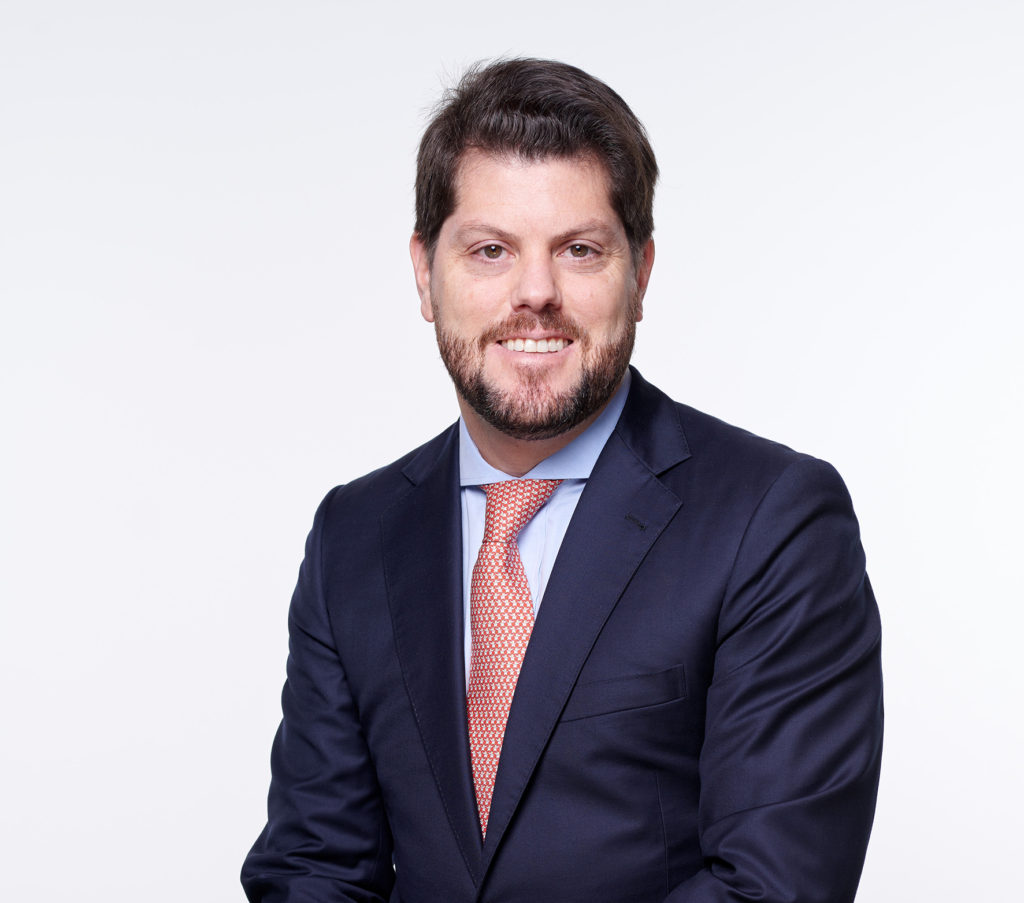
TTR DealMaker Q&A con Antonio Fernández, presidente de Armabex y ArmanexT

Antonio Fernández Hernando es el presidente de Armabex y de ArmanexT. Economista y Executive MBA por IESE, cuenta con más de 25 años de experiencia en el sector financiero ocupando posiciones directivas de responsabilidad.

TTR: ArmanexT ha sido la primera empresa española autorizada por Euronext como Listing Sponsor. ¿Cómo se gesta la decisión de especializarse en esta bolsa paneuropea? ¿Cree que el número de compañías españolas prestando este tipo de servicio irá en aumento?

Es una decisión que viene empujada por la observación: ¿por qué siendo España el segundo país con más PYMES de Europa no llegaban a medio centenar las que cotizan el Mercado Alternativo español? Después de analizar con detalle las respuestas y justificaciones que nos daban las distintas PYMES y fondos de capital riesgo, llegamos a la conclusión de que había determinados aspectos en los criterios de admisión y permanencia en dicho Mercado que, en principio, no encajaban con las necesidades y expectativas de ambos. 

En ArmanexT estamos convencidos de que el camino natural para el crecimiento y la internacionalización de las PYMES es el Mercado de Valores, por lo que continuamos buscando cómo dar respuesta a esta situación. Acudimos entonces al Alternative Investment Market (AIM) -que es el Sistema Multilateral de Negociación similar al MAB, pero de la Bolsa de Londres- pero con el Brexit a punto de concluir, nos centramos en Euronext que es la mayor plataforma de bolsas de Europa y comprende, entre otras, las de Francia, Bélgica, Holanda, Portugal, e Irlanda. 

En ArmanexT, como Listing Sponsor oficial ayudamos a las PYMES con los requisitos de acceso a cotizar y el mantenimiento que exige Euronext, los cuales, ahora sí, entendemos son más asumibles para las expectativas, necesidades y tamaño de muchas PYMES y SOCIMI españolas.

TTR: ¿Qué ventajas puede ofrecer el cross-listing en Euronext a las empresas españolas? ¿A qué tipo de empresas recomendaría llevar a cabo el proceso?

Cotizar en dos mercados a la vez supone dar visibilidad a la compañía ante posibles inversores. Es un mensaje claro de los órganos de dirección de la compañía sobre la transparencia y búsqueda de liquidez para sus actuales y futuros accionistas. 

No obstante, el cross-listing es más bien un paso intermedio para que la compañía decida finalmente qué Mercado de Valores se adapta mejor a su estrategia de crecimiento y composición accionarial. No creo que con una misma moneda y dentro de la Unión Europea sea esta medida muy sostenible y necesaria a medio plazo. No es sino una parte de un proceso para aquellas compañías que, cotizando en un Mercado, decidan transitoriamente hacerlo en dos a la vez. 

Una vez pasado un plazo de tiempo prudencial, y viendo en qué Bolsa tienen más inversores y liquidez, es previsible que tomen la decisión de estar finalmente cotizando en una sola.

TTR: ¿Qué diferencias hay a nivel técnico con el listing que pueden llevar a cabo las empresas españolas en el mercado financiero nacional?

Los requisitos entre ambos Mercados de Valores a nivel de costes y plazos son distintos y variados.

De Euronext destacaría la posibilidad de realizar un Listing Técnico, muy justificado para empresas familiares, empresas tecnológicas o PYMES que quieren participar de las innumerables ventajas que ofrece el cotizar en un Mercado de Valores, pero sin la necesidad inicial de cambiar su estructura accionarial. 

Con este sistema que, además, hemos simplificado en ArmanexT, la compañía no necesita realizar una oferta de acciones inicial. Puede cotizar con el número y composición de accionistas que tenga. Más adelante podrá decidir realizar ampliaciones de capital, operaciones corporativas o entradas de capital riesgo para las cuales ya estará perfectamente preparada.

TTR: ¿Percibe interés de compañías nacionales para iniciar este proceso de cotización en Euronext? ¿Está Armanext autorizado a prestar sus servicios a empresas de nacionalidad no española?

Cotizar en bolsa ni es caro, ni es complicado ni es solo para las grandes compañías. Estos son mitos obsoletos fruto de otras épocas y mercados.  La receptividad que estamos teniendo para ofrecer estas importantes decisiones, siempre pasan por una actuación de máxima responsabilidad de los principales accionistas de las PYMES, en analizar con detalle esta nueva oportunidad que hasta ahora no estaba a su alcance. Son varias las compañías que han iniciado un periodo de 2-3 meses de reflexión y análisis para evaluar las ventajas y las obligaciones que les supone el cotizar en una bolsa como, por ejemplo, la de París. 

Fuera de nuestras fronteras, nos encontramos que entre las empresas que lo están analizando, están compañías de países de LATAM, como México, Argentina, Colombia… que se plantean el cotizar, incluso directamente, en la Bolsa de París, con distintos objetivos: desde una deslocalización geo-política por la situación de sus respectivos países, hasta la búsqueda de posibles inversores y notoriedad en la que es la tercera economía del mundo, la zona Euro. Muchas de ellas están tremendamente dolarizadas y este cambio les puede ayudar a iniciar una nueva etapa de crecimiento en un mercado tan importante como es el europeo. 

La licencia que tenemos en ArmanexT como Listing Sponsor oficial de Euronext nos permite incorporar a cotizar a cualquier compañía que cumpla los requisitos de admisión con independencia del país de procedencia de la misma. En ArmanexT tenemos tres áreas muy diferenciadas: la dedicada a las PYMES (incluidas SOCIMI) que quieren cotizar en Euronext Access París; la dedicada a las SOCIMI que quieren cotizar en España, y otra área para empresas de LATAM.