Transactional Impact Monitor: Spain & Portugal – Vol. 3

Transactional Impact Monitor: Spain & Portugal – Vol. 3

27 May 2020

TTR’s Transactional Impact Monitor (TIM) is a Special Report combining local knowledge and market visibility from top dealmakers developed to address extraordinary situations affecting the macroeconomic stability and M&A outlook in core markets

INDEX

SPAIN
– M&A Outlook
– Private Equity
– Equity Capital Markets
– Handling the Crisis

PORTUGAL
– M&A Outlook
– Private Equity
– Handling the Crisis

– The View from Milan
– Dealmaker Profiles

SPAIN

As Spain approaches the 10-week mark since the royal decree was issued declaring a state of emergency on 11 March, the country has begun tiptoeing back to normalcy, or what even the government describes as the “new normal”, with a phased approach to the easing of restrictions on business activities and movement. 

In phase one, which began 11 May, family members and friends are permitted to gather in groups of up to 10 persons in homes, open-air restaurants and bars, with a limit set at 50% of the normal maximum occupancy. In phase 2, which had a provisional start date of Monday, 25 May, family members will be permitted to visit their relatives in old age homes, one at a time, provided there are no Covid-19 infections among the residents. The limit on the number of persons permitted to congregate will increase to 15 and patrons will be able to sit inside restaurants and bars for table service. 

Phase 3 will begin on 8 June, at the earliest, pending continued improvement in the health situation, with the government determining the pace of advancement from one phase to the next independently for each autonomous community. Once in phase three, protocols for workers to be reincorporated into the workplace will be implemented and patrons will be permitted to stand in bars once again. Travel beyond the province of residence will only be permitted after 22 June, at the earliest, and only to other regions of Spain that are in the same phase in the resumption of normal business activities.

Things are slightly better now, commented Écija Partner Emilio Prieto. “From the public health perspective, I believe the worst has passed. From an economic standpoint, however, things will be very tough for Spain,” he said.

In the tourism and hospitality industry, for example, which represents nearly 15% of Spain’s GDP, 2020 is a lost year, said Prieto, and 2021 will also be very difficult. “For the restaurant industry, where we have seen a lot of investment in recent years, the blow has obviously been nothing less than colossal,” he said. To make things worse, the new social distancing norms, which will continue to be enforced post-lockdown, will make several businesses simply inoperable, he added. “These are businesses that normally require a minimum occupancy rate of around 80% to remain viable; the owners of these establishments already know this is out of the question,” Prieto said. 

Retail, leisure, hospitality and related sectors are among those suffering most, while deals in the healthcare industry, old age homes and pharmaceuticals, along with financial services, and wealth management, in particular, remain on track, according to Pinsent Masons Partner Antonio Sánchez Montero.

Regardless of what happens, Spaniards will eventually go back to restaurants and bars and those businesses will inevitably bounce back, sooner or later, Prieto said. “We are essentially gregarious people; socializing is in our nature,” he noted.

The new normal will look a lot different where the workplace environment is concerned, however, Prieto said. “The only thing we can be absolutely certain of, in the middle of all this anxiety and confusion, is that remote working is here to stay,” Prieto said. 

“Why should a company pay for a five-story office in the center of Madrid when it can accommodate a portion of its employees in three floors and have the rest working remotely from home?” Prieto said. These remote workers will not only benefit from a much better work-family balance, but the cost savings involved are staggering, Prieto noted. “Some of our international clients are already moving in that direction,” Prieto said. “They have renegotiated rent prices and are now planning to sublet part of their space to other tenants and probably vacate part of the total area at the end of their contracts,” he said. Real estate will, no doubt, suffer as a result, particularly commercial space and corporate offices, Prieto noted. 

Given the continuing uncertainty, it’s impossible to make foolproof macroeconomic projections for the close of 2020, but almost all the indications suggest a fall in GDP of between 7% and 12%, Prieto said. 

“So the question, really, seems to be, will things be very bad or simply disastrous?” The key issue now is whether or not there will be a recovery in 2021, said Prieto. In Spain, a country heavily dependent on consumption to drive the economy, there will be economic sectors that suffer tremendously, he said. 

“The legal field is privileged in that in times of prosperity, transactional work is in great demand, while in times of crisis, litigious work is in great demand. We saw it 10 years ago, and we are seeing it now,” Pinsent Masons Partner Antonio Sánchez Montero noted. 

The impact of force majeure on contracts is keeping legal advisors busy at virtually every firm, he added. “This situation is so different, similar only to the situation in Spain a century ago. Nobody precisely contemplated this in their contracts; they are asking how they can amend terms they’d agreed to under completely different conditions.” Labor advisors also have their hands full amid all the legislative measures implemented to mitigate a sharp rise in unemployment in the aftermath of the lock-down, said Sánchez. 

M&A Outlook
Click here to access the third issue of Transactional Impact Monitor: Spain & Portugal – Vol. 3.

PORTUGAL

Portugal too has begun to implement a phased reactivation of the economy, though the shut down was more limited than in Spain from the outset.

We are still mandatorily working from home until the middle of June, said Abreu Advogados Partner Ana Sofia Batista. “We have this ability to adjust,” said Batista of the Portuguese and local businesses that have faced the current crisis with agility. Notwithstanding, the damage hasn’t been averted, only postponed by the government’s efforts to protect workers, tenants and provide liquidity to the market, she said. The moratorium on commercial and non-commercial rent, for example, is not forgiveness, and rents must be repaid in the first month following termination of the state of emergency.

A similar moratorium extends to companies in a borrowing relationship with the country’s commercial banks, which are in better shape than they were when the global economic crisis hit in 2008. “We think this crisis is very different,” said Batista. The impact is asymmetric, she said, noting certain sectors like energy and health were hardly impacted. “And then you have tourism,” she added, noting there were hotels that probably will be sold and groups that will eventually need to be restructured. 

The substantive changes to Portugal’s labor laws and subsequent amendments gave Abreu Advogados a sizeable workload as transactional activity stalled over the past two months, Batista said. “There were very practical issues that needed to be amended and adjusted, which made our work more difficult than it should have been, but it’s natural because legislation was coming out very rapidly,” she explained. 

Abreu has been running a series of webinars to keep its clients and broader business network abreast of all the new legislation being enacted. “Things are changing, not day-by-day, but almost,” she said, adding, “We anticipate that many companies will, naturally, suffer.”

Though Portugal has already begun allowing businesses to resume operations according to a phased approach similar to Spain’s, Batista said she sees a wave of restructurings in the latter part of 2020 as the moratorium providing breathing room to corporate borrowers is lifted and creditors take legal action. Judicial administrators will need to act rapidly in 4Q20 to deal with the backlog, she said.

M&A Outlook
Click here to access the third issue of Transactional Impact Monitor: Spain & Portugal – Vol. 3.

The View from Milan

The Special Report has sections on M&A, Private Equity and Handling the Crisis, as well as a first-hand account from Italy in The View From Milan, featuring EY Italy Managing Partner Tax & Law and Mediterranean Region Accounts Leader Stefania Radoccia.

Transactional Impact Monitor: Spain & Portugal – Vol. 3.

Informe Mensual América Latina – Abril 2020

El mercado M&A de América Latina registra una disminución del 33% hasta abril de 2020

Hasta abril se han registrado 538 operaciones y un importe de USD 17.098

En el año se han registrado 38 operaciones de Private Equity y 117 de Venture Capital

Brasil, México y Chile, países que registran mayor número de operaciones en LatAm

El mercado transaccional de América Latina ha registrado en abril un total de 87 fusiones y adquisiciones, entre anunciadas y cerradas, por un importe agregado de USD 3.056,58m, según el más reciente informe de Transactional Track Record.

Por su parte, en los cuatro primeros meses del año se han contabilizado 538 fusiones y adquisiciones, entre anunciadas y cerradas, por un importe agregado de EUR 17.098m.

Estas cifras implican un descenso del 33,17% en el número de operaciones y una disminución del 54,28% en el importe de estas, con respecto al mismo periodo de 2019.

Ranking de Operaciones por Países

Según datos registrados en el transcurso hasta el mes de abril, por número de operaciones, Brasil lidera el ranking de países más activos de la región con 316 operaciones (con un descenso interanual del 29%), y con una diminución del 59% en el capital movilizado (USD 9.227m). Le sigue en el listado México, con 81 operaciones (con un descenso del 22%), y una disminución del 58% de su importe con respecto al mismo periodo de 2019 (USD 2.631m).

Por su parte, Chile mantiene su posición en el ranking, con 54 operaciones (una disminución del 41%), y con un descenso del 63% en el capital movilizado (USD 1.286m). Colombia, por su parte, sube una posición en el ranking, desplaza a Argentina y registra 38 operaciones (un descenso del 55%), y una disminución del 24% en el capital movilizado (USD 1.965m).

Entretanto, Argentina ha registrado 34 operaciones (una baja del 36%), con una disminución del 58% en su importe respecto al mismo periodo del año pasado (USD 566m). Y en último lugar, Perú presenta 22 operaciones (caída del 64%) y con una disminución del 68% en su capital movilizado (USD 521m).

Ámbito Cross-Border

En el ámbito cross-border se destaca hasta abril el apetito inversor de las compañías latinoamericanas en el exterior, especialmente en Norteamérica, donde se han llevado a cabo 16 operaciones. Por su parte, las compañías que más han realizado operaciones estratégicas en América Latina proceden de Norteamérica y Europa, con 80 y 59 operaciones, respectivamente.

Private Equity, Venture Capital y Asset Acquisitions

Hasta abril de 2020 se han contabilizado un total de 38 operaciones de Private Equity por USD 620m, lo cual supone un descenso del 24% en el número de operaciones y una disminución del 80,82% en el importe de éstas, con respecto al mismo periodo del año anterior. 

Por su parte, el segmento de Venture Capital ha contabilizado en los cuatro primeros meses del año un total de 117 operaciones con un importe agregado de USD 941m, lo que implica una variación positiva del 0,86% en el número de operaciones y un descenso del 15,84% en el importe de las mismas en términos interanuales.

En el segmento de Asset Acquisitions, hasta abril se han registrado 105 operaciones, por un valor de USD 4.326m, lo cual representa un descenso del 34,78% en el número de operaciones, y una caída del 37,94% en el importe de estas, con respecto al mismo periodo de 2019.

Transacción Destacada

Para abril de 2020, Transactional Track Record ha seleccionado como operación destacada la relacionada con Sempra Energy, la cual ha completado la venta de Luz del Sur a China Yangtze Power International por USD 3.590m.

La operación ha estado asesorada por la parte legal por White & Case US; Rodrigo, Elías & Medrano Abogados; Estudio Muñiz; y Baker McKenzie US. Por la parte financiera, la operación ha sido asesorada por Bank of America Merrill Lynch; y Lazard. En la asesoría por Due Dilligence ha participado Estudio Muñiz.

Ranking de Asesores Financieros y Legales

Relatório Mensal Portugal – Abril 2020

Volume de fusões e aquisições mantém-se a cair até abril

Até o fim de abril  observa-se uma redução no volume de transações  no mercado português, em relação ao mesmo período de 2019.

Valor e número de transações 

Segundo o mais recente relatório do  TTR – Transactional Track Record, até o fim de abril de 2020, a plataforma mapeou 109 transações envolvendo empresas portuguesas, o que representa uma diminuição de 14% em relação ao mesmo período de 2019. Já no tocante ao valor total transacionado, houve uma movimentação de EUR 6,5bi, ou seja, um aumento de 87% em relação ao valor transacionado até o fim de abril de 2019. Os dados de abril reforçam a tendência de queda iniciada em fevereiro.

Setores 

Com referência aos setores mais ativos, neste período podemos observar que a ordem do primeiro trimestre se mantém. Assim, o setor imobiliário continua na liderança com 37 transações, o que representa um aumento de 54% na comparação interanual. No segundo lugar, figura o setor tecnológico com 17 transações e em terceiro, encontra-se o setor de hotelaria, turismo e restaurantes com sete transações. 

Transações Cross-border 

O volume de aquisições realizadas por empresas norteamericanas em Portugal sofreu uma redução de 40%, porém os Estados Unidos figuram na segunda posição dos países que mais adquiriram empresas portuguesas no período. Da mesma forma, fundos de Private Equity e Venture Capital estrangeiros reduziram seus investimentos em empresas portuguesas em 67%, se comparado ao período homólogo do ano anterior. 

No sentido contrário, foram mapeadas até o fim de abril, 15 transações onde empresas portuguesas realizaram aquisições no exterior. A Espanha continua sendo o destino preferido, com seis transações e EUR 751,8m movimentados. Da mesma forma, Espanha é o pais que mais adquire em Portugal com 12 operações e EUR 1,2bi transacionados no período. 

Private Equity 

Entre janeiro e abril foram registradas sete transações envolvendo fundos de Private Equity, o que representa uma redução de 53% no volume, em relação ao mesmo período de 2019. Já o valor movimentado teve uma aumento de 17% com EUR 806m. 

Venture Capital

Já os resultados mapeados pelo TTR envolvendo fundos de Venture Capital mostram uma redução tanto en volume quanto em valor total investido. Foram 18 transações, queda de 25%, e valor total de EUR 55m, que representa redução de 47%. 

O setor que mais atraiu investimento dos fundos de Venture Capital foi o de Tecnologia com 11 transações, seguido pelo setor de internet e imobiliário com duas transações cada. O fundo que mais se destacou foi o EDP  Ventures que esteve envolvido em três transações. 

Transação destacada do mês

A transação destacada pelo TTR  foi a conclusão da aquisição realizada pela espanhola Siemens Gamesa  das empresas  Senvion Deutschland e Rio Blades, por EUR 200m.  

A transação contou com a assessoria jurídica dos escritórios Cuatrecasas Portugal, Freshfields Bruckhaus Deringer e Deloitte Legal.  A assessoria financeira foi realizada por Rothschild e Deloitte. A firma Llorente & Cuenca foi responsável pela assessoria de comunicação.  

Informe Mensual España – Abril 2020

El mercado transaccional español registra una disminución del 27% en el número de operaciones hasta abril de 2020 

En 2020 se han registrado 595 operaciones y un importe de EUR 12.163m 

En abril se han registrado 59 operaciones y un capital movilizado de EUR 2.785,56m 

El sector Inmobiliario es el más activo del año, con 142 transacciones 

En el año se registran 35 operaciones de Private Equity y 114 de Venture Capital 

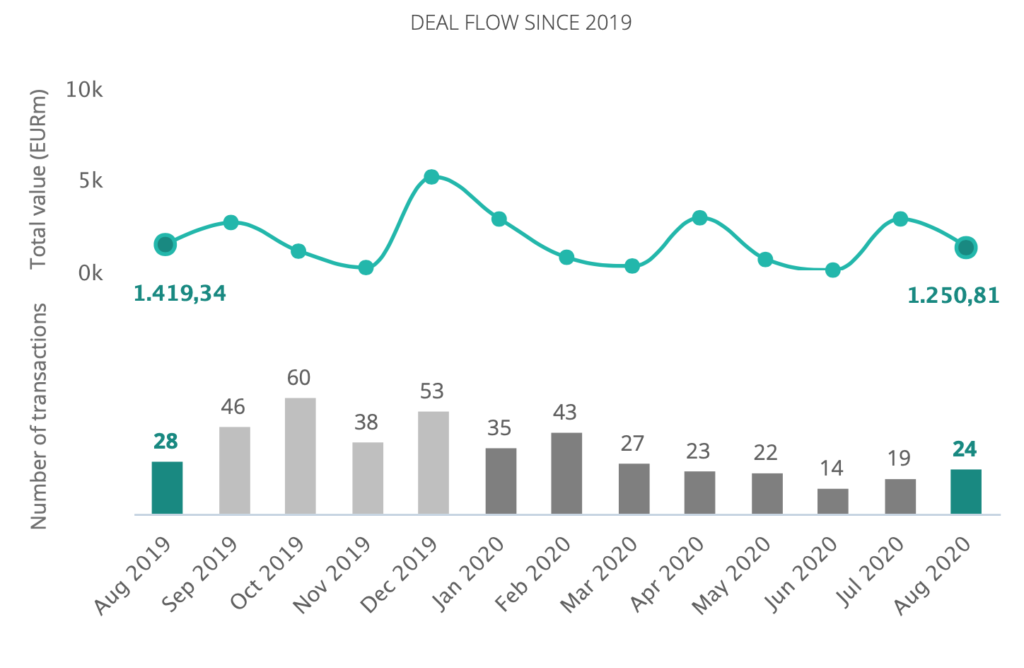
El mercado transaccional español ha registrado hasta el mes de abril un total de 595 operaciones con un importe agregado de EUR 12.163m, según el informe mensual de TTR. Estas cifras suponen un descenso del 59,55% en el capital movilizado y una disminución del 26,72% en el número de operaciones, con respecto al mismo periodo de 2019. 

Por su parte, en el mes de abril se han contabilizado 59 fusiones y adquisiciones, entre anunciadas y cerradas, por un importe agregado de EUR 2.785,56m. 

En términos sectoriales, el sector Inmobiliario ha sido el más activo del año, con un total de 142 transacciones, seguido por el de Tecnología, con 102. 

Ámbito Cross-Border 

Por lo que respecta al mercado Cross-Border, hasta abril de 2020 las empresas españolas han elegido como principales destinos de inversión a Portugal y Francia, con 12 y 6 operaciones, respectivamente. En términos de importe, Portugal es el país en el que España ha realizado un mayor desembolso, con un valor aproximado de EUR 1.191m.  

Por otro lado, Reino Unido y Estados Unidos, con 38 y 33 operaciones respectivamente, son los países que mayor número de inversiones han realizado en España. Por importe destaca Alemania, con un importe de EUR 1.759,60m. 

Private Equity y Venture Capital

En lo que va de año se han contabilizado un total de 35 operaciones de Private Equity por EUR 1.718m, lo cual supone un descenso del 59,30% en el número de operaciones y del 90,12% en el importe de las mismas, respecto al mismo periodo del año anterior.  

Por su parte, en el mercado de Venture Capital se han llevado a cabo 114 transacciones con un importe agregado de EUR 216m, lo que implica una reducción del 19,15% en el número de operaciones y del 68,73% en el importe de las mismas, en términos interanuales. 

Asset Acquisitions

En el segmento de Asset Acquisitions, hasta abril se han registrado 190 operaciones por un valor de EUR 3.089m, lo cual representa una disminución del 26,36% en el número de operaciones, y un descenso del 29,51% en el importe de éstas, en términos interanuales. 

Transacción del mes 
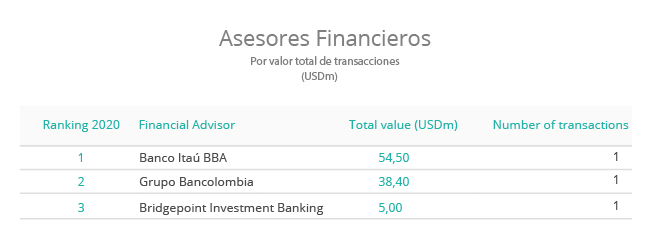
En abril de 2020, TTR ha seleccionado como transacción destacada la adquisición de Tallgrass Energy por parte de Blackstone, Enagás y GIC. 

La operación, que ha registrado un importe de EUR 2.755,83m, ha estado asesorada por la parte legal por Vinson & Elkins; Latham & Watkins; Sidley Austin US; Bracewell Law; y por Baker Botts. Por la parte financiera, la operación ha sido asesorada por Citigroup Global Markets; Credit Suisse Group; y por Evercore Partners.  

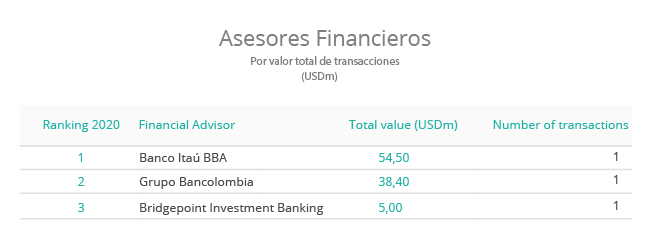
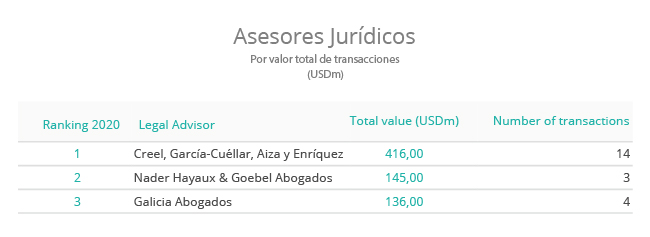
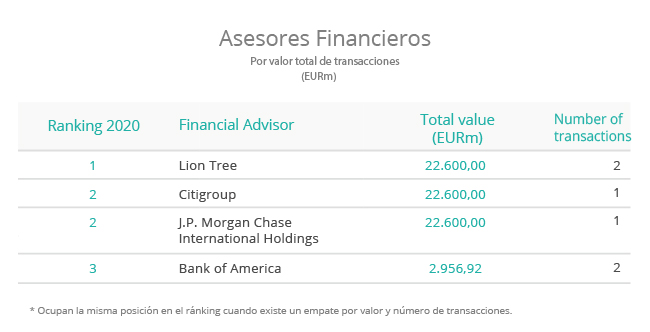
Ranking de asesores financieros y jurídicos 
Transactional Impact Monitor: Mexico

Transactional Impact Monitor: Mexico

30 April 2020

TTR’s Transactional Impact Monitor (TIM) is a Special Report combining local knowledge and market visibility from top dealmakers developed to address extraordinary situations affecting the macroeconomic stability and M&A outlook in core markets

INDEX

– M&A Outlook
– Private Equity
– Equity Capital Markets
– Handling the Crisis
– Dealmaker Profiles

Mexico has taken a somewhat unique approach to combatting the “invisible enemy” of SARS-CoV-2. President Andrés Manuel López Obrador, popularly known as AMLO, actively downplayed the threat posed by the virus , before reluctantly declaring a public health emergency on Tuesday, 31 March. He then advised non-essential workers to stay home, two weeks after much of the world was already locked down. 

“The government was trying to prevent an economic impact, especially on the informal economy, to avoid a social problem,” explained Galicia Abogados Founding Partner Manuel Galicia. 

More recently, AMLO has used his updates to the nation to rail against government bailouts and predatory neoliberal lending practices that only benefit the rich. Mexico’s private sector, he has maintained, shouldn’t hold its breath for a rescue package. 

“We will face the health crisis and the crisis of neoliberalism with a unique approach, one that will protect the majority, especially those in need, the poorest, that will serve everyone,” the president said in his address to the nation on 28 April.

Mexico’s private sector didn’t wait for a bailout. Those able to telecommute did so beginning in mid-March, though schools and restaurants remained open and many went about their daily business as usual until the beginning of April. “There was a situation in which the private sector was behaving one way, and the government another,” said Galicia. Testing was initially only offered in select government labs, before it was extended to private labs, a similar bottleneck faced in the US, noted Serficor IMAP Partner Gabriel Millán.

The Mexican authorities have since issued several decrees granting emergency powers and extended the 31 March quarantine through the end of May. On 23 April health officials announced plans to manufacture ventilators in Mexico in partnership with private entities acting in solidarity in anticipation of a peak in confirmed cases projected for mid-May. 

“The government has been sending strange signals, leaving many perplexed,” said Millán. The slow and dismissive reaction of the president reduced compliance when the stay-at-home orders were finally issued, Millán said, and images of people filling the streets immediately thereafter demonstrated the poor compliance with to “social distancing”, or “sana distancia” as it’s been promoted in Mexico. 

The launch of a super hero character, “Susana Distancia”, by Mexico’s Secretariat of Health didn’t reverse the relaxed attitude held by many, thanks in large part to AMLO’s insistence on greeting supporters with handshakes and hugs as the rest of the world “sheltered in place”, Millán said. “If that’s how people are behaving in Mexico City, the epicenter of contagion in the country, I can assure you that other parts of the country are heeding official health advisories even less.”

M&A Outlook
Click here to access the first issue of Transactional Impact Monitor: Mexico