DealMaker Q&A

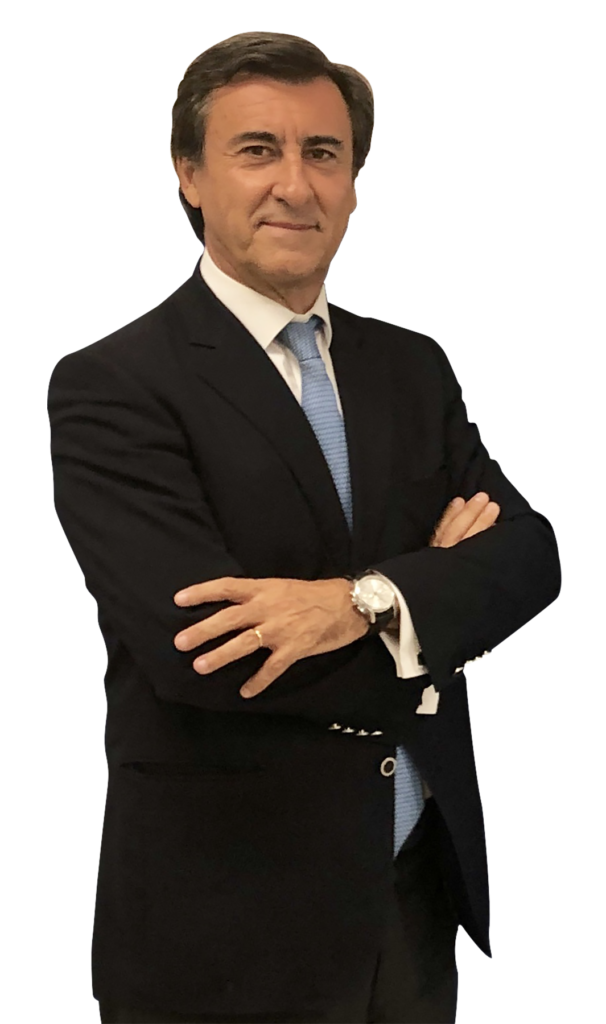
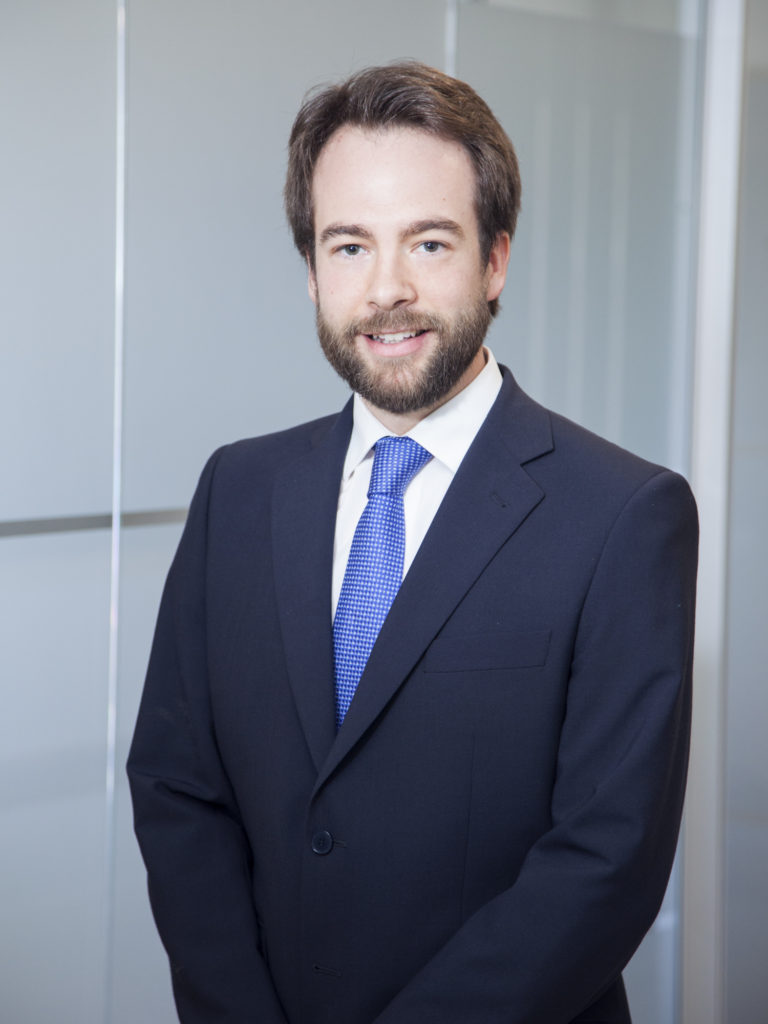
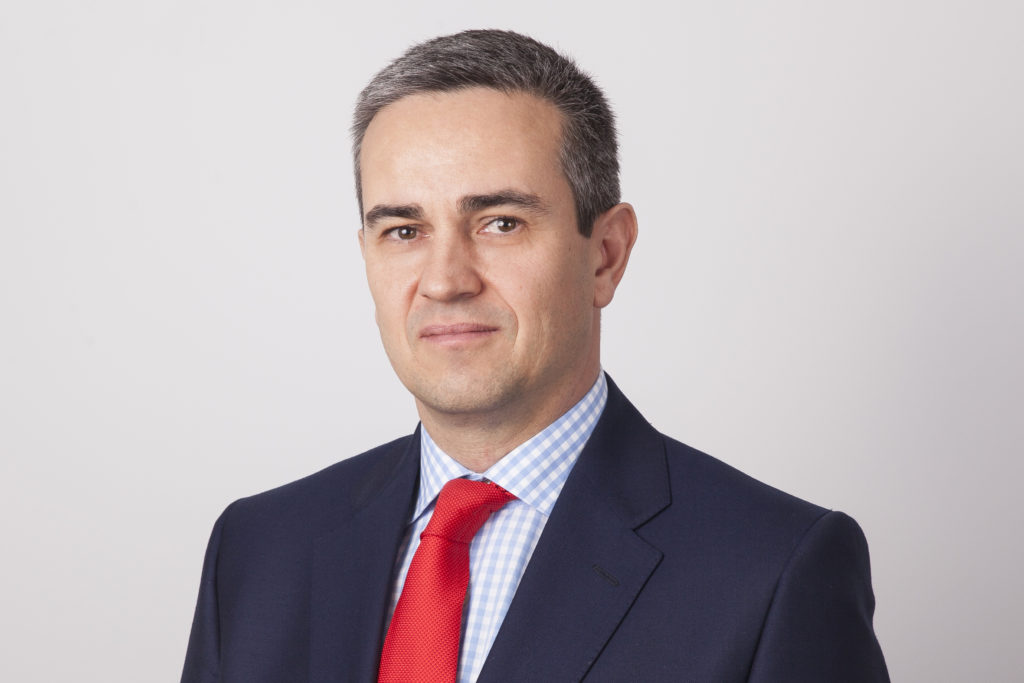
TTR Dealmaker Q&A with Garrigues Portugal Partners Susana Pimenta de Sousa and Mário Lino Dias

Garrigues Portugal Partners Susana Pimenta de Sousa and Mário Lino Dias spoke to TTR about what to expect from the Portuguese M&A and Private Equity markets in 2019 and the acquisition of Frutorra by Grefusa, chosen as Deal of the 4Q by TTR.

How would you assess the performance of the M&A market in Portugal in the first two months of 2019? Is there any scenario or trend that we should be aware for 2019?

The M&A market in Portugal in the first months of 2019 is in line with last year’s performance, although after a cool down period in the European transactions’ market in the second semester of 2018 it is advisable to assume that this “cooling” environment may probably hit the Portuguese market during the course of this year. In any case, it is always difficult to predict what will be its exact impact or if it is due to the relative uncertain environment that Europe is living nowadays.


What are the biggest constraints to M&A operations in Portugal today and how does it impact on the attractiveness of companies looking for investment, especially in regulated sectors such as financial, health and infrastructure concessions?

The recurrent main constraints are tax stability, predictability on timings and approvals from public authorities (particularly regulatory ones, when applicable) and uncertainties on future performance of Portuguese markets. In particular on healthcare where we may see some specific interests in Portugal coming from the other side of the Atlantic, the timing for reaction and approvals from the regulatory authority may be crucial to allow an effective investment, but if not expeditious investors will give up and look into other markets in Europe.


Regarding the performance of the Private Equity funds in Portugal, how does the Portuguese legislation figure in the face of international models and practices, in a scenario where most of the deals are not large enough to attract the major international Private Equity houses who have minimum tickets of much greater value?

The legal or regulatory framework tend not to be a blockage on the investment in Portugal. The funds have structures set up on different jurisdictions and the assessment made at the Portuguese level is mainly centered on the target legal and economic environment. In our experience the issue raised by the size of the transactions that brings Portugal out of the radar due to minimum ticket levels is balanced by the attractiveness of a less competitive transactional market (with still one to one negotiation available and less competitive bids), price with multiples still below other Southern European countries and ability to find well-managed companies with leading position on specific sectors.

When it comes to foreign investments made in Portuguese companies, Spain remains the country’s biggest investor, especially in the Real Estate and Health sectors. What are the current market conditions that help explain this preference and will it last?

Portugal is almost a natural choice for Spanish investors, as they normally think about building an Iberian strategy for positioning their companies and groups. The geographical proximity is also a factor for the choice, as it will involve fewer resources rather than an investment in other or culturally different jurisdictions. The Spanish economy is still performing very well and the perspectives are good for 2019, although some political uncertainties, so the preference for Portugal will last for sure!

In November 2018, the Spain-based nuts and cereal snacks producer Grefusa acquired 70% of the Portuguese Frutorra from the Fernandes Pimenta family, chosen as Deal of the 4Q by TTR. How did Garrigues land this mandate and what would you highlight in terms of importance and complexity in this deal?

Garrigues has landed the mandate due to the long-standing relationship with Grefusa as client for many years, particularly through our offices in Valencia. Frutorra has a leading position in the dry fruits market in Portugal. Therefore, its acquisition by Grefusa was important not only because it marked the entrance of Grefusa into the Portuguese market but also as an essential factor to meet their growth plans and to reinforce their position in the dry fruits sector. The complexity of the deal was mainly related to the fact that Grefusa was not acquiring 100% of the share capital, and therefore the parties needing to agree on the future terms of their relationship subject to a very short timeframe.

DealMaker Q&A

Entrevista con Ínigo del Val, socio en Allen & Overy España.

Ínigo del Val, socio en Allen & Overy España

TTR – ¿Cómo definiría usted la actividad del mercado de M&A español una vez finalizado el año? ¿Cuáles considera que son los principales factores explicativos de los resultados obtenidos?

Creo que no digo nada que no se haya dicho al señalar que ha sido un año estupendo. Los motivos son conocidos por todos: fondos disponibles en los industriales y los inversores, disponibilidad de deuda a precios razonables y apetito inversor. A pesar de haber existido incertidumbres macro-políticas y económicas los factores antes mencionados han marcado el nivel de operaciones de M&A. por otro lado el tejido industrial español ha dado muestras de fortaleza y haber hecho las cosas bien después de la crisis, creo que el país ha sabido vender confianza.

TTR – Según los datos de TTR, de las 2.454 operaciones registradas en España durante el año 2018, 1.336 son domésticas, con un importe agregado de EUR 8.799m, y 1.118 son crossborder, con un importe agregado de EUR 107.113m. Estos datos pueden entenderse como una fortaleza, en la medida en que pueden verse como un indicador de la elevada interacción internacional de las empresas españolas, o como una debilidad, en la medida en que los datos del mercado doméstico podrían considerarse no demasiado elevados. ¿Cuál es su opinión?

Es un dato natural y no sorprendente. Somos una economía fuerte pero no enorme y nuestras empresas están ahora mucho más internacionalizadas que antes. Es difícil ver operaciones inlcuso de “mid-market” sin componente internacional; esto es bueno. Somos un país receptor de inversión y esto también es bueno.


TTR – Como experto en el segmento Private Equity, ¿considera usted que las cifras registradas en 2018 son positivas? ¿Por qué?

Lo son, indudablemente. La competencia por buenos activos es feroz, la subasta en operaciones incluso de tamaño moderado es la norma y se ven pocas operaciones bilaterales salvo que tengas ángulos especiales. El sector está sano, hemos vivido épocas malas y todos somos más precavidos pero por ese mismo motivo creo que estamos mejor preparados para un cambio de ciclo.


TTR – Varias firmas de Private Equity internacionales de renombre han redoblado su apuesta en 2018 por el sector inmobiliario español, como es el caso de Blackstone, Cerberus, Lone Star, etc… ¿Qué condiciones se dan en el sector para que sea tan demandado por este tipo de entidades internacionales? ¿Por qué las firmas de private equity españolas parecen tener un menor interés en el real estate español?

Los fondos que mencionas han estado muy ligados al sector inmobiliario desde hace años con las operaciones de recompra de carteras a los bancos, lo conocen y han creado equipos expertos en ese ámbito. Tras la crisis queda mucho ladrillo que sacar de los balances de los bancos y ellos son los que más experiencia tienen en hacerlo y considerar su rentabilidad. Creo que los fondos nacionales son más puro capital riesgo y tienen la ambición de invertir en sectores industriales. Tampoco hay muchos fondos nacionales interesados en infraestructuras. Los fondos nacionales tienen otras pretensiones en retornos y equipos preparados para otro tipo de activos; no es su estrategia de inversión real estate salvo las empresas (ya incluso cotizadas) que operan en el sector.


TTR – ¿Qué otros sectores diría usted que se perciben como los de mayor potencial por players nacionales e internacionales del segmento Private Equity?

En España las operaciones grandes seguirán girando en torno a energía  e infraestructuras ya que son gran parte de las grandes compañías que hay en España. Pharma, real estate, salud… todos esos sectores son muy atractivos en estos momentos.


TTR – ¿Cómo prevé que se desarrolle el año 2019 en términos de M&A y Private Equity en España?

Creo que será parecido a 2018 y está empezando muy fuerte. Los mercados de capitales están bastante parados y eso hará que una potencial desaceleración natural en private M&A se copense con la necesidad de invertir. Tengo más dudas para 2020.

DealMaker Q&A

DealMaker Q&A with Helena Vaz Pinto, M&A partner at Vieira de Almeida.

According to Helena Vaz Pinto, 2018 has been a quite positive year for M&A in Portugal, even with a “structural problem of financing the Portuguese economy, with repercussions in the M&A market”.

How would you assess the performance of the M&A market in Portugal since the beginning of 2018?

The assessment of the Portuguese M&A market in 2018 is quite positive. It has shown clear signs of maturity. It is a market that is no longer driven by the privatizations of large companies (which seems to be a closed chapter), nor a market predominantly integrated by restructuring processes and distressed M&A.

There is abundant liquidity, in particular from the part of foreign investors, and in a context of low interest rates, the M&A market tends to become more dynamic.
Although the distressed M&A component is still relevant, there has been a significant flow of operations that do not qualify as such and that evidence the existence of a certain development of the Portuguese transactional market. Obviously, the size of the transactions is adjusted to the dimension of the national economy, thus focusing mainly on midcap companies.
There was a clear preponderance of some sectors: real estate, financial (banking and insurance) energy, real estate and infrastructure (transport, health, tourism, education, telecoms, etc.).

In your opinion, what are the biggest constraints to M&A operations in Portugal today?

There are a number of structural factors that affect the Portuguese business ecosystem and that impact on the attractiveness of companies for the purpose of enticing investment. Amongst those factors it is worth mentioning the (still) excessive indebtedness and the limitations and restrictions on access to funding in the national banking system and the limited use of alternative sources of financing, namely via the capital market.

There continues to be a structural problem of financing the Portuguese economy, with repercussions in the M&A market. In M&A operations there is a very significant prevalence of foreign investment (of the most diverse origins) that is funded outside the Portuguese financial system. Obviously, it is also the difficulty to obtain finance and capital that pushes Portuguese companies and groups to rationalize their structures, through the sale of assets, the formation of partnerships with third parties or the sale of businesses, generating a significant part of the Portuguese transactional market workflow.

On the other hand, the majority of transactions are not large enough to attract the major international Private Equity houses who have minimum tickets of much greater value.

From another perspective, the fact that the current governmental solution is centered in an alliance between the socialist minority Government and the leftwing parties, led to the approval in 2018 of new legislation imposing the need to obtain the prior permission of employees in the transfer of businesses structured as asset deals. Depending on how courts will interpret and apply such legislation, this may be a relevant obstacle that may jeopardize or restrict the election for such transactions.

Corporate transactions in regulated sectors (financial, health, infrastructure concessions) still involve a lot of bureaucracy and excessive delay in the authorization processes to which they are subject. The issue of excessive delays is particularly relevant in the health sector where we see transactions that take more than one year to be authorized by the competent authorities. This issue is also present in the transactions of distressed assets carried out in a judicial context.

The performance of Venture Capital funds in Portugal has had quite an interesting year in 2018. How do you see the scenario of Portuguese legislation in the face of international models and practices, both for investors and for those seeking funding?

There is a boom of start-ups, venture capital funds, incubators, accelerators and programs and policies to stimulate this type of investment.

There was, in fact, more activity in Venture Capital in 2018 that is based on an economic and political context of incentive to entrepreneurship and innovation. There is a boom of start-ups, venture capital funds, incubators, accelerators and programs and policies to stimulate this type of investment.

In 2018 Venture Capital investments have been on track, but it is particularly worth mentioning that there has been some successful exits this year (which are an essential element of the Venture Capital investment cycle) and which are breaking the stagnation experienced in recent years in the sector (the most striking illustration of this was the IPO Anglo-Portuguese unicorn Farfetch).

The Venture Capital industry in Portugal has always been and remains extremely open and sensitive to international trends, adhering to US-based models and practices. The existing Portuguese regulatory framework in not however adequate for Venture Capital investment, and the adoption of a specific legal regime for this type of investment would thus be highly recommended.

In fact, the Portuguese legislation – in particular, corporate law with respect to investment models and corporate governance -, is not in line with the Venture Capital Anglo-Saxon based legal system, and the design and structuring of a Venture Capital transaction usually requires some adjustments to cope with international standards and practices. These adjustments are not very well understood by foreign investors and may give room to a certain level of entropy.

In this context, we have seen the relocation of Portuguese companies to other jurisdictions with more “investor friendly” corporate and governance structures, such as the USA, but also other European jurisdictions such as the UK and Luxembourg.

Which transactions would you highlight in terms of importance and complexity this year, whether you have acted directly or with the participation of Vieira de Almeida?

On the team’s work in 2018, in terms of importance I would highlight the following transactions the sale of Alitce/PT’s telecommunication tower businesses in Portugal, creating the first telecommunication tower company in Portugal.

There were also a number of deals in the energy sector (solar and wind) a large number of restructuring transactions that always involve a certain level of complexity.

In terms of complexity, I would also like to highlight the closing of the sale to Mirova Core Infrastructure in the beginning of 2018 of the combined shareholding stakes of two PPP in the road sector in Madeira Island (VIAEXPRESSO and Vialitoral). The sale of the stakes in the two companies was made by two different groups of shareholders with different interests and positions (some sold the entire stake in each different company and some just sold part of its position and remained shareholders of the target companies). Although the sale of the stakes in each company were deal with by two separate agreements, they have been designed in terms that one transaction could not be completed without the other.

Finally, and with regard to the the financial sector, we would like to highlight the sale process launched by CGD (the Portuguese public bank) of its foreign subsidiaries in Spain and South Africa (still ongoing).

DealMaker Q&A

TTR DealMaker Q&A with Bustillo Abogados Partner Javier Bustillo (in EN/ES)


Javier is a Partner of Bustillo Abogados, a boutique commercial law firm that advises startups, private companies and venture capital funds in different types of industries on mergers and acquisitions. His knowledge in this kind of operations and his previous experience in Coca-Cola and Xerox Europe allows him to offer advice in complex operations and to understand the interests of the different parties. 


TTR: How would you describe the transactional market in 2018? Do you consider the records to be positive? 

JB: In the Mid-Market segment in which Bustillo Abogados is operating, we see a significant increase in operations with respect to previous years. This increase is mainly driven by a greater ease of financing and efforts to improve their market share as well as their geographical positioning, mainly through acquisitions in technology or innovation. After many complicated years for companies, they are now seeking to promote inorganic growth in order to strengthen their strategic positioning. It is also important to highlight the increase in the valuations of companies that are in a process of purchase since, on numerous occasions, they are presented with different purchase offers. In addition to the previously mentioned easy access to financing, this is due to an improvement in expectations of profitabilityin light of the economic recovery. However, it is difficult to say for how long this bullish trend will last. 


TTR: More than half of the transactions advised by Bustillo Abogados so far this year are Venture Capital transactions. Do you think that the startup universe in Spain has room for growth or have we already reached the peak? 

JB: The startup universe in Spain is maturing fast although we are still behind other countries that are several years ahead of us with regards to creating new trends, innovation or know-how. We see a clear approach of large and medium-sized companies to innovation through the acquisition of startups that allow them, among other things, to incorporate innovative technology or accelerate the process of digital transformation. Although the value of the larger operations is increasing, most of them are still of a relatively moderate size compared to other European countries. However, in my view, these differences are going to reduce considering the good work being done in the technological ecosystem in Spain.


TTR: After a period of innovative ideas, would you say that we can expect more disruptive ideas or that new startups that are going to emerge will base their development on the improvement or competition of existing projects? 

JB: The technology industry is constantly reinventing itself by seeking to offer innovative products and services that try to respond to the needs generated in our society as is happening now with blockchain for example. In a constantly evolving world, new ideas are emerging every day, attempting to take advantage of business opportunities and fill existing gaps in the market in different areas and sectors. In this context, many startups that are born, seek to simplify processes and jobs that nowadays are too complicated or tedious. However, we cannot forget that many of them bring us closer to realities that were previously unthinkable, such as artificial intelligence or mixed realities, generating at the same time new concerns and desires to which it is necessary to respond.This is why I am convinced that entrepreneurs still have a lot to surprise us with and to revolutionize our lives. 


TTR: And from the point of view of investors, in addition to the traditional funds that have been operating in Spain for several years, the numerous Business Angels, and the commitment to Venture Capital by certain banking institutions, is there room for new market players? 

JB: From my perception, Corporate Venture Capital is spreading rapidly, where companies that have had some previous experience with startups either through acquisitions, startup accelerators, incubators or others, decide to increase their commitment and establish their own investment structure. The most iconic companies in Spain have been implementing this strategy for some time already, nevertheless now there is a trend that non-listed companies are also wanting to professionalize their investments. The rapid advancement of technology and its direct impact on almost all business models we know, is forcing companies to be vigilant against possible disruptions in their industry. The establishment of a Corporate Venture Capital allows companies toanalyse, select and invest in a large number of startups that may be of interest to them, either because of a specific technology, to expand their existing portfolio of products or services or simply to improve internal work processes. At the being able to acquire only those that are really crucial for their business. 


TTR: Do you think that we will see a more specialization within sectors in which these new players may arise? If large companies begin to focus more on areas of investment in Venture Capital internally, could it be the case that the investment criterion is based more on the development of a certain technology necessary for the company than on the economic profitability of the project? Could this be understood as an intermediate step between internal development of technology and outsourcing? 

JB: This is precisely the point of Corporate Venture Capital, profitability is no longer seen in purely economic terms, but in many cases these investments are promoted for strategic, business, innovation or human resource reasons. A few decades ago, innovation was always born in the R&D departments of large companies due to the high volume of investment required and the long creation processes, but the lower cost and access to computers has allowed innovation to be transferred to anyone with access to internet. Therefore, companies must also change how and where they invest in order to innovate.


TTR entrevista

TTR: ¿Cómo describiría la situación del mercado transaccional en el año 2018? ¿Considera usted que los registros son positivos? 

J.B.G.: En el segmento de Mid-Market en el que nos desenvolvemos en Bustillo Abogados, apreciamos un incremento importante de operaciones con respecto a años anteriores impulsado principalmente por una mayor facilidad de financiación y el afán por mejorar la cuota de mercado y el posicionamiento geográfico, fundamentalmente a través de la adquisiciones en tecnología o innovación.  Tras muchos años complicados para las empresas, éstas tratan ahora de potenciar un crecimiento inorgánico con el objetivo de fortalecer su posicionamiento estratégico. También es importante destacar un incremento en las valoraciones de las empresas que se encuentran en proceso de compra al encontrarse, en numerosas ocasiones, con diferentes oferta de compra. Esto se debe, además de por el mencionado acceso a la financiación, por una mejoría en las expectativas de rentabilidad dada la recuperación económica. No obstante, lo que resulta difícil es conocer por cuanto tiempo se podrá mantener esta tendencia alcista.  


TTR: Más de la mitad de las operaciones asesoradas por Bustillo Abogados en lo que va de año son operaciones de Venture Capital¿Cree usted que el universo startup en España tiene margen de crecimiento o ya hemos alcanzado el cénit? 

J.B.G.: El universo startup en España madura a un ritmo muy rápido aunque aún estamos lejos de otros países que nos llevan unos años de ventaja en cuanto a generar nuevas tendencias, innovación o conocimiento. Vemos un claro acercamiento de las grandes y medianas empresas a la innovación mediante la adquisición de startups que les permiten, entre otras cosas, incorporar una tecnología innovadora o acelerar el proceso de transformación digital. Aunque crece la cuantía en las operaciones de mayor tamaño, la mayoría siguen siendo de un tamaño moderado en comparación con otros países europeos, unas diferencias que, desde mi punto de vista, se irán reduciendo al considerar la buena labor que se está haciendo en el ecosistema tecnológico español. 


TTR: Tras una etapa de ideas innovadoras, ¿diría usted que cabe esperar más ideas disruptivas, o que las nuevas startups que surjan basarán su desarrollo en la mejora o en la competencia de proyectos existentes? 

J.B.G.: La industria tecnológica se reinventa constantemente buscando ofrecer productos y servicios innovadores que tratan de dar respuesta a las necesidades que se generan en nuestra sociedad como esta ocurriendo ahora con blockchain por poner un ejemplo. En un mundo en constante evolución, cada día surgen nuevas ideas que tratan de aprovechar las oportunidades empresariales y ocupar los huecos existentes en el mercado en áreas y sectores de lo más variado. En este escenario, muchas de las startups que nacen, buscan simplificar procesos y trabajos que puedan resultar complicados o tediosos en la actualidad. Sin embargo, no podemos obviar tampoco que muchas de ellas nos  acercan a realidades que antes eran impensables como la inteligencia artificial o las realidades mixtas, lo que a su vez, genera nuevas inquietudes y deseos a los que será necesario responder. Es por ello que estoy convencido de que los emprendedores aún tienen mucho con lo que sorprendernos y revolucionar nuestras vidas. 


TTR: Y desde el punto de vista de los inversores, además de los fondos tradicionales que llevan varios años operando en España, de los numerosos Business Angels existentes, y de la apuesta por inversiones de Venture Capital que están llevando a cabo determinadas entidades bancarias, ¿hay cabida para nuevos players de mercado? 

J.B.G.: Desde mi percepción, se está extendiendo con fuerza el formato de Capital Riesgo Corporativo, donde las empresas que han tenido algún contacto previo con startups ya sea mediante adquisiciones, aceleradoras de proyectos de startups, incubadoras u otras deciden incrementar su compromiso y establecer su propia estructura de inversión. Las empresas más emblemáticas de España llevan tiempo desarrollando esta estrategia si bien es cierto que ahora se percibe un movimiento en las empresas no cotizadas que también buscan profesionalizar sus inversiones. El rápido avance de la tecnología y su impacto tan directo en casi todos los modelos de negocio que conocemos está obligando a las empresas a estar vigilantes ante posibles disrupciones en su industria. El establecimiento de un Capital Riesgo Corporativo permite a las empresas analizar, seleccionar e invertir en un elevado número de startups que puedan ser de su interés, ya sea por una tecnología determinada, porque amplían la cartera existente de productos o servicios o simplemente para mejorar procesos internos de trabajo, pudiendo adquirir solo aquellas que realmente sean determinantes para su negocio. 


TTR: ¿Cree usted, por lo tanto, que asistiremos a una especialización más acusada por sectores de los nuevos players que puedan surgir? Si las grandes empresas comienzan a habilitar áreas de inversión en Venture Capital a nivel interno, ¿podría darse el caso de que el criterio de inversión se basase más en el desarrollo de una determinada tecnología necesaria para la empresa que en la rentabilidad económica del proyecto? ¿Podría entenderse esto como un paso intermedio entre desarrollo interno de tecnología y externalización? 

J.B.G.: Ese es justo el punto de inflexión en el formato de Capital Riesgo Corporativo dado que ya no se busca únicamente rentabilidad en términos económicos sino que en muchos casos, dichas inversiones vienen promovidas por razones estratégicas, de negocio, de innovación o de recursos humanos. Hace unas décadas la innovación nacía siempre en los departamentos de I+D de las grandes empresas dado el alto volumen de inversión requerido y los largos procesos de creación pero el abaratamiento y el acceso a la computación ha permitido trasladar la innovación a cualquier persona con acceso a internet por lo que las empresas deben también cambiar el cómo y el dónde invierten para innovar. 

DealMaker Q&A

TTR DealMaker Q&A with Uría Menéndez-Proença de Carvalho Parner Jorge Brito Pereira

Fotografias perfil advogados Uría Proença de Carvalho; Janeiro 2016

Jorge Brito Pereira joined Uría Menéndez-Proença de Carvalho as a partner in 2016 and focuses his practice on corporate, M&A, financing and capital markets work. He has broad experience in advising on prominent transactions in Portugal, in particular privatizations, takeover bids, public offerings, M&A and financing.

TTR – In 2018, there has been a significant increase in the M&A deal value in Portugal, though this result was strongly influenced by some specific transactions such as China Three Gorges’ PTO over EDP and, more recently, the acquisition by Sonae Sierra of three shopping centers in Spain. How would you rate the Portuguese transactional this year?

There is no question that 2018 will close as a very positive year for M&A transactions in Portugal.

JBP – There is no question that 2018 will close as a very positive year for M&A transactions in Portugal. Furthermore, the M&A market has been increasingly positive in the last few years. The focus on Portugal by foreign investors cannot be disputed today, and low interest rates (which have had a direct effect on regulated markets and real estate) is one of the factors driving this trend. At Uría Menéndez – Proença de Carvalho, our M&A activity has been increasing exponentially for the last few years and therefore we are very optimistic about the near future.

TTR – Though the Real Estate sector remains the most attractive for investors, other segments such as Technology and Finance & Insurance have emerged as hot targets for investments in the country. What are the market conditions that favor or explain this appetite for Portuguese companies in those segments?

JBP – Different market conditions can explain that effect. Firstly, M&A is closely dependent upon an investor’s ability to acquire a loan at a good interest rate, and the truth is that we are currently experiencing an environment of historically low interest rates. Also, as a side effect of these low interest rates, the discounted cash flow of a company’s future earnings are worth more. This triggers movement in the market – new buyers, with new valuations of assets, create movement. Secondly, different sectors of our system are, for different reasons, in the process of consolidation, which always ends up triggering acquisitions. Finally, Portugal has been under the spotlight of foreign investors who, in contrast to the bailout years, now view Portugal as an interesting, stable and promising economy.

TTR – Which deals would you highlight in terms of importance and complexity this year?

JBP – Because of its value, and at a moment in which its outcome is still unclear, the China Three Gorges takeover appears to be the most important transaction of the year (at least, so far) but there are many others. Fortunately, Uría Menéndez – Proença de Carvalho is, or has been, involved in most of the significant transactions of the year (unfortunately I cannot disclose information regarding ongoing transactions and current clients).


TTR –  Any scenarios or trends that we should be on the lookout for within the Portuguese M&A market in the coming months or in 2019? And which sectors do you believe have the greatest potential for growth?

JBP – 2019 looks rather promising for the M&A market. It is hard to point out the actual areas in which it will more active, but it seems clear that the financial, energy and telecom sectors will be the most dynamic.