Content available in English and Spanish (scroll down)
TTR Dealmaker Q&A with Pérez-Llorca
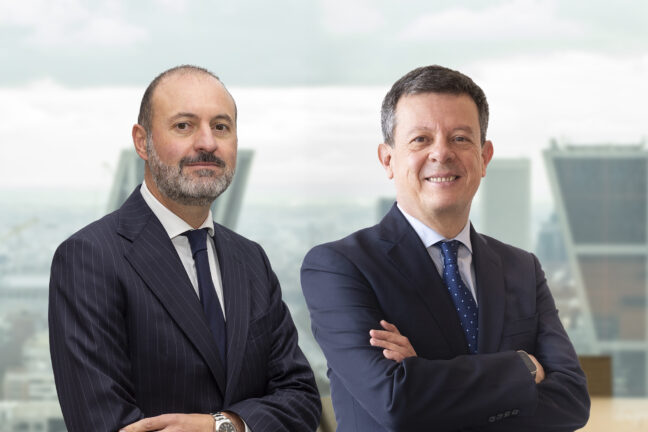
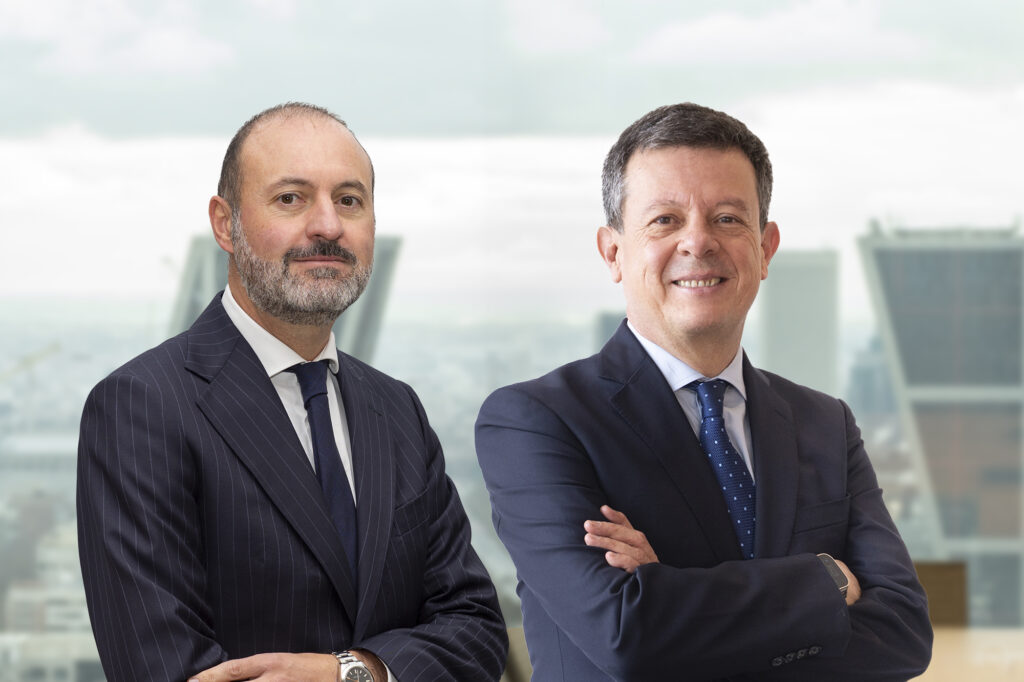
Partners Iván Delgado and Mauricio Piñeros
Iván Delgado is Pérez-Llorca’s International Executive Partner. He leads the firm’s international strategy and oversees its foreign operations. A partner since 2007, he was in charge of opening the New York office in 2015, which he led for five years. He currently combines his executive responsibilities with advising on complex transactions, especially those with an international dimension, focusing on Latin America and the US.
With more than 20 years of experience, Iván specialises in M&A and private equity transactions, both in listed and unlisted companies. He has advised on some of the most significant transactions in the Iberian market in recent years. These include AM FRESH Group and EQT in the merger of SNFL with IFG (€1.742 billion), Telecom Argentina in the acquisition of 99.99% of Telefónica Argentina (US$1.245 billion), Energy Infrastructure Partners in its investment in Plenitude (€549 million), Bluestone Food and Tech Investments in the acquisition of 100% of AMC Group (€330 million), Codere in the combination of its subsidiary Codere Online with the US SPAC DD3 Acquisition Corp. II (US$300 million), Nexans in the acquisition of the Centelsa group from Xignux (US$225 million), Familia Amodio in the acquisition of a significant stake in OHL (€55 million) and Insight Partners, Salesforce Ventures and ISAI in several rounds of investment in Copado (US$96 million and additional transactions).
He has also participated in transactions with a strong technological or regulatory component, such as the sale of Strands to CRIF, the acquisition of SafetyPay Spain by Paysafe, and the sale of Qipro Soluciones to Accenture. Recognised by MergerLinks as one of the top M&A lawyers in Spain (2023), Iván is also listed as a “Leading Individual” in Legal 500. He holds a degree in Law and a Master’s degree in Legal Practice from Universidad Carlos III, where he has also served as an associate lecturer. He is also a member of the Madrid Bar Association, the New York City Bar and is the treasurer of the CHGBE Committee of the IBA.
Mauricio is the Country Chair of Pérez-Llorca Colombia and leads the Tax practice. Since he began his professional practice in 1987, he has advised national and multinational companies on mergers and acquisitions, corporate taxation, tax structuring, project finance and foreign investment. He also advises individuals and families on estate planning and taxation.
He has a strong track record in significant transactions. Some examples of his experience include the corporate reorganisation of Ecopetrol, the merger between SABMiller and Bavaria, and the acquisition of Libertad and Grupo Pão de Açúcar by Almacenes Éxito. He has also led processes such as the restructuring of Bogotá Beer Company, the reorganisation of Mercantil Colpatria and the design and implementation of Grupo Aval’s loyalty plan. He has provided strategic advice on tax planning to companies in the energy sector and has supported the acquisition of the Briceño-Tunja-Sogamoso road concession.
Between 2018 and March 2024 he was a judge of the Constitutional Court, where he participated in key decisions. He has taught tax law at Universidad del Rosario, Universidad de los Andes and Pontificia Universidad Javeriana. He is a member of the Board of Directors of the Colombian Institute of Tax Law, which he chaired three times, and of the IFA Colombia. He has been recognised by Legal 500, Chambers Latin America, Leaders League, LACCA Approved and ITR World Tax.
TTR: The recent integration with Gómez-Pinzón marks an important milestone for Pérez-Llorca. What motivated this decision, and why did you choose Colombia as the first step for your direct expansion into Latin America?
The merger with Gómez-Pinzón arose from an opportunity that emerged naturally. It did not result from an active search, but from the alignment of strategic plans and a shared vision for growth. Colombia is a particularly attractive market, with a dynamic economy and in a key position for investment flows into the region from the United States, Europe, Mexico, Asia and other South American countries.
Gómez-Pinzón is, moreover, the perfect partner with which to take this step: a firm with a long history, an excellent team, and great prestige in its market. Together we share the ambition to build a leading practice in Colombia and provide clients with first class advice. This integration not only strengthens our presence in Latin America, but also boosts our internationalisation strategy in the region with a project that we are very excited about.
TTR: What strategic synergies do you identify between the Spanish and Colombian markets? What types of investors or clients are leading transactions between both jurisdictions?
Spain and Colombia have a very close relationship, with economic and cultural ties that facilitate investment and create many opportunities in both directions. There is a clear synergy in sectors such as energy, infrastructure, finance, technology and cross-border M&A transactions, where demand for solutions that combine local knowledge with international experience continues to grow.
Our commitment to remaining close to our clients in all their investment plans has been the driving force behind our internationalisation strategy. Today, many of these transactions are led by multinationals and international funds. The integration with Gómez-Pinzón enables us to work more closely with them and provide the advice they need in both jurisdictions, with teams operating as one.
TTR: How would you describe the performance of the Colombian mergers and acquisitions market so far in 2025? Which sectors are showing the greatest dynamism or appeal for international investors?
In 2025 we have seen an uptick in M&A transactions in Colombia. The most dynamic sectors have been technology, telecommunications (especially with regard to towers), renewable energy, infrastructure, health, mass consumption and financial services. In these sectors, local companies have attracted significant investor interest.
Colombia remains attractive to international investors because of its strategic position in Latin America. This is coupled with a strong domestic market, increasingly integrated into regional trade, and a resilient business class, capable of generating strategic alliances that drive competitiveness. As a firm, we see clear opportunities to support complex transactions that respond to this active and changing environment.
TTR: From Pérez-Llorca’s perspective, what are the main trends shaping the M&A market in Spain in 2025? What role are international funds playing, and which sectors are the most active?
In 2025 we are seeing a very dynamic M&A market, driven by several factors. On the one hand, companies have regained their appetite for growth and are using corporate actions not only to expand, but also to transform their business models, incorporate digital capabilities and integrate artificial intelligence, while advancing their ESG objectives. In addition, there is greater availability of capital and a significant volume of assets is expected to come to the market, both from private equity portfolios and from divestments by large corporations seeking to focus on their strategic businesses.
International funds are playing a leading role. Private equity, venture capital and even sovereign wealth funds are very active, taking advantage of attractive prices and the need to deploy their high liquidity. Many of these funds are also entering a disinvestment phase after long holding cycles during the pandemic, which is driving secondary buyouts, spin-offs and sales to industrials. The sectors leading the activity include renewable energy, technology and software, real estate and logistics, healthcare and pharmaceuticals, as well as financial services, all of which are highly attractive to investors and continue to see large deals.
TTR: What are the main challenges and advantages of advising on transactions between Spain and Colombia? Are you observing an increase in the flow of bilateral transactions?
We have definitely seen an increase, almost immediately after the announcement of our merger, in the flow of work between our offices in Madrid and Bogotá and between our offices in Bogotá and Mexico. This allows us to conclude, at least preliminarily, that the decision we made was the right one. We observe interest from Spanish investors in key sectors such as infrastructure, energy, telecommunications and mass consumption. Spanish companies view Colombia as a dynamic market with opportunities for regional expansion, while Colombian companies leverage their access to Europe and Spanish expertise in strategic sectors. This relationship translates into M&A transactions, alliances and joint ventures that require specialised legal advice to meet both local regulations in each country and international standards.
In terms of challenges when advising on these transactions, one of the main hurdles is the difference in regulatory frameworks and the need to thoroughly understand the exchange, tax and competition regulations in both countries, as well as managing cultural and business specificities. Nonetheless, the advantages are clear, especially as Pérez-Llorca’s in-depth knowledge of both markets allows it to offer comprehensive and personalised support that minimises risks and maximises value for clients. Increasing trade integration and bilateral agreements also facilitate the structuring of efficient transactions, making this relationship a very promising field for strategic legal advice.
TTR: Which sectors currently offer the greatest opportunities for cross-border investment between the two countries? Where do you see the most added value for clients with a presence or interests in Spain and Colombia?
As mentioned in the previous answer, we are seeing movements in sectors such as infrastructure, energy, telecommunications and mass consumption.
In infrastructure, the country continues to make progress in transport, logistics, and in road, port and airport concessions. In energy, Colombia is accelerating the transition to renewable sources, bolstered by tax incentives and a clear roadmap for solar, wind and green hydrogen.
In telecommunications, there is growth in the expansion of 5G networks and the need for tower and technological infrastructure. Lastly, in mass consumption and retail, the rise of e-commerce and the demand for international brands are attracting major economic groups.
TTR: Does this integration with Gómez-Pinzón represent a first step towards a broader strategy in Latin America? Are you considering future openings in other countries in the region? en otros países de la región?
For the time being, our efforts are focused on strengthening the Colombian project and building a benchmark practice in this market, supporting our clients in complex transactions with a local and international approach. We are very excited about the firm growing, not only in size, but primarily in quality, by cultivating leading practices and recruiting professionals of the highest calibre, all the while maintaining the culture that defines Pérez-Llorca and that has been fundamental to our success.
Spanish version
Iván Delgado es Socio Ejecutivo Internacional de Pérez-Llorca. Lidera la estrategia internacional del Despacho y supervisa sus operaciones en el extranjero. Socio desde 2007, fue responsable de la apertura de la oficina de Nueva York en 2015, que dirigió durante cinco años. Actualmente compagina sus responsabilidades ejecutivas con el asesoramiento en transacciones complejas, especialmente aquellas con dimensión internacional y foco en Latinoamérica y EE.UU.
Con más de 20 años de experiencia, Iván está especializado en operaciones de M&A y private equity, tanto en sociedades cotizadas como no cotizadas. Ha asesorado en algunas de las transacciones más relevantes del mercado ibérico en los últimos años, tales como AM FRESH Group y EQT en la fusión de SNFL con IFG (€1.742 millones), Telecom Argentina en la adquisición del 99,99% de Telefónica Argentina (USD 1.245 millones), Energy Infrastructure Partners en su inversión en Plenitude (€549 millones), Bluestone Food and Tech Investments en la adquisición del 100% de AMC Group (€330 millones), Codere en la combinación de su filial Codere Online con la SPAC estadounidense DD3 Acquisition Corp. II (USD 300 millones), Nexans en la adquisición del grupo Centelsa a Xignux (USD 225 millones), Familia Amodio en la adquisición de una participación significativa en OHL (€55 millones) e Insight Partners, Salesforce Ventures e ISAI en diversas rondas de inversión en Copado (USD 96 millones y transacciones adicionales).
Asimismo, ha participado en operaciones con un fuerte componente tecnológico o regulatorio, como la venta de Strands a CRIF, la adquisición de SafetyPay Spain por Paysafe o la venta de Qipro Soluciones a Accenture. Reconocido por MergerLinks como uno de los principales abogados de M&A en España (2023), Iván figura también como “Leading Individual” en Legal 500. Es licenciado en Derecho y máster en práctica jurídica por la Universidad Carlos III, donde ha sido profesor asociado. Además, es miembro del Ilustre Colegio de la Abogacía de Madrid, del New York City Bar y tesorero del Comité CHGBE de la IBA.
Mauricio es el Country Chair de Pérez-Llorca Colombia y lidera el Grupo de Práctica de Tributario. Desde que inició su ejercicio profesional en 1987 ha asesorado a compañías nacionales y multinacionales en temas como fusiones y adquisiciones, impuestos corporativos, estructuración tributaria, financiamiento de proyectos e inversión extranjera. También asesora a personas y familias en planeación patrimonial e impuestos.
Cuenta con una sólida trayectoria en operaciones relevantes. Entre sus principales experiencias se encuentran la reorganización corporativa de Ecopetrol, la fusión entre SABMiller y Bavaria, y la adquisición de Libertad y del Grupo Pão de Açúcar por parte de Almacenes Éxito. También ha liderado procesos como la reestructuración de Bogotá Beer Company, la reorganización de Mercantil Colpatria y el diseño e implementación del plan de fidelización de Grupo Aval. Ha brindado asesoría estratégica en planificación tributaria a empresas del sector energético y ha acompañado la adquisición de la concesión vial Briceño-Tunja-Sogamoso.
Entre 2018 y marzo de 2024 fue conjuez de la Corte Constitucional, participando en decisiones clave. Ha sido profesor de derecho tributario en la Universidad del Rosario, la Universidad de los Andes y la Pontificia Universidad Javeriana.
Es miembro del Consejo Directivo del Instituto Colombiano de Derecho Tributario, que presidió en tres ocasiones, y de la IFA Colombia. Ha sido reconocido por The Legal 500, Chambers Latin America, Leaders League, LACCA Approved e ITR World Tax.
TTR: La reciente integración con Gómez-Pinzón marca un hito importante para Pérez-Llorca. ¿Qué motivó esta decisión y por qué eligieron Colombia como primer paso para su expansión directa en América Latina?
La integración con Gómez-Pinzón responde a una oportunidad que surgió de manera natural. No hubo una búsqueda activa, sino la coincidencia de planes estratégicos y una visión común de crecimiento. Colombia es un mercado especialmente atractivo, con una economía dinámica y una posición clave para los flujos de inversión en la región, desde Estados Unidos, Europa, México, Asia y otros países sudamericanos.
Gómez-Pinzón es, además, el socio perfecto para dar este paso: una firma con una larga trayectoria, un equipo excelente y un gran prestigio en su mercado. Juntos compartimos la ambición de construir una práctica líder en Colombia y ofrecer a los clientes un asesoramiento de primer nivel. Esta integración no solo refuerza nuestra presencia en Latinoamérica, sino que impulsa nuestra estrategia de internacionalización en la región con un proyecto que nos ilusiona enormemente.
TTR: ¿Qué sinergias estratégicas identifican entre los mercados de España y Colombia? ¿Qué tipo de inversores o clientes están liderando las operaciones entre ambas jurisdicciones?
España y Colombia mantienen una relación muy estrecha, con vínculos económicos y culturales que facilitan las inversiones y generan muchas oportunidades en ambos sentidos. Hay una conexión clara en sectores como energía, infraestructuras, financiero, tecnología y en operaciones de M&A transfronterizas, donde cada vez se demandan más soluciones que combinen lo local con lo internacional.
Nuestro compromiso por estar cerca de los clientes en todos sus planes de inversión ha sido el motor de nuestra estrategia de internacionalización. Hoy, tanto multinacionales como fondos internacionales son los que lideran muchas de estas operaciones. La integración con Gómez-Pinzón nos permite acompañarlos de una forma más cercana y ofrecerles el asesoramiento que necesitan en ambas jurisdicciones, con equipos que trabajan como uno solo.
TTR: ¿Cómo describirían el comportamiento del mercado colombiano de fusiones y adquisiciones en lo que va de 2025? ¿Qué sectores muestran mayor dinamismo o atractivo para inversores internacionales?
En 2025 hemos visto un repunte en las operaciones de fusiones y adquisiciones en Colombia. Los sectores con mayor dinamismo han sido tecnología, telecomunicaciones (especialmente lo que se refiere a torres) energía renovable, infraestructura, salud, consumo masivo y servicios financieros, en los que las empresas locales han despertado el interés de los inversionistas.
Colombia sigue siendo atractiva para inversionistas internacionales por su posición estratégica en América Latina. A esto se suma un mercado interno sólido, cada vez más integrado al comercio regional, y una clase empresarial resiliente, capaz de generar alianzas estratégicas que impulsan la competitividad. Como firma, vemos oportunidades claras para acompañar transacciones complejas que respondan a este entorno activo y cambiante.
TTR: Desde la perspectiva de Pérez-Llorca, ¿cuáles son las principales tendencias que están marcando el mercado de M&A en España en 2025? ¿Qué rol están jugando los fondos internacionales y qué sectores están siendo más activos?
En 2025 estamos viendo un mercado de M&A muy dinámico, impulsado por varios factores. Por un lado, las compañías han recuperado el apetito por el crecimiento y están utilizando las operaciones corporativas no solo para expandirse, sino también para transformar sus modelos de negocio, incorporar capacidades digitales, inteligencia artificial y avanzar en sus objetivos ESG. Además, hay una mayor disponibilidad de capital y se espera un volumen relevante de activos en el mercado, procedentes tanto de carteras de private equity como de desinversiones de grandes corporaciones que buscan centrarse en sus negocios estratégicos.
Los fondos internacionales están teniendo un papel protagonista. Private equity, venture capital e incluso fondos soberanos están muy activos, aprovechando precios atractivos y la necesidad de colocar su elevada liquidez. Muchos de ellos, además, se encuentran en fase de desinversión tras los largos ciclos de retención durante la pandemia, lo que está impulsando operaciones de secondary buyouts, spin-offs y ventas a industriales. Los sectores que están liderando la actividad son energías renovables, tecnología y software, inmobiliario y logístico, salud y farmacéutico, así como servicios financieros, todos ellos con un gran atractivo para los inversores y donde seguimos viendo operaciones de gran calado.
TTR: ¿Cuáles son los principales retos y ventajas al asesorar transacciones entre España y Colombia? ¿Están observando un incremento en el flujo de operaciones bilaterales?
Definitivamente hemos visto un incremento, casi que inmediato después de anunciada nuestra integración, en el flujo de trabajo entre nuestras oficinas en Madrid y Bogotá y entre nuestras oficinas de Bogotá y México. Eso nos permite concluir preliminarmente que la decisión que tomamos fue la correcta. Vemos, entonces, interés de inversionistas españoles en sectores clave como infraestructura, energía, telecomunicaciones y consumo masivo. Las empresas españolas ven a Colombia como un mercado dinámico con oportunidades para expansión regional, mientras que las compañías colombianas aprovechan el acceso a Europa y la experiencia española en sectores estratégicos. Esta relación se traduce en transacciones de fusiones y adquisiciones, alianzas y joint ventures que requieren asesoría legal especializada para responder tanto a la regulación local en cada país con estándares internacionales.
En cuanto a los retos al asesorar estas transacciones, uno de los principales es la diferencia en marcos regulatorios y la necesidad de comprender a fondo las normativas cambiarias, fiscales y de competencia de ambos países, así como gestionar las particularidades culturales y de negocio. Sin embargo, las ventajas son claras, especialmente como Pérez-Llorca: el conocimiento profundo de ambos mercados permite ofrecer un acompañamiento integral y personalizado que minimiza riesgos y maximiza el valor para los clientes. Además, la creciente integración comercial y los acuerdos bilaterales facilitan la estructuración de operaciones eficientes, haciendo de esta relación un campo muy prometedor para asesoría legal estratégica.
TTR: ¿Qué sectores presentan hoy mayores oportunidades de inversión cruzada entre ambos países? ¿Dónde ven más valor añadido para clientes con presencia o intereses en España y Colombia?
Como lo mencioné en la respuesta anterior, vemos movimientos en sectores como infraestructura, energía, telecomunicaciones y consumo masivo.
En infraestructura, el país sigue avanzando en proyectos de transporte, logística y concesiones viales, portuarias y aeroportuarias; en energía, Colombia está acelerando la transición hacia fuentes renovables, con incentivos tributarios y una hoja de ruta clara en energías solar, eólica e hidrógeno verde.
Por su parte en telecomunicaciones, se ve movimiento en la expansión de redes 5G y la necesidad de infraestructura de torres y tecnológica; y finalmente, en consumo masivo y retail, el crecimiento del e-commerce y la demanda por marcas internacionales impulsan la llegada de grupos económicos importantes.
TTR: ¿Esta integración con Gómez-Pinzón representa un primer paso hacia una estrategia más amplia en América Latina? ¿Están considerando futuras aperturas en otros países de la región?
Por el momento, nuestros esfuerzos pasan por reforzar el proyecto colombiano y construir una práctica de referencia en este mercado, apoyando a nuestros clientes en operaciones complejas con un enfoque local e internacional. Tenemos una gran ilusión por hacer crecer la firma, no solo en dimensión, sino principalmente en calidad, en prácticas líderes y en profesionales con el máximo talento, manteniendo siempre la cultura que caracteriza a Pérez-Llorca y que ha sido fundamental en nuestra trayectoria.