DealMaker Q&A

TTR DealMaker Q&A with Pérez Alati Grondona Benites & Arntsen Partner Eugenio Aramburu


Deal Summary:

On 2 November, PeCom Servicios Energía, a subsidiary of Argentine conglomerate Pérez Companc Family Group, closed the acquisition of pump and petrochemicals manufacturer Bolland y Cia. for ARS 1.5bn (USD 126.3m). The transaction was selected by TTR as Deal of the Quarter in Argentina for 4Q18. The deal follows the USD 98m acquisition of PeCom Servicios Energía in 2015 by the family-owned holding, marking the group’s reentry into the oil and gas business and the subsequent acquisition of Tel3 closed in August. The group had previously exited its energy holdings with the USD 1.1bn sale of Petrolera Pérez Companc to Petrobras in 2002.

TTR talked to Pérez Alati Grondona Benites & Arntsen Partner Eugenio Aramburu about the deal.

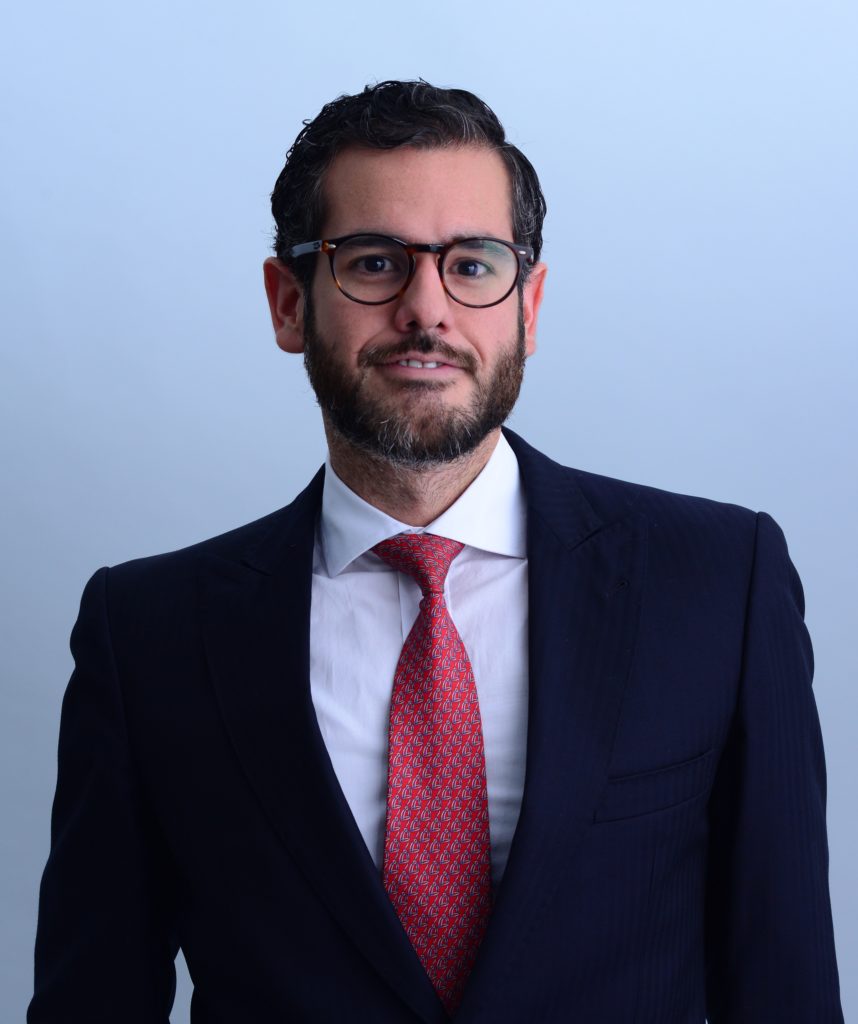
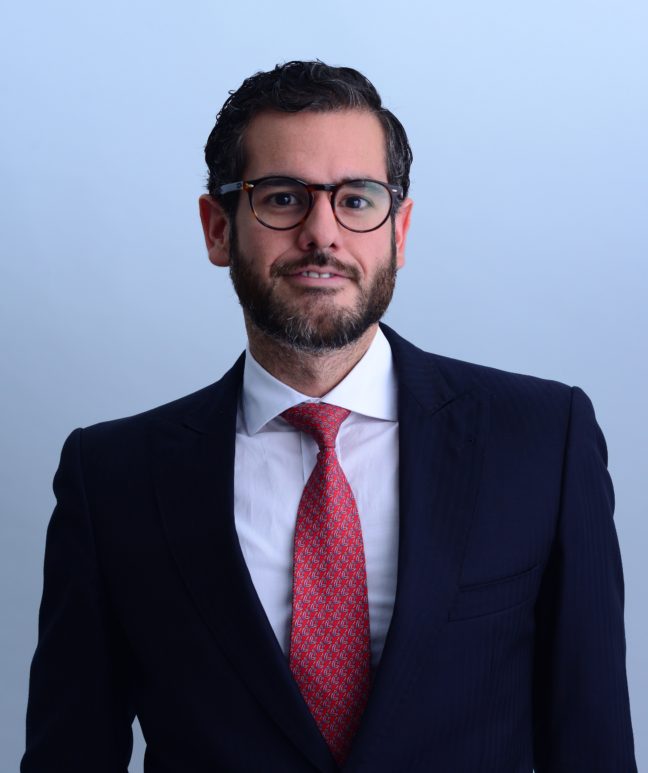
Eugenio Aramburu

TTR: How did you land this mandate?

EA: We’ve been working with the Pérez Companc Family Group for a little more than a year-and-a-half. They knew of us through a few other deals, including the sale of the family oil business to Petrobras in 2002, when we represented the buyer. We also represented BRF when it bought a number of brands from the family’s food business, Molinos Río de la Plata, in 2015. They had a chance to interact with us at the time and selected us because we were one of the bigger firms in Argentina providing comprehensive legal services and they liked how we worked.

TTR: How did this deal come about?

EA: Pecom approached Bolland. Some shareholders wanted to sell, some did not. Some were older and some had taken equity in a recent management buy-out.

TTR: Why was Pecom interested in expanding its holdings in Argentina’s oil and gas industry?

EA: The Pérez Companc Family Group is confident that the oil and gas industry is going to expand and they wanted to expand into services they did not already offer to become a full-service provider to the industry. Through this deal they can now offer integrated solutions to all the operators throughout the oil and gas industry.

TTR: Why was it a good time to invest full heartedly in this industry?

EA: Notwithstanding the international price of oil, there is an absolute necessity from the standpoint of the Argentine government to develop the Vaca Muerta reserves as it is one of the biggest reserves of shale gas in the world. While development of these assets may be slower because of international energy prices, Argentina is going to provide incentives to develop this industry regardless. Argentina is currently importing gas, from Venezuela and elsewhere, which will become unnecessary once these reserves enter production. All these reasons motivated Pecom to have a bigger presence in the gas industry.

TTR: How did recent political and economic reforms in Argentina set the stage for this deal?

EA: During the Kirchner administration you would never have seen a transaction like this. The government had intervened in oil and gas prices and investments in the industry were basically zero. These investments that require a long term for amortization need a stable environment. When Macri came to power, the situation changed drastically. The government set out to stimulate investments in the energy market, which is where there have been more transactions. This transaction couldn’t have happened before. This is a bet on the part of the Perez Companc Group demonstrating confidence in the Argentine government and the industry.

TTR: What made this transaction challenging?

EA: Bolland had a lot of individual shareholders and they didn’t all have the same interest in the sale, so it demanded a lot of negotiations aligning all their different interests. Secondly, it was a very significant deal for Pecom because it implied doubling the size of the company. Thirdly, the regional nature of the deal, with Bolland having operating companies not only in Argentina, but in Brazil, Bolivia and Colombia, made it quite complex. The transaction took a lot of time, especially because we had to coordinate due diligence throughout these different countries. Also, the target was run like a family company, so we had to work a lot with the sellers to help them develop a data room. Then, during the negotiations, Argentina devalued the peso, which had a business impact on the target, so that had to be negotiated as well.

TTR: How was the transaction financed and how long did it take to close?

EA: The Perez Companc Group has available funds to finance the deal, so we did not have to negotiate any financing agreement. It took 10 months between execution of the non-binding offer and closing.

TTR: Why was the target considered a good complement to Pecom’s existing operations?

EA: Bolland produced pumps for the oil and gas industry, while Pecom didn’t have a pump business. They also had a chemicals business, and that was also an area in which Pecom was not present. It was a strategic acquisition that transformed Pecom into a full services provider.

TTR: What became of Bolland’s minority partner in the Colombian operating company?

EA: A Colombian businessman had a 30% stake in the Colombian subsidiary. He’s a Colombian investor who saw an opportunity to exit, so he tried to apply pressure for the sale of his stake, and Pecom decided it was easier not to have a minority shareholder in Colombia. At the time of closing we negotiated a term sheet for the acquisition of his stake and that acquisition was negotiated and consummated after closing of the first deal. It was not a substantial amount compared to the larger deal.

TTR: How will Pecom leverage Bolland’s interntional presence?

EA: Increasing its operations across the region is definitely an objective for Pecom now that it has become the biggest local player in Argentina through this transaction. Bolland had operating subsidiaries where Pecom didn’t have any presence at all and can now look at how to increase their market participation in these markets with their full portfolio of products and services.

TTR: How hard will this acquisition be for Pecom to integrate?

EA: Integration will be a big challenge for Pecom. It’s acquiring a target that’s almost as big as itself. Though Pecom is a family-owned company, it was run more like an international company in terms of corporate governance and labor standards. Bolland had almost 800 employees that will need to adjust to new policies and a different compensation scheme. From a real estate perspective, Pecom will have to move its headquarters to a new building that is being constructed now because the entire staff couldn’t all fit at the existing facility. IT systems will need to be integrated too, which is also a challenge.

TTR: What other deals do you see on the horizon for Pecom?

EA: We are now involved in one ongoing transaction where the group is negotiating another important acquisition related to the energy industry. I cannot offer more details on that as a binding agreement has yet to be signed. Suffice it to say that they’re looking to deepen their foothold in Argentina’s oil and gas industry and this is not the last of their investments.

TTR: How was the valuation arrived at and how pleased were the sellers?

EA: The sellers were satisfied with the outcome. Despite the devaluation that happened in the midst of negotiations, the purchase price, which was denominated in dollars, was not modified.

Some of the sellers considered their stake in Bolland as a retirement plan to see dividends forever and many didn’t want to assume liabilities and indemnifications with the sale. The fact that the price was good helped appease the detractors.

TTR: Which practice areas were critical to your firm’s work on the deal?

EA: In the diligence process we had lawyers from all fields, including oil and gas and environmental because Bolland had a chemicals business that produced products used to enhance the productivity of wells. The real estate practice was also important because there were assets located in border areas, which means you have apply for special permissions with Argentina’s Ministry of the Interior owing to security issues. Labor law also come into play because the target had unionized employees and commercial litigation attorneys were also heavily involved.

TTR: What makes this deal stand out among other transactions you’ve worked on?

EA: It’s not that common for an Argentine company to acquire a regional target. The coordination required to perform due diligence in four countries makes it stand out. Also, In Argentina, it’s not that common to see such large transactions, though perhaps the sum is not that material for an international transaction. Thirdly, from a business and psychological aspect, it was a really keystone transaction for our client. The client was really focused and needed to take care of every detail. For all these reasons it was a very important transaction for us and it took a lot of time. It was also really important for the client given that it resulted in the biggest player in Argentina.

TTR: What does this deal say about the level of confidence in Argentina?

EA: This transaction serves as a vote of confidence, especially at a time when the Macri administration was having some difficulties in the face of a recession and nervousness due to inflation, with several investors, especially international investors, delaying their investments. The first ones that take advantage of these opportunities are local players, eager to take a chance. They’re here for the long run. Hopefully international investors will follow.
DealMaker Q&A

TTR DealMaker Q&A with Payet, Rey, Cauvi, Pérez Abogados Associate Alan García

Deal Summary:

On 30 November 2018, Lima-based asset management firm Sigma SAFI acquired a 51% interest in the Parque Eólico Marcona and Parque Eólico Tres Hermanas from Grupo Cobra for USD 56m, consolidating its ownership of Peru’s largest wind farms with a combined installed capacity of 130MW between them. The wind farms were developed by Grupo Cobra, a Spain-based subsidiary of ACS, with financing provided by a consortium of institutions including Eximbank, KFW DEG, FMO, CAF, Proparco and Natixis.TTR DealMaker Q&A with Payet, Rey, Cauvi, Pérez Abogados Associate Alan García

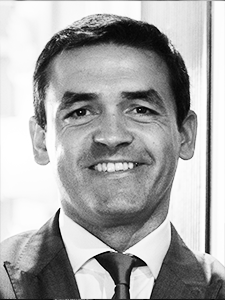
Alan García

Payet, Rey, Cauvi, Pérez Abogados Associate Alan García discusses details of a complex transaction that saw Sigma SAFI consolidate its ownership of Peru’s largest wind farm assets by paying off legacy creditors in the country’s first ever co-issuance.

TTR: How long have you been working with Sigma SAFI and how did you land this mandate?

AG: We’ve had a relationship with Sigma SAFI that spans several years. We represented the fund manager in 2015 and 2016 when it acquired its initial 49% interest in the two wind farms when Grupo Cobra retained its 51% stake. A couple of months ago we carried out a restructuring of the debt held by each entity, and from there we executed the acquisition. It was logical that we could be of value to the buyer given our understanding of the refinancing arrangement, which was a precursor to the acquisition. There were eight financial entities involved with mirrored contracts for Tres Hermanas and Marcona, each with its own project finance with all the associated step-in rights.

TTR: What made this transaction so complicated?

AG: The deal was complex because it required prepaying debt held by international development banks and simultaneously carrying out a private placement, all on the heels of a refinancing. Each project company had to be handled independently with their respective assets and concession agreements used as guarantees to the creditors. The complexities of the deal relate to its structure of guarantees that couldn’t be shared between entities and the symmetrical contracts that were drafted under New York and Peruvian Laws. The sequence of execution of the various contracts required to carry out the deal within a short period given to eliminate prior liens made the transaction especially challenging.

TTR: What makes this deal unique?

AG: This was the first co-issuance of notes by Peruvian issuers in Peru’s history. Being a replacement of debt and guarantees, basically with one project finance substituted by another, makes this deal stand out, especially given that between them the two wind farms represent 60% of the wind power capacity in Peru.

TTR: Which practice areas were involved?

AG: We had two teams working simultaneously, one dedicated to the acquisition and the other to the refinancing. Both teams were led by Finance and Capital Markets Partner Eduardo Vega and me, with parallel negotiations. We had corporate, tax, regulatory and energy specialists in each with a total of eight attorneys.

TTR Dealmaker Q&A – Hugo Rosa Ferreira

TTR Dealmaker Q&A

April 2016

Bankinter acquires Barclays Portugal

EUR 175m

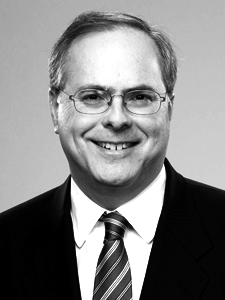
Hugo Rosa Ferreira 
PLMJ

On 1 April Spain’s Bankinter closed the acquisition of Barclays Portugal, marking its first foray beyond its home market. Hugo Rosa Ferreira led the PLMJ team that advised Barclays Portugal on the sale of its branch network, comprising commercial, private and corporate banking, along with asset management, insurance and pension portfolios.


Q: Why was PLMJ selected as the seller’s legal advisor?

A: The transaction relates to a Portuguese branch of the UK bank, so the seller needed local advice to structure the deal from a regulatory perspective and a transactional perspective. At the end of the day we had to transfer all the assets, including all the underlying contractual relationships governed by Portuguese law.

Q: How long has PLMJ been working with Barclays Portugal?

A: We had been advising the seller on a regular basis for six years. We were on retainer since 2011, although we began working with Barclays in 2010. We advised not only on the banking products but on restructuring the corporate loan book. That was the bulk of our work from 2010 to 2015. We also had a very large chunk of the corporate litigation and insolvency and restructuring of corporate clients. We also worked a little bit with Barclaycard and occasionally we provide some corporate banking advice.

Q: Why was the business structured as a branch network rather than a subsidiary?

A: It was a decision made when Barclays decided to come into Portugal. Under the EU banking directive it is a much easier process to establish a local branch rather than apply for a license. Barclays established a local branch network and grew organically.

Q: What prompted Barclays to exit Portugal?

A: The exit was made within the context of a more global strategy of withdrawing from smaller operations. It has been doing that in a few other countries such as Spain and Italy. Barclays exited Spain two years ago, and this deal falls within its global strategy of withdrawing from non-core continental European markets and focusing on its core operations.

Q: What made this transaction so complex?

A: The fact that we had to structure the deal as an asset sale rather than a share sale added complexity. In a traditional M&A deal you negotiate a traditional share purchase agreement. Since we didn’t have a company, we couldn’t sell the shares. We had to transfer each and every one of the contractual relationships, with clients, suppliers, tenants, landlords, each of those contractual agreements. We had to structure the deal in the most efficient and legally robust way possible. We had to identify all these contractual relationships to be transferred, how to do so without raising any regulatory issues and we had to try to mitigate any scenario where the counterparty would object. We had to structure the transfers differently for certain types of assets. For example, the retail banking business had one structure and the corporate banking business had another. Property and derivatives each had a specific legal structure. Most of the Portuguese operation was sold. The seller kept a little bit of core corporate and the Barclaycard business, which was its decision from the beginning.

Q: To what extent did clients object to the transfer of those contractual agreements?

A: Only an extremely small number of clients objected initially, insisting they wanted to keep their relationship with Barclays. Some were in litigation and for strategic reasons they didn’t want to transfer those contracts, or clients in default on their mortgage loans for example. There are several alternatives for those clients. Barclays has resolved nearly all the objections. Some of them required additional information. For those that really did want to stay with Barclays, there are solutions from a relationship standpoint. Barclays does have the ability to continue to serve those clients, but these really amount to a very small number. Most of the objectors were duly transferred since the deal closed, either they transferred to Bankinter or they were transferred to another bank. After all those were sorted out the number was even smaller.

Q: What practice areas were critical to closing the deal?

A: Banking and finance, property, employment, privacy and data protection. I would say that these four were the main practice areas that were paramount to the success of the deal. Others involved were competition, litigation and tax.

Q: How were M&A considerations incorporated into the asset sale structure?

A: although we had to structure the deal as an asset sale, we did have all the M&A type terms and conditions that you’d have in a share purchase agreement. We had everything transferred under an umbrella business sale and purchase agreement where we set out all the terms for the transfer. The transfer had to be carried out under specific types of agreements, but overall the terms and conditions are similar to what you’d find in an M&A deal, including price adjustments, warranties, covenants and conditions for indemnity, time frames for indemnities to begin and be waived, relieved. All those typical M&A conditions were brought into the deal under the framework agreement, although we had to transfer all the assets under specific transfer type agreements.

Q: What made these assets attractive for Bankinter?

A: This is Bankinter’s first expansion outside of Spain. Barclays had an established presence in Portugal. It has been in Portgual for at least 30 years. Barclays had a small-to-medium size operation in Portugal, which made it a good fit for what Bankinter was looking for in terms of expanding beyond Spain. It’s a small step towards becoming international, but it’s a reasonable and sustainable step for the buyer.

Q: How much competition was there for these assets?

A: There was a lot of interest from all types of potential buyers, from banks and investment funds, some of them looking to buy the entire operation, others part of the operation, including Portuguese and foreign banks, and mostly foreign funds.

Q: What made Bankinter’s offer the winning bid?

A: I believe that it was a combination of things. Bankinter did exactly what Barclays did when it entered the market to consummate the deal by opening a branch to acquire the assets. It “passported” its banking license from Spain. That was a relatively smooth detail. The fact that it was already an EU bank was a plus in its proposal, as some of the other bidders were not. Bankinter simply notified the Bank of Spain, which then notified the Bank of Portugal. It usually takes about four months to obtain the branch license.

Q: What conditions were imposed by market regulators for the deal to be approved?

A: None expressly as the deal was not subject to any conditionality. The deal was structured so that it was not subject to regulatory approval, at least the banking part. For the insurance part, the transfer of the portfolio was subject to regulatory approval, which was obtained. From the banking side, it was not, but implicitly we had to follow the principle of neutrality, in that it had to be neutral to all clients, and that was expressed in all the documents of the transaction itself and in the documentation used to seek the approval of clients. That was the only rule, not a written rule, but it was something that we had to follow. Although we didn’t need approval, we were in constant contact with the Bank of Portugal to keep the regulator apprised.

Q: Beyond the EUR 175m purchase price, what other investment does this deal imply?

A: The bank needed to be funded, so Bankinter had to provide the funding that was released to Barclays. On closing, Barclays UK no longer had to fund the bank, whereas conversely, Bankinter needed to inject the funds required to comply with capital requirements, which implies around EUR 2bn.

Q: What does this sale mean for Portugal’s financial services sector?

A: It’s an example of the appetite that the market has for Portuguese banks. The Portuguese banking market was traditionally concentrated among four or five large banks. One of them was Banco Espirito Santo, which was subject to resolution. Another, BCP, has been under distress for years now, while BPI and Caixa are also not in good shape. This presents an opportunity for foreign banks to establish themselves in Portugal with a solid operation. This deal shows there’s appetite for the Portuguese banking market, especially for these kinds of transactions.

Q: What has buoyed interest in the sector despite systemic problems?

A: The financial sector’s problems are the result of bad management and fraud. The problem is not with the customer base; the problem is with management. This deal is absolutely a positive indicator. There’s a discussion whether to completely open the market to foreign investors. There’s no restriction on foreign ownership, it’s more of a political issue with the left wing parties raising concerns. We’ve seen that the traditional Portuguese banks were not well managed. There are some examples of foreign banks coming in and being successful, such as Santander, one of the soundest, if not the soundest, bank in Portugal, and Deutsche Bank, which is also very successful in Portugal with certain types of clients. I don’t see any reason why banks wouldn’t open themselves to foreign investment. Where such investment has been made, it’s been positive. We will soon see the sale of Novo Bank, likely to a foreign bank or investment fund. There’s talk about consolidation among the market’s largest four or five banks, which are those that are in worst financial shape. The market is very much alive and I’m sure we’re going to continue to see, if not this type of transaction, large holdings in Portuguese banks sold to foreign investors in the next 12 to 24 months.

See-Full-Transactions-Details

Download PDF

TTR Dealmaker Q&A – Alan Klein ( Simpson, Thacher & Bartlett)

TTR Dealmaker Q&A

October, 2015

Owen-Illinois acquires Vitro´s glass container business

USD 2.15bn

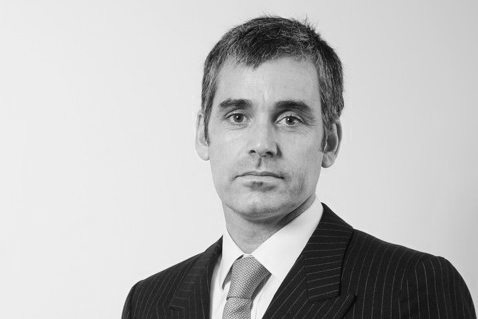
Alan Klein
Simpson, Thacher & Bartlett

Alan Klein, co-administrative partner at Simpson, Thacher & Bartlett, led the legal team that advised Owens-Illinois in its USD 2.15bn all-cash acquisition of Vitro’s glass container business that closed on 1 September. The acquired assets include five plants in Vitro’s home market, Mexico, one in Bolivia and the seller’s distribution lines in the US.

________________________________________________________________________________


Q: How did Simpson, Thacher & Bartlett land this mandate?

A: We’ve worked with Owens-Illinois for over 25 years, since KKR acquired Owens-Illinois in the late 1980s. We were one of the firms involved in the acquisition and financing of that deal. I started working with Owens-Illinois in the late ‘80s and since that time have helped them with innumerable acquisitions and divestitures, as well as prospective transactions.

Q: How long was Vitro’s glass business in the sights of Owens-Illinois?

A: It’s something Owens-Illinois has been thinking about going back several decades.

Q: Why was this collection of assets attractive and strategic for the buyer?

A: It’s a natural geographic extension for Owens-Illinois because they have a strong position throughout the US, Canada and Latin America, so it’s a natural fit. It’s a natural combination from Owens-Illinois’ perspective. Vitro was a leading container and glass manufacturer in Mexico and filling that gap is something Owens-Illinois has been interested in for a long time.

Q: Why was this the right time to launch a bid?

A: It was a point in time when the buyer and the seller were able to agree on a price, which they’d never been able to do before. Vitro’s glass manufacturing business was performing well, and Owens was in a position to afford to pay the price that Vitro was looking for. There was a negotiation and they were able to reach an agreement on price.

Q: What were the obstacles to the deal closing in past attempts?

A: When one party was ready the other wasn’t, and vice versa.

Q: What made this transaction particularly challenging?

A: It’s a carve-out from the rest of Vitro’s business. My experience has been that whenever you’re buying a part of a company where the assets have been intermingled with other parts of the seller’s business, you have to sort of tease that apart and unwind everything. They had a lot of restructuring to do, they had to move things around internally and that leads to a whole host of approvals needed from vendors, from landlords, and then there’s a whole host of associated tax issues. It’s like taking a box of puzzle pieces, throwing them on the ground and then putting them back together — it’s a painstaking process.

Q: How long did the transaction take to complete?

A: Once we were able to get an agreement on terms, we were actually able to close it by the beginning of September, so it only took three-and-a-half months from the announcement date of 13 May, which is quick. It took a lot of work and some luck to get it done so quickly.

Q: How did your team of 20 attorneys navigate these challenges?

A: It required close collaboration with the seller’s counsel and a lot of attention to detail. Corporate, intellectual property, tax and real estate, were all key parts of the team.

Q: To what extent was antitrust a consideration?

A: Competition was certainly involved and they did a great job because we got approvals in the US and Mexico in relatively short order. Glass is a funny thing, glass bottles in particular. They’re heavy and fragile, and consequently most of Vitro’s production is sold in Mexico. There was no second request from the FTC and the Mexican authorities got quite comfortable with it as well. Though Owens-Illinois is a major producer in the US, both US and Mexican authorities had no objection, for the reason that the production from Mexico is overwhelming used in Mexico. It doesn’t change the profile of either market. Owens is stepping into Vitro’s shoes in terms of manufacturing glass containers. It shouldn’t have an effect on the Mexican market.

Q: Why did the buyer opt to finance the transaction with cash?

A: Owens-Illinois was concurrently doing some financings in the public market as well and they had enough cash to do it. They were doing other work on their capital structure. They were taking additional risk with the deal, but Owens was confident that it had enough resources and could keep its capital structure in a healthy, rational state.

Q: What does the deal represent within the context of Owens’ global growth strategy?

A: It’s a piece that’s been missing. Owens is a very global business, with strong presence in the US and Canada, and a strong presence in Latin America. This transaction filled a gap.

Q: What made this deal stand out from other recent transactions you’ve worked on?

A: It’s certainly one of the largest acquisitions in Mexico of an industrial business for sure, and it’s something that’s been on Owens-Illinois’ radar screen, and as a result, our radar screen, for a long time, literally 20 years, as a potential transaction.

See-Full-Transactions-Details

Download PDF